Chronicle Editor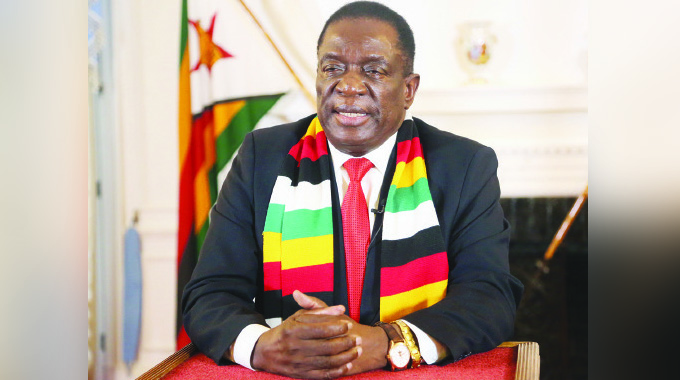
Victoria Ruzvidzo in NEW YORK, USA
PRESIDENT Mnangagwa has called for an urgent reform of the United Nations Security Council if it is to perform the role for which it was created.
In a no-holds-barred address to the 79th United Nations General Assembly here on Thursday, President Mnangagwa said many nations felt hard done by the Security Council in its present form.
The Security Council is one of the six principal organs of the UN charged with maintaining international peace and security. It’s powers include establishing peace keeping missions, enacting international sanctions and authorising military action.
Permanent members of the Security Council are the United States, United Kingdom, France, Russia and China. The Security Council is often criticised for being a tool of the West, particularly the US and UK, who use it to bully smaller and weaker nations, with Zimbabwe among the victims of sanctions sponsored by London and Washington.
In his address to the General Assembly, President Mnangagwa, who is also the chairman of SADC, decried the impotence of the Security Council on key issues afflicting the world.
“The current paralysis of the Security Council on crucial topics is unconscionable as it negates the very reason for its existence. Reform of the Security Council is not just an aspiration but a present-day necessity. This reform is not just a matter of fairness, it is essential for ensuring that the Council’s decisions are inclusive, credible and truly reflective of the global community’s diversity,” he said.

President Mnangagwa said it was in this regard that Zimbabwe stood by the African Union’s Ezulwini Consensus and the Sirte Declaration which advocated for at least two permanent seats with veto power for African countries in the Security Council and additional non-permanent seats.
Furthermore, the President called for the restructuring of the international financial system to restore its relevance. “The international financial architecture, as it stands today, is an anachronistic construct that no longer meets the needs of the global community, particularly those of developing nations.
“Our economies, which are the life-blood of the global market, are disproportionately affected by the rigid and often inequitable policies imposed by dominant financial institutions,” he said.
President Mnangagwa lamented the current global order saying it was steeped in historical power imbalances, hence failing to provide the necessary flexibility and support required for sustainable development.
“It is imperative that we reform these structures to ensure that they are more inclusive, equitable, and reflective of the diverse realities that are faced by all Member States, particularly, the Global South in a world facing all manner of insecurities.”
Despite the shortcomings of the unipolar world with its bias towards the West, President Mnangagwa said Zimbabwe remains a committed member of the UN.
“I wish to reaffirm Zimbabwe’s commitment to the purposes and principles of the UN Charter. The challenges we face are immense, but not insurmountable. By acting together, we can advance peace, promote sustainable development, and uphold human dignity for present and future generations,” he said.
“Zimbabwe stands ready to collaborate with all Member States to ensure that our shared aspirations for a better world are realised. Let us work in unison, guided by the spirit of multi-lateralism, solidarity, and mutual respect, in order to address the pressing issues of our time and, to build a more inclusive, just, and sustainable future.”
In his keynote address on Tuesday, UN Secretary-General Antonio Guterres also lamented the current international financial system, which he described as failing to adapt to current realities. He said the international Monetary Fund and the World Bank had become archaic.


 Online Reporter