

 admin
admin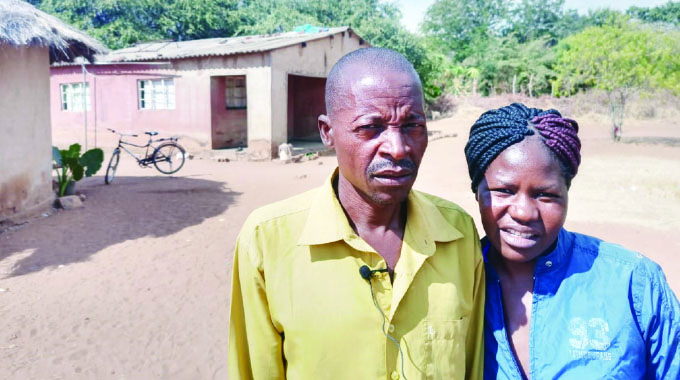
Sifelani Tsiko Agric & innovations Editor
Irene Chifunda (40) of Mandaza Village in the Ward 15, Mbire District in the northern part of the country used to go on a savage campaign of domestic abuse, beating up her husband as he cowered down on the ground.
She made her husband Felix Majaya’s (52) life a living hell with physical attacks and verbal humiliation, leaving him with bad memories that will last a lifetime.
On one occasion she boxed him hard for merely failing to provide food and injured him on his right hand.
In furious tirades she would call him names and cause bruises and scratches that he would cover up before he would walk around with shame around the village.
Even though Majaya was slightly bigger and physically stronger than his petite wife, he did not fight back when she began to attack him.
He was frequently overwhelmed by her sheer physical abuse.
“I used to beat up my husband daily. I was violent and whenever he failed to buy bread or sugar for the family I would beat him thoroughly,” she said.
“All this stopped after I was trained as a gender champion by the Lower Guruve Development Association (LGDA) under the Spotlight Initiative.
Knowledge is important in the fight against gender-based violence.
“Women must work hard too to feed their families. We must not wait for men to do it alone. We have a role to play too. It is not for men alone.”

Claster Mahembe of Chitsiga Vllage with his second wife Tracy, twins and mother
Little by little, Majaya lost his independence and willpower and just accepted that was how his life was going to be.
He complied with Irene’s demands and almost lost control for most aspects of his everyday life.
“I am so grateful for the Spotlight Initiative. It brought violence to an end in our marriage. There is peace in our marriage now. She has changed a lot for the better now after she was trained as a gender champion,” he said.
“We now live together in peace and harmony. She is involved in a fence-making project supported by the Spotlight Initiative and she is getting some income to support our family. I am happy that there is peace. It is so much better now than before.”
Men, too, are also victims of domestic violence, contradicting the widespread impression that it is almost always women who are left battered and bruised.
Men assaulted by their partners are often ignored by police, see their attacker go free and have far fewer refuges to flee to than women.
But the Spotlight Initiative in Mbire is changing all this.
To address problems related to gender-based violence, early child marriages and child sexual abuses in Hurungwe, Guruve, Mbire and Muzarabani a consortia comprising Caritas, the Lower Guruve Development Association (LGDA) and other community-based organisations (CBOs) are spearheading programmes to raise awareness on the impact of GBV on women and girls.
The programmes running under the Spotlight Initiative supported through a partnership between the European Union and UN Women are aimed at ending violence against women and girls and harmful practices.
Zimbabwe is among the 20 countries in Africa, Latin America, Asia- Pacific and the Caribbean which are participating in the four-year programme which started in 2019 and ends this year.
The country was supported by the EU to the tune of US$30 million for the first phase to help Zimbabwe meet some of its Sustainable Development Goals (SDG 3 and 5) on empowering women and girls to realise their full potential in a violent free, gender-responsive and inclusive environment.
LGDA trained a number of villagers to become gender champions in Guruve, Mbire and Muzarabani.
The champions have assisted greatly in raising awareness and supporting local communities to report child abuse cases and to follow-up cases with the police.
Local communities in the four districts, north of Zimbabwe have been sensitised about the dangers of selling off young girls into early marriage or abusing young girls.
“Before this initiative, domestic violence cases were high and locals were not aware of women and girls’ rights. Most people are now aware of the bad results of domestic violence, early childhood marriages and even the beating of our husbands,” Irene said.
“Now things are better. There is a better appreciation of women and girls’ rights despite the fact that we still have the problems here. Before this programme, I would fight over money and trivial issues such as sugar and salt. If my husband came back with nothing I would beat him up.”
She said poverty and high expectations by women to be looked after escalated cases of domestic violence.
“A real woman must not be a ‘DCC — Daddy Chakati Chapera.’ Women must use their hands to till the land, grow vegetables, rear chickens and goats to support their families,” Ireene said.
“I am now empowered to look after my family. We have a fence-making project, goat and chicken rearing projects that are very useful to supplement our family incomes. We have to use our hands and not sell our bodies to feed our families.”
Nelisha Machona (48) of Mandaza Village said even if the project was coming to an end, she and other gender champions would continue to fight against gender based violence.
“Yes, we still face problems. We need bicycles to help us travel long distances to reach out to other people in our big ward. We also need some allowance to help us stay motivated in our work. Despite the problems, we will continue to fight hard to end domestic violence,” she said.
During the Covid -19 pandemic, the women got support from the Spotlight Initiative, sewed masks and earned more than US$700 which they used to buy a fence making machine that cost US$400.
Machona and her group — Kushinga Sewing and Wire-making Group — bought 10 goats from earnings they got from the fence-making project. Their goats have since increased to more than 100.
“We sell some and eat some. These are some of the benefits of the Spotlight Initiative. We have so far raised US$460 from fence sales and we want to expand and even buy cattle.
“Most of the GBV cases are over money. We do not want women to be DCCs here in our area. Women have to use their hands to empower themselves and fight GBV cases.”
Women in Mbire now run Internal Savings and Lending Schemes (ISALS) to improve their household livelihoods.
“We have raised more than US$1 000 from our ISALs. We now want to pass on our gains to the youth to start some projects. We got US$500 from UN Women and we are giving it to local youths to start some poultry projects,” Machona said.
“We are passing on this scheme to help them stay away from alcohol and drug abuse. The Spotlight Initiative has left us empowered. We are now better off.”
Claster Mahembe (46) of Chitsiga Village in Mbire and who has two wives — Noreen (42) and Tracy (38) — said the Spotlight Initiative peeled his eyes.
“I was a violent man. I used to beat up my two wives over petty issues. I did not want to take any advice or listen to anyone. I was stubborn,” he said.
“I am now a changed man ever since I joined the Spotlight Initiative as a gender champion. I can now apologise whenever I hurt my wives. We have peace now and there is better understanding in our home. We do budgeting together to avoid conflicts.
“I do piece jobs and whenever I get something I share it with my two wives. I am more open now and my wives are happy.”
He said women now understood their rights better and locals were informed on GBV issues.
“Men should respect women. We need to discuss and solve our problems amicably. We do counselling to support our local communities on GBV issues. People are now better informed about GBV issues than before,” he said.
“Violence is not a good thing. Peace and harmony is important for the family unit and the community. Men must not do whatever they like, they must speak well and respect their women. Women are important partners in our community.”
Mahembe is helping out other men to better prevent the violent abuse of women and girls.
“There is behaviour change in our community. People are now aware of the dangers of GBV. There was a lack of knowledge before but now things are better,” he said.
Said his second wife Tracy: “This programme helped to end violence in our home. There is change now and we now co-exist well with my husband and his first wife.
“My husband used to be violent but now we can now talk and discuss issues freely. We understand each other better. I have a child from another marriage and my husband accepted him. He has taken care of him well.
“Even if a woman has a child from another marriage, men must accept them and co-exist with them well.”
The Spotlight Initiative supported through a partnership between the European Union and the United Nations complements and supports on-going Government campaigns against gender-based violence in the country.
It helps Zimbabwe to meet some of its Sustainable Development Goals (SDG 3 and 5) on empowering women and girls to realise their full potential in a violent free, gender-responsive and inclusive environment.



 Online Reporter