admin
admin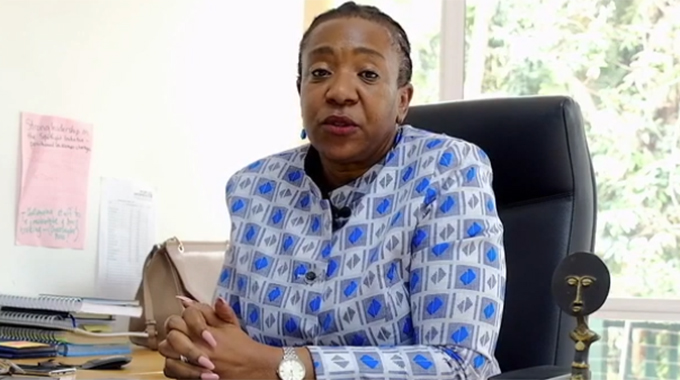
Sifelani Tsiko
Agric, Environment & Innovations Editor
UN Women has been working with various local NGOs and community based organisations (CBOs) under the first phase of the Spotlight Initiative supported through a partnership between the European Union and the United Nations to end violence against women and girls and harmful practices. Zimbabwe is among the 20 countries in Africa, Latin America, Asia — Pacific and the Caribbean which have benefited from the four — year programme supported by the EU to the tune of US$30 million. In this report, Sifelani Tsiko (ST), Agric, Environment & Innovations Editor speaks to UN Women country representative Delphine Serumaga (DS) on how her organisation is helping Zimbabwe to meet some of its Sustainable Development Goals (SDG 3 and 5) on empowering women and girls to realise their full potential in a violent free, gender-responsive and inclusive environment.
********
ST: Can you briefly tell us about Spotlight Initiative and its broad aims in the fight to end violence against women and girls and harmful practices in Zimbabwe?
DS: The overall vision of the Spotlight Initiative has been to ensure that women and girls realise their full potential in a violence-free, gender-responsive and inclusive Zimbabwe. This vision is being achieved gradually by ensuring that GBV is no longer seen as a private issue to be addressed at the individual level of survivors and perpetrators, but as a national public issue that has an impact on achieving inclusive and sustainable development.
As done before with HIV/AIDS — moving the GBV from the private space to the public’s consciousness at all levels will trigger urgent, concerted, and meaningful actions to change behaviours. So broadly; Spotlight is contributing to Zimbabwe’s achievement of two of the country’s prioritised Sustainable Development Goals: SDG 3 and SDG 5 by contributing to the elimination of SGBV and HPs through the creation of a broad partnership with civil society, government, private sector and the media among others.
ST: How many local NGOs and CBOs did you work with under the first phase of the Spotlight Initiative?
DS: As UN Women under the Spotlight Initiative we worked with 24 civil society organisations and up to 78 community-based groups which are driving community activism and grassroot movements against GBV.
ST: What are some of the major achievements that have been registered by the initiative in Zimbabwe in terms of impact on beneficiaries? Can you touch briefly on learning and experiences of this first phase?
DS: Movement building has been our major success. In Zimbabwe we now have a vibrant community-based movement which is working to end GBV. The movement is transforming people and communities to act and react against GBV.
The movement is made up of both influential and local people ranging from community advocates, teachers, in some cases religious leaders, women, girls, service providers, men and boys who are transforming mind-sets and creating thriving and safe communities. Strengthened referral pathway system across the communities has seen an increase in cases reported (physically and virtually) seeking assistance on SGBV related issues such as cases of early marriages, domestic violence, sexual harassment and child abuse. The introduction of gender champions made the referral pathways more convenient and friendly to women. CBOs have become vital referral points.
The programme has been able to ensure long term recovery of GBV survivors through Increased streams of revenue for the vulnerable. Women are now able to mobilise themselves into internal savings and lending schemes (ISAL) groups that work to economically empower them to become more independent while actively contributing to the household income. Successful set-up of mobile one-stop centres in response to GBV, violence against women and girls (VAWG) and harmful practices has strengthened collaboration and coordination of various stakeholders such as Chiefs, village heads, and Victim Friendly Unit (VFU) in tackling emerging issues.
A total of 749 survivors (644 females, 105 males) accessed services. We have learnt that using participatory, consultative and co-creation methods to break through existing attitudes by making communities take responsibility for promoting the rights of women and girls and other marginalised groups fosters a sense of responsibility and ownership and accountability to the programmes and to each other as individuals and collectively in communities.
ST: The urgent crises caused by COVID-19 have derailed the implementation of the initiative, leaving crucial gaps in the rolling of programmes at grassroots level. Can you tell us how the raging Covid–19 pandemic has affected the first phase of the Spotlight Initiative in Zimbabwe? Can you also comment briefly on some of the challenges you encountered during the first phase of the initiative?
DS: The pandemic and the consequent lockdown not only negatively affected some activities resulting in some delays but also resulted in new and innovative ways of implementation and a shift in the ways in which civil society organisations normally implemented programmes in communities that is, the use of technology, working closely with CBOs, FBOs, local leaders, gender champions and so on, for sustained the implementation of programmes. Up to 60 percent of our programming is community based and lock down restrictions certainly affected the way in which we worked.
We had to go to the digital space in order to ensure continuity of our work. The challenge, of course, is ensuring that everyone can access the digital space. Connectivity issues remain problematic in rural areas as well as poor access to electricity.
However, the presence of gender champions and other structures we helped support at community level ensured that implementation of the programme continued. Key challenges even for key government officials included not having access to internet connectivity at home and the rising cost of data charges.
ST: How does the UN Women intend to fill in the gaps and drawbacks encountered under the first phase of the Spotlight Initiative?
DS: We need to come up with implementation strategies that are suitable to the current Covid-19 lockdowns and pandemic without losing sight of the main goal of elimination of GBV and harmful practices. We also need to continue working with relevant stakeholders on GBV, harmful practices and promotion of sexual and reproductive health and rights in Zimbabwe.
Improving the coordination and monitoring of the programme with the support of relevant stakeholders is critical as well.
ST: In this Decade of Action to deliver the Sustainable Development Goals, to what extent can you say the initiative will help Zimbabwe to meet some of its Sustainable Development Goals (SDG 3 and 5) on empowering women and girls to realise their full potential in a violent free, gender-responsive and inclusive environment?
DS: Promoting the attainment of SDGs 3 and 5 were the ones which were most pronounced. We made sure that health services were improved as well as mental health services. This is a big thing for us. Our programme work also helped in making sure women participated in decision making at community level, had access to of sexual and reproductive health services, became aware of referral pathway systems across the communities and as well as centres and services for SGBV related issues such as cases of early marriages, domestic violence, sexual harassment and child abuse. On SDG 5 we had to help improve the environment, in making sure women have access to making decisions at community level, making sure that women had access to the economy and livelihood projects, and access to the court system.
Read the full interview on www.herald.co.zw
Establishment of the Safe Markets Initiative which is contributing to the economic livelihoods of women by creating a safe space for them to trade improves their earning potential, which translates to the empowerment of women.
ST: Are there any plans to roll out the second phase of the Spotlight Initiative in Zimbabwe given the impact of the Covid -19 pandemic that has made gender inequality worse, pushed more women into poverty, out of jobs and away from access to educational and medical services, including for sexual and reproductive health?
DS: Definitely! We are in the throes of planning for the second phase of the Spotlight Initiative. We are putting together the budgets for the second phase. The second phase is actually starting technically on July 01 and we will continue working closely with the partners we have been working with. Zimbabwe has done very well from a global standard in implementation of the first phase. There have been many successes and reports will show that. We intend to continue for another 18 months. Beyond the 4-year period, we are intending to see this as a model to go forward through ensuring that the Government takes ownership of the programmes such as this. We want a model that doesn’t start and stops but moves forward towards transformation. The amount that we are working with is about US$9 million for the next 18 months. We want to build and consolidate on the successes that we had in the first phase.
ST: What is going to be the major thrust of the second phase of this programme?
DS: We are not going to change drastically. We are going to continue working closely with the Government to formulate a strong national movement on SGBV, harmful practices and promotion of SRHR which supports all the sub – national movements that were established in phase I and advocate as much as possible to influence policies. Gender responsive budgeting and social accountability of duty bearers will be influenced at national level to make sure GBV issues are supported at that level which will enhance the sustainability of the programme for the future.
ST: Looking ahead, what is your comment on UN Women efforts towards helping Zimbabwe to attain some of its goals in this Decade of Action to deliver the Sustainable Development Goals?
DS: Persistence is key and also opening doors in things that people we think wouldn’t be interested in. There has been a groundswell of men engaging and wanting to engage. Men should persistently educate themselves, men should persistently engage themselves be it at a small level or household level, community level or at national level in persistently making the space safe and making Zimbabwe a safe space for women.


 Online Reporter