Chronicle Editor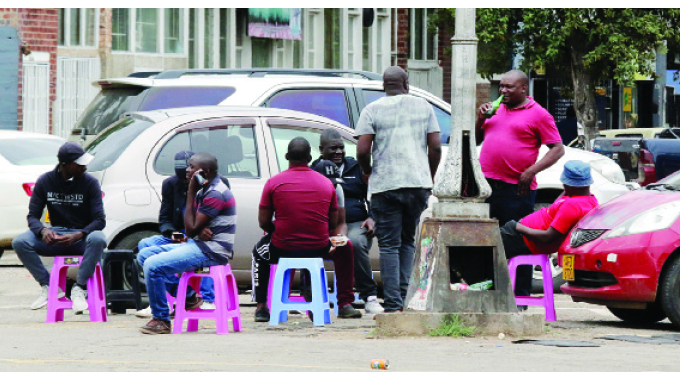
Limukani Ncube
If you want as many as 20 cows, I can refer you to someone who can organise them for you. By tomorrow they will be delivered to wherever you want. The person who co-ordinates informal cattle sales across rural Matabeleland is always parked there (pointing at the street). Just by using the cellphone without even moving an inch, she can put together over 100 cattle overnight, and the deal will be legit,” said a Bulawayo vendor, Mandla Ndlovu, casually caressing his wares, and repeatedly adjusting his makeshift chair made of cardboard boxes rolled together and fastened with a rope.
It is a mild day, the first Saturday of the New Year to be exact. A sports utility vehicle (SUV) passes by and we gaze at it and steal sight of its occupants, a middle-aged man with a sports cap and snow-white golf t-shirt. On the passenger seat is a young lady with long shiny hair (not sure if that is what they call Brazilian hair), and the sound of music in the car makes us follow it with our eyes as it moves out of sight. As the car shows us its back, the vendor looks up at the sky and says “ezinkulu” (the big ones), referring to the motorist.
He has a story to tell and knows pretty much what the “who is who” in town does to make a living. He even knows who was with this and that girl at a nightclub the previous night. He knows who was in the VIP section of the top night club in town and who bought a couple of expensive bottles of whisky and champaigne, and set heads turning, with waitresses strutting to his table with bottles and glittering lights up in the air. The script seemed plucked off Harare deals pages as Mandla narrated how hustlers in town go about their business.
“There are no big tenders here, but people are busy hustling. Some have made it from “ukuphathelisa” (forex black market trading), and some are into gold dealings. The guys in these two sectors are the ones driving big cars in town and buying whisky and champaign in bars and nightclubs. Yizo ezinkulu! (they are the big boys). Of course, there are a few successful businesspeople in town and company executives, but they don’t paint the town red like the hustlers,” he said.
However, for a long time, Bulawayo has been referred to as “slow”. The city has been labelled slow in terms of business transactions, which affects other social phenomena, including entertainment and even offerings and tithes for Christians. Moreover, driving in the Bulawayo city centre just after 5:30PM is relatively a joy ride, a sharp contrast to the level of traffic in the capital, Harare. With a population of 665 952 people (358 081 females and 307 871 males), Bulawayo is not even half the population of Harare, which stands at 2 427 231. Since business is a numbers game, it follows that Harare will generate more business and that perhaps explains why the capital city does not go to sleep.
However, the City of Kings and Queens, as Bulawayo is known, is alive and kicking, under the circumstances. The streets are abuzz with activities during the day, and leisure centres get busy as the week reaches the tail end of its marathon. While the levels are not as high as in Harare, “wheeling and dealing” has increased over the years in Bulawayo. It has been kind enough to keep the streets busy, children going to school, food on the table, roof over heads, retail shops operating, bars and nightclubs operating, and other social and economic sectors breathing as well. The buzzword is hustling and what are these hustles that people in Bulawayo are occupied with?
“It’s the usual suspects. A lot of car dealerships are sprouting up. People are runners, that is shopping for people in South Africa and even doing orders for businesses this side. They are doing what omalayitsha (cross-border transporters) do, but on a smaller scale. Then for those that are monied, a lot of pharmacies are popping up even elokitshini (western suburbs). And of course, second-hand clothes are still a big thing as well as China shops where you get almost everything at the lowest prices you can ever imagine. Abafana bamaDollar deals etshwaleni (The guys who do dollar deals for alcohol) are also making a killing,” said a local journalist.

As you move around the city centre, you notice that there is an unconventional shopping mall craze in town, where shops are partitioned with aluminium and glass. One person is selling clothes and shoes, the next person is selling tackies, the next person is selling cellphones and accessories and the next person is selling solar power appliances and fittings.
If there is no new restaurant set up at the corner, a liquor store has been opened or a grocery shop with imported goods, popularly known as Rand shops, as they sell exclusively in forex. Many in the informal sector fill up flea markets, line up the streets washing cars, buying and selling foreign currency, selling second-hand clothes, footwear, an assortment of groceries including bread, airtime (and the new craze of Hot charging), alcohol, stationery, fruits and vegetables, cooked amangqina (cow hooves) and even roasted maize. Some hustlers have even invaded nightclubs and bars where they sell tackies openly inside the joints, or have them displayed on top of their cars.
The locals have since been joined by vendors and traders from as far as Harare, Mutare and Mozambique, who land in the city at the break of dawn through overnight buses. The visiting traders sell their wares during the day and use the overnight buses that leave Bulawayo between 7PM and midnight to go back to their bases to restock. Of note are traders from Mozambique who move around selling men’s shirts and suits and can be found even at Renkini Long Distance Bus Terminus, with shirts that go for as low as US$3 and suits ranging from US$15 to US$25.
There is also a thriving money transfer service, which those in neighbouring countries and overseas use to send money to friends and relatives back home for a commission of around ten percent. Some operate from offices in town, even though unregistered, while others operate from the comfort of their vehicles, streets, or homes in residential areas. You can even talk of illegal transporters (Honda Fit or Mshikashika). Those who are organised in the taxi business have joined the organised call up service under “In-drive”, which operates like Uber in other countries. There is also a group of enterprising men and women who are into real estate. Unregistered and unofficial, they know which building has space and which houses in eastern and western areas need tenants. And they make a quick buck by charging prospective tenants a viewing fee of US$20.
“Imagine how many prospective tenants these unregistered agents can take to see one office or house per day? If you want a house to rent, they look for it on your behalf and charge you,” said a local dealer.
Our sister paper, Chronicle reported last week that eager to flip the script and carve their paths, three innovative Bulawayo youths are re-wiring traditional ways of food delivery services in the city. They have come up with an application, “Dial a Scooter”, that allows food lovers in Bulawayo to order meals from selected restaurants in the city and get them delivered right at their doorstep. The young entrepreneurs have partnered with 15 restaurants, food outlets and a stationery shop. Whenever customers buy their food or stationery, a scooter is available to deliver the items. In addition, some enterprising youths are also cooking food at home and making deliveries to workplaces in the city centre.
Media reports indicate that vendors selling products on the streets have forced some registered companies to follow suit. The big players are acknowledging that consumers are increasingly looking for more affordable and convenient shopping options. Those options are now largely found at “Dollar deals” outlets, where most products are priced at US$1. However, the Dollar deals have impacted negatively on registered businesses, especially bars, nightclubs, retail shops and clothing shops. According to nightclub, bar and bottle store owners, the trend has diminished trends of patronage at popular leisure centres that are supposed to meet a set of 26 standard requirements to be licensed to operate.
Social and community clubs have devised ways to save money through money clubs and grocery clubs, where members get their share at the end of the year, or at the end of each month if the club is following a monthly rotation system. This gives an opportunity to members to invest in substantial household property. Furthermore, the shebeens are still much alive and kicking and continue to host gigs for members where they get substantial amounts of money when their turn comes as hosts.
The shebeens are no longer restricted to western suburbs. They are now even found in affluent suburbs.
A Bulawayo businessman and economic commentator, Mr Reginald Shoko, said there is a lot of money that changes hands in the informal sector.
“Everything is legit, but unregulated. You see people in street corners sitting on chairs and drinking beer all day. They are buying cheap beer from the Dollar deals guys and then spend the day socialising. What happens in the streets is what keeps the economy of Bulawayo running since there are a few corporates.
“Those with buildings are making a killing with these malls where you can have up to 50 people or 100 under one roof. A lot is happening on the streets. If you spend your time holed up in offices, you might never know what makes Bulawayo tick and what makes people put food on the table on a daily basis,” he said.


 Online Reporter