Online Reporter
Stanford Chiwanga, [email protected]
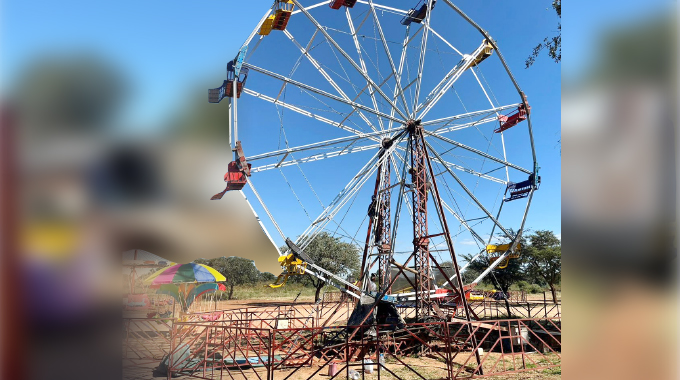
BY the time the lights of Luna Park flicker on and the Ferris wheel creaks into motion, the laughter drifting across the fairground masks a far harder reality behind the spectacle. Long before the first child clutches a candy floss or a couple clings to each other on a spinning ride, a small, weather-beaten community has already lived an entire day — cooking over open fires, repairing iron machines, nursing fevers, missing home and quietly bracing itself for loss.
“People only see the lights and happiness. They don’t see the life before the gates open. They don’t see the sacrifices — the families left behind, the sickness endured on the road, or the strength it takes to keep smiling for others,” says proprietor Witness Chihota.
This is the unseen world of Zimbabwe’s travelling amusement park workers, modern-day nomads bound together not by blood, but by survival.
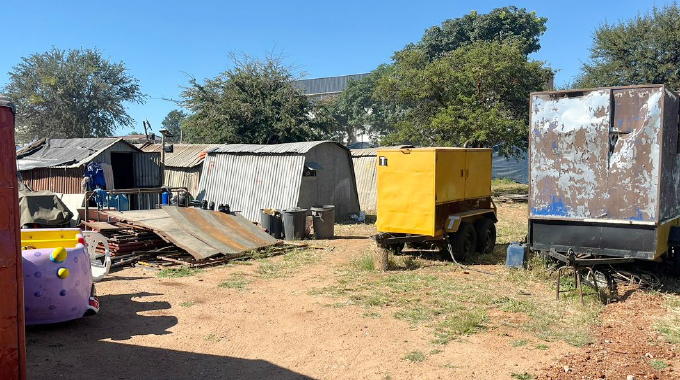
Their homes are temporary by design. Tents stitched together through trial and repetition stand beside makeshift rooms fashioned from zinc sheets and borrowed tarpaulin. These fragile structures rise wherever the park settles — Beitbridge today, Mutare tomorrow, Bulawayo next month. Wind rattles through thin walls, rain finds its way through seams, and heat turns metal into ovens by midday. Yet this is where life happens.
“You get used to the discomfort. After a while, you stop thinking of it as hardship. It just becomes home, even if you know it won’t be there for long. Human beings adapt quicker than people think. When you realise this is how you feed your family, you stop fighting the conditions and focus on surviving,” says supervisor Toendepi Mpofu.
For Chihota, endurance has only ever been possible through unity. He speaks not of workers or staff, but of comrades bound by circumstance.
“We spend more time together than with our own families. So if one person gets sick, it affects all of us. We have to move as one. There is no option of ignoring someone’s pain here. If a brother is weak today, someone else carries his load. That is how this life works.”
Illness here is communal business: meals are adjusted, duties are shuffled; rest is enforced. Medical aid is in place, not as a benefit, but as a necessity.
“This life can break you if you are alone. Here, we don’t allow anyone to be alone. Loneliness is more dangerous than hunger or fatigue. That’s why we talk, we check on one another, and we make sure everyone feels they belong, even when times are hard,” Chihota says.
Yet even the strongest sense of togetherness cannot hold death at bay. Chihota recounts the losses calmly, his voice steady but heavy with memory. Four workers have died during Luna Park’s long journey. Two passed away while the park operated in Mozambique – one from malaria in Chimoio, another under circumstances Chihota believes involved poisoning. The other two succumbed to long illnesses years apart.
“Death hits harder here. We all mourn, but we cannot all bury our colleagues. Few have to travel, the rest have to stay and work. There is no proper space to mourn. Sometimes you cry at night, then in the morning you dismantle the rides and move on,” he reveals.
Security has long been another constant worry. The bright lights and expensive machinery make the park visible – and vulnerable. Robberies in the past forced the community to tighten its defences.
“We learned the hard way. Now we have guards, better systems, and the police assist us when they can. But security isn’t just about protecting equipment. It’s about protecting people who sleep a few metres away from everything we own,” Chihota says.
For 25-year-old Claudious Chikwira, Luna Park has been both baptism and proving ground. A machine operator and clown since 2023, his work demands constant performance, even when energy is gone. “
You smile for the kids even when you are exhausted inside,” he says.
His early days were uneasy, marked by relationship struggles and the shock of constant movement.
“At first it was difficult. I didn’t understand this lifestyle. But you adjust. You either adapt, or you leave.”
The longer one stays, the heavier the separations become. Gift Melusi, a machinery maintenance worker since 2018, counts time not in weeks, but in absences.
“Sometimes I go two or three months without seeing my family,” he says quietly.
His children, once young, are now grown and married – a reality shaped largely from afar. The distance strained his marriage in the early years.
“There were problems then. But with time, we understood each other. You don’t get used to the pain – you just learn how to live with it.” Melusi finds comfort in the machines themselves.
“Iron doesn’t lie. If you take care of it, it will take care of you.”
Every bolt and cable is checked again and again, not out of fear, but discipline.
“People trust their lives to these machines. We cannot afford mistakes.”
The safety record stands unbroken — no serious accidents to date — something he regards as quiet evidence that rigour matters.
Sixteen years on the road have shaped Toendepi Mpofu into both supervisor and survivor. He has watched marriages bend and sometimes break under the weight of distance, including his own.
“At the beginning, my wife struggled. This life is not normal.”
Over time, understanding replaced tension. Occasionally, she visits the camp. Often, she cannot.
“We cook for ourselves here. Everything is shared. That’s how we manage.”
Fredrick Bhaloni lives on the brighter edge of the operation. A marketer, tuckshop attendant and roadshow leader for six years, he sells the fantasy — candy floss blooming into clouds, popcorn crackling, drinks cold enough to cut through the heat. But the smiles come with long hours.
“People think Luna Park is only for kids. That’s not true. Even adults come to forget their stress.”
Couples arrive hand in hand, chasing laughter as escape. “It’s 50-50. Children and grown-ups. Everyone needs joy.”
Behind the scenes, Cephas Mutsakatsa ensures that joy does not slip into danger. For more than a decade, he has supervised staff and overseen the brutal labour of assembling and dismantling the park.
“Packing alone can take five hours. Dismantling takes more than a day, and setting up again can take nearly a week.”
Every step is deliberate.
“If you rush, people can get hurt. This work needs patience.”
When the crowds thin and the lights dim, the nomadic village folds back into itself. Stories are shared under the stars. Phones are held tightly during brief calls home. Sickness is watched closely. Loneliness is softened with jokes and shared meals.
“Tomorrow we do it all again. Because people are coming for happiness.”
Like gypsies and nomads before them, these workers exist on the margins of settled life, bound together by labour, movement and quiet loyalty.
Their homes are temporary, but their bonds endure. Under zinc roofs and canvas skies, they have built something fragile yet resilient — not just an amusement park, but a community that carries joy from town to town, even as it bears the unseen cost.