Sundaymail Editor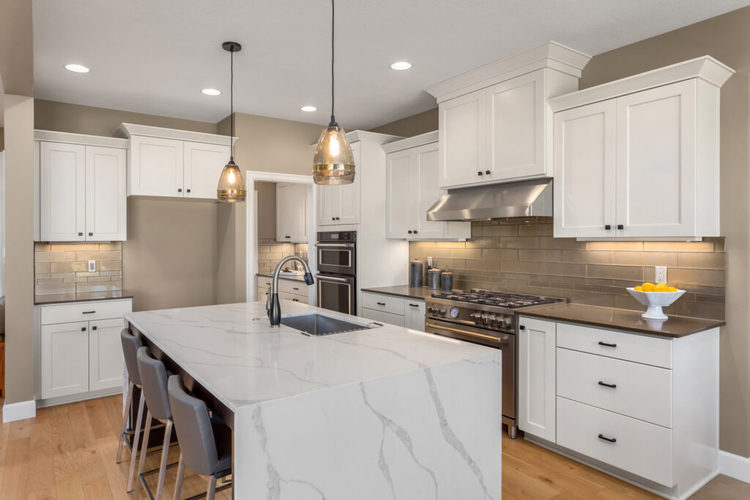
TRANSITIONAL has become one of the most popular kitchen design trends in recent times.
Traditional, contemporary or farmhouse seem to be falling out of favour. But, why are transitional kitchens so popular? And, perhaps more importantly, would this style fit your design aesthetic? Here, we try to explain some of the features that define a transitional kitchen.
Clean and relaxed
Kitchen design experts say transitional design offers the best of both worlds, blending the textures of traditional with the sleekness of contemporary design.
For kitchens, think geometric, clean and practical lines for the countertops, cabinetry, crown moulding and other crafted elements.
Experts say non-fussy is a key element of transitional kitchens. They believe one should never include corbels or ornate appliques or other heavily decorative features typical of traditional kitchens.
Colours
Since transitional kitchens often open to the living area, designers are opting for smooth features that blend in. What is more, they often aim to achieve a light and airy effect.
Cabinets
In transitional kitchens, cabinets are usually a light or medium colour in painted wood, wood grain or mixed materials. Designers are using integrated storage with recessed panels, and doors are not as prevalent as drawers.
Matte decorative hardware or integrated hardware are also traits of this design style.
Appliances
White kitchens with stainless steel appliances are still king — with frequently contrasting island and perimeter cabinetry. Also, expect to find fully-integrated French-door refrigerators in transitional kitchens. Designers say there will either be an induction cooktop along with a wall oven and microwave or a dual-fuel or gas range. Updraft hoods and standard-door dishwashers are other staples in this design.
Countertops and backsplashes
Marble countertops and even marble backsplashes work beautifully for transitional kitchens. Other popular features that define transitional kitchens include quartz and quartzite. Designers say countertops are thick one-and-quarter inch (1¼ inch) and are either traditional or they have waterfall edges. Subway tile for backsplashes is still a favourite, but mosaics and glass tile in a variety of sizes work great, too.
Sinks and faucets
Popular sinks styles among designers include stainless steel single bowl or apron sinks. Among faucets, brushed stainless steel finishes reign; matte, polished or satin finishes are also popular.
However, there is no preference regarding faucet functionality. Designers are selecting faucets that are motion-controlled, touch or even manual.
Flooring and lighting
The flooring can be either tile or wood, typically high gloss, but it does not have to be. Designers are using both hardwood and engineered wood plank, continuing the debate on using hardwood floors in kitchens and bathrooms. The various types of large-format tile used in transitional kitchens include ceramic, porcelain and stone. Some designers are also using luxury vinyl.
Designers are incorporating a variety of lighting options in transitional kitchens. These include recessed lights and pendants and dimmer and traditional switches. Under cabinet lighting and interior cabinet lighting are also features of this kitchen style. And designers are more frequently adding motion sensors and keypads.
Contemporary, mid-century modern, industrial, glam and even traditional elements can blend successfully into a transitional kitchen. — freshome.



 Online Reporter