

 admin
admin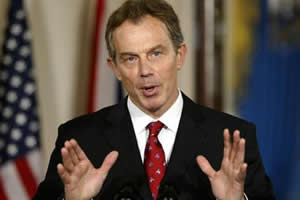
system over the parliamentary system where the head of government is the prime minister.
But, what are the differences between the two systems? One constitutional expert says that the difference is in the emphasis of the law in the presidential system while the parliamentary system with the prime minister in charge relies on politics for decision making.
What it means is that the decision of the president can be challenged in court while those of the prime minister have to be approved by parliament.
The prime minister has to rely on the support of the majority of MPs in parliament without which the prime minister can face a vote of confidence and can be removed from office if the vote of confidence is negative.
Members of parliament of the governing party can dismiss the prime minister like what happened to the former British prime ministers, Margaret Thatcher and Tony Blair even when they had won new mandates to govern.
In the USA, a president cannot be dismissed by his party members in Congress and cannot be subjected to a vote of confidence like a prime minister. The cabinet cannot dismiss a sitting president.
The only requirement is that the president cannot be above the law and his decisions can be challenged through the courts.
The preference for the presidential system of limited terms of office, is that the electorate will still have an opportunity to vote in a new president, maybe, every five years.
What must be put in place are the details, such as, if the president loses a majority in parliament. Surely this does not matter since the president is elected by popular vote. Yes, it will be difficult to get the president’s programs through parliament but the president can still govern.
One other aspect to consider is the effective decision making that a presidential system gives the president.
Countries that are embroiled in the debt crisis have prime ministers as head of government.
The reason being that these countries borrow money which they fail to pay because they play politics to stay in power. In the presidential system, the law not too much politics is the deciding factor.
Once a president is elected, the exercise of power is with the electorate in mind where as the prime minister will always look to the party and MPs to exercise power.
The prime minister is far removed from the electorate since only one constituency will have elected the prime minister. In actual fact, the prime minister is one among equals with MPs of the party while a president is different.
The major problem is where the constitution may want to mix the two systems. In the current constitution, the provision for a vote of confidence in the president, although never implemented, is unnecessary.
The new constitution must be very explicit that the president can only be impeached for wrong doing and that two thirds of both houses of parliament can remove the president.
The term of parliament must be fixed so that the president cannot be allowed to dissolve parliament for whatever reason.
At least the present arrangement which allows for harmonised elections has put paid to this. If the president dissolves parliament, the president will also face an election.
It is important that the public should be educated in various systems of government and how elections should be run.
One provision I find difficult to accept is that of run-off if no presidential candidate achieves a majority of over 50 percent of the votes cast. There are too many disputes all over the world. In the USA, there is no such requirement.
Of late, Liberia has a crisis over the run-off system. The same was the case here in Zimbabwe in 2008 elections.
What could be the alternative? Zambia has had its elections and Michael Sata polled 46 percent while out going president, Rupiah Banda, got 36 percent. Sata won the presidency.
Why should the presidential race face the run-off while other election races do not apply the run-off system? In France, from the president right down to the local councillors, the run-off system applies. But for a third world country, this would be very expensive and cumbersome.
If the system is first past the post, then it must apply for every candidate from the president to the councillor.
There has been talk that parliament could elect the executive president like what happens in South Africa.
The South African system could solve a lot of problems about the run-off controversies in electing a president.
As it is said, the devil is in the details in a new constitution. It will be interesting to see what the drafters of the new constitution will come up with.



 Online Reporter