Online Reporter
Nqobile Tshili, [email protected]
THE United Nations Human Rights Council (UNHRC) has commended Zimbabwe for abolishing the death penalty, urging other nations to follow suit as capital punishment is widely regarded as a violation of human rights.
Since gaining independence in 1980, Zimbabwe executed 105 individuals, with the last execution taking place in 2005. In a landmark development, President Mnangagwa signed the Death Penalty Abolition Act in December last year, officially ending capital punishment in the country. The new law mandates that all prisoners previously sentenced to death be resentenced.
On Monday, Attorney-General Virginia Mabiza appeared before the UNHRC in Geneva, Switzerland, where she outlined Zimbabwe’s progress in upholding human rights, particularly in relation to the abolition of the death penalty.
In a statement, secretary to the Attorney-General Mr Johane Gandiwa said Mrs Mabiza provided historical context on the circumstances that led Zimbabwe to abolish capital punishment.
He said the Attorney General detailed the nation’s journey from the pre-colonial era, through colonial rule, and into the post-independence period, culminating in last year’s decision to scrap the death sentence, a move that has earned international praise from human rights watchdogs.
“Following the presentation by Attorney-General Mabiza, several countries paid tribute to Zimbabwe for its inspirational journey. Mr Maxime Prevot, Deputy Prime Minister and Minister of Foreign Affairs, European Affairs and Development Co-operation, speaking on behalf of the core group on the question of the death penalty welcomed the recent decision of Zimbabwe to abolish the death penalty and encouraged other states to follow suit, or, pending its abolition, to impose a moratorium on its use,” said Mr Gandiwa.
The core group comprises Belgium, Benin, Costa Rica, France, Mexico, Mongolia, the Republic of Moldova, and Switzerland.
Mr Gandiwa said Switzerland also extended its congratulations to Zimbabwe, recognising the country’s significant step in advancing human rights protections.
“The UN High Commissioner for Human Rights, Volker Türk, noted that Zimbabwe has now joined 26 other African nations and a total of 113 countries globally that have completely abolished the death penalty,” he said.
At independence, Zimbabwe’s legal system strongly endorsed the death penalty, imposing it for crimes such as murder, attempted murder, conspiracy, treason, rape, attempted rape, aggravated robbery, and various political offenses under colonial security laws.
However, through legal reforms and the adoption of the 2013 Constitution, the country gradually reduced the number of offences that warranted capital punishment.
“The Attorney-General further informed the Human Rights Council that between 1980 and 2005, 105 convicted offenders were sadly executed. Since then, no other executions have been carried out in Zimbabwe, and this can be attributed to policy decisions coupled with judicial discretion against capital punishment,” said Mr Gandiwa.
“The courts have consistently identified extenuating circumstances to mitigate sentences, thereby avoiding the imposition of the death penalty.”
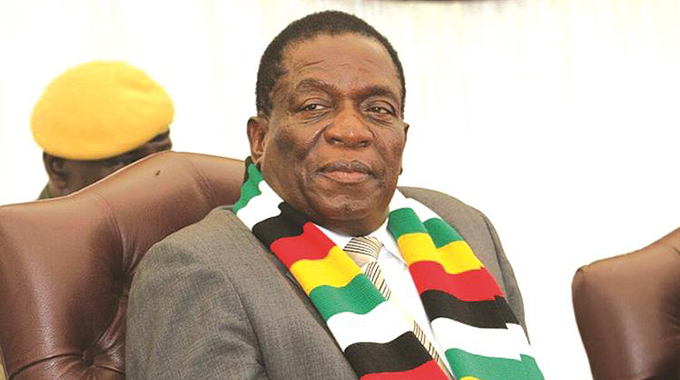
The 2013 Constitution introduced significant limitations on capital punishment, exempting women, individuals under 21, and those over 70 from execution. Mr Gandiwa attributed the eventual abolition of the death penalty to strong political will under President Mnangagwa’s leadership.
“These reforms, coupled with strong political will from His Excellency the President Dr ED Mnangagwa, paved the way for the eventual abolition of the death penalty in Zimbabwe,” said Mr Gandiwa.
“Ultimately, last year, Government enacted the Death Penalty Abolition Act (Chapter 9:26), a significant milestone in the country’s human rights journey. The Death Penalty Abolition Act (Chapter 9:26) outlawed the imposition of the Death Penalty.”
Under the new law, the Justice, Legal and Parliamentary Affairs Minister, the Prosecutor General, and the Commissioner General of Zimbabwe Prisons and Correctional Services are required to facilitate the resentencing of individuals previously condemned to death.
Mr Gandiwa said over the years, the country’s legal system found capital punishment to be degrading, with prison conditions for death row inmates violating human rights.
“As a result, the courts often commuted death sentences to life imprisonment. Several reported cases serve to demonstrate the fact that the death penalty should not be imposed indiscriminately.
“By interpreting fundamental human rights expansively and addressing human rights abuses, the courts continue to uphold fundamental rights in compliance with human rights Conventions and Treaties,” he said. — @nqotshili