Online Reporter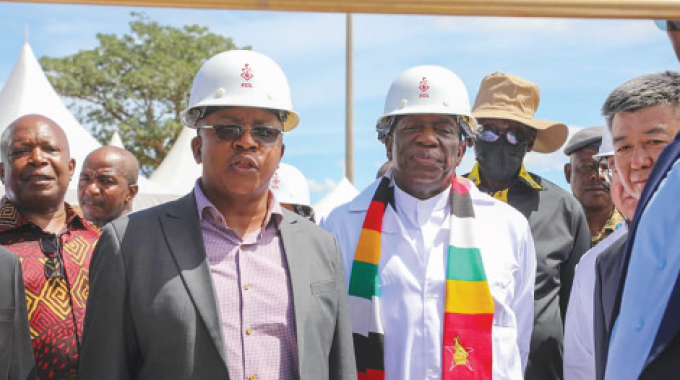
Nqobile Bhebhe, [email protected]
A VAST wilderness where elephants roamed freely in Beitbridge is on the cusp of an economic transformation with the development of the Palm River Energy Metallurgical Special Economic Zone (SEZ).
The US$3,6 billion project aims to establish Matabeleland as a hub for energy production and metallurgical industries, leveraging the region’s strategic location and natural resources.
It symbolises Zimbabwe’s push towards industrialisation, economic growth, and energy security, marking a significant shift from its natural heritage to a modern, industrialised economy.
On Monday, President Mnangagwa led a symbolic groundbreaking ceremony to officially launch the project.
The project will introduce stainless steel production.
Beitbridge, the country’s busiest border town, serves as a crucial gateway to South Africa and the rest of the SADC region.
Historically known for its hot, arid climate and diverse wildlife —including elephant populations —Beitbridge is now being transformed into a mega-city energy park designed to support energy-intensive metallurgical industries.
Covering 5 163 hectares, the project will be implemented in five phases over 12 years.
The first phase, which has a two-year construction period, involves an initial investment of US$237 million.
This will fund the annual production of 200 000 tonnes of ferrochrome, along with supporting coal mines, coking plants, and infrastructure.
Located near the Beitbridge Border Post, the project is strategically positioned to facilitate cross-border trade, attracting investors from Zimbabwe, South Africa, and beyond.
The SEZ will establish metallurgical processing plants, including facilities for steel, ferrochrome, and other mineral beneficiation processes.
The first phase — already completed — was a joint venture between the Government, Xintai Resources, and Tuli Coal.
A 100MW thermal power generation plant is currently being commissioned, with 50MW expected by the end of March.
Additionally, a coal wash plant with a capacity of 160 000 tonnes per year and a chrome smelting plant have also been completed.
The energy park will include a coking plant with an annual capacity of one million tonnes of coke, and ferrochrome smelting plant producing 100 000 tonnes of high-carbon ferrochrome.
A 1 200 MW thermal power plant, with surplus electricity supplied to the national grid is also part of the project scope.
The ferrochrome plant will also support special and stainless steel production.
The project will provide thousands of employment opportunities, significantly benefiting local communities.
Once completed, it is expected to create over 2 000 jobs.
Currently, more than 300 Chinese and 800 Zimbabwean workers — a total of over 1 000 personnel are already engaged in its implementation.
Matabeleland South Minister of State for Provincial Affairs and Devolution, Dr Evelyn Ndlovu, emphasised the project’s significance.
“We appreciate this kind of investment in our province, which signals the beginning of a long journey to industrialise Matabeleland South. This industrial park will play a crucial role in the attainment of the envisaged Vision 2030.”
By processing minerals locally rather than exporting raw materials, the project will drive value addition, boost export revenues, and create more jobs.
It will also foster skills development through training programmes, empowering local workers to participate in the country’s industrialisation efforts.
With Beitbridge’s status as a key border town, the SEZ will enhance regional trade, creating an industrial corridor linking Zimbabwe to South Africa, Botswana, Zambia, and Mozambique.
This aligns with the African Continental Free Trade Area (AfCFTA) initiative of promoting trade integration.
The project also highlights the growing economic and diplomatic ties between Zimbabwe and China.
Chinese expertise in metallurgy and energy production will be transferred to Zimbabwean workers and companies, enhancing local capacity and fostering innovation.
To support skills development, officials have announced a US$500 000 scholarship fund to sponsor Zimbabwean youth to study in China.
A partnership between Shanxi Engineering Vocational College and Harare Polytechnic is facilitating a
College-Enterprise project aimed at upskilling young professionals in metallurgy, mechanical engineering, and electrical engineering.
Additionally, plans are in place to establish a Metallurgical Centre of Excellence focused on value addition and beneficiation.
Xinganglian Metallurgy Company chairman, Mr Zhou Xudong, outlined the scholarship initiative.
“We firmly believe that a strong youth leads to a strong nation. To support this vision, the Palm River Special Economic Zone has committed US$500 000 to establish the Palm River Education Fund.
“Over the next few years, we will annually select five to 10 outstanding students from the Beitbridge region to receive scholarships.”
At the groundbreaking ceremony, Mr Huang Minghai, Economic and Commercial Counsellor of the Chinese Embassy, praised Zimbabwe’s economic potential.
“Zimbabwe is a nation brimming with potential — a land blessed with abundant natural resources, a vibrant cultural heritage, and a resilient, hardworking people.
“Under President Mnangagwa’s transformative ‘Open for Business’ policy, Zimbabwe has emerged as a beacon of opportunity,” said Mr Huang.
He noted that nearly half of the Chinese firms investing in Zimbabwe are in the mining sector and emphasised China’s mutual interest in mining cooperation with Zimbabwe.
“It is this spirit of openness, coupled with Zimbabwe’s immense potential, that inspired Shanxi Xinganglian Group to establish the Xintai Industrial Park — a testament to our shared vision of progress.”
As Zimbabwe continues on its path to industrialisation, the Palm River Energy SEZ stands as a symbol of progress and prosperity.