admin
admin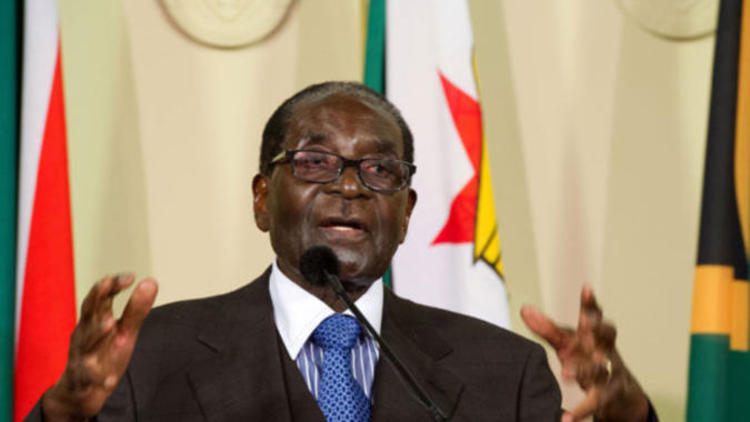
Mabasa Sasa on Isla de Margarita
A strong sense of unity and international co-operation are the biggest weapons small nations have to fight unilateralism that threatens their development, President Mugabe has said. Addressing the 17th Summit of the Non-Aligned Movement here yesterday, President Mugabe said the bloc had a decades-old tradition of advancing the causes of underdeveloped countries, and its founding principles were needed now more than ever in the face of interference by big powers in the affairs of emerging economies.
President Mugabe, who was singled out for honour by host President Nicolas Maduro and asked to address the Summit at the top of proceedings, also thanked NAM for opposing illegal Western sanctions on Zimbabwe.
He said, “Poverty is a threat to international peace and security and the wellbeing of people who are at the centre of Agenda 2030.
“We should therefore continue to speak out against unilateral actions that undermine efforts to address poverty and underdevelopment.
“Zimbabwe and other Non-Aligned Movement members continue to be targets of unwarranted sanctions from powerful countries who seek to use economic might to impose their will on others.”
President Mugabe went on, “We are grateful for the steadfast support and solidarity from the movement, and expect sustained efforts to have these heinous sanctions lifted.
“… let me (reaffirm) Zimbabwe’s commitment to multilateralism and to the movement’s principles; to support Non-Aligned Movement’s collective efforts to achieve peace, security, democracy, human rights, social and economic development for all mankind.
“Unity, solidarity and cohesion are our most potent weapons.”
Speaking soon after Iran’s President Hassan Rouhani handed over chairmanship of NAM to President Maduro, and United Nations Secretary-General Mr Ban Ki-moon’s televised address, President Mugabe said the bloc should “continue to be the torch bearers in the quest for peace and socio-economic development as guided by the principles of sovereign equality of states, non-interference in the internal affairs of states, respect of the right to self-determination, non-aggression, peaceful co-existence, and respect of the sovereignty and territorial integrity of states, and the resolution of conflicts by peaceful means”.
“These principles are as valid today as they were half-a-century ago. The propensity by some powerful member states to resort to unilateralism in pursuit of their selfish interests poses the greatest danger to international peace and security and the rule of law in our world today.
“The consequences of non-adherence to the principles of the United Nations Charter are there for all of us to see.
“Interventions, interference in the internal affairs of small and weak states, and the use of force at the slightest excuse have spawned a humanitarian crisis of unprecedented proportions in Afghanistan, Iraq, Libya and Syria.
“The propensity to use force or coercion in pursuit of hegemonic interests, military adventurism, regime change agendas, or the advancement of narrow foreign policy interests of a few states, is thus a matter of serious concern. These misguided interventions have not only created hotbeds and fertile breeding grounds for extremism and terrorism, but have also triggered unprecedented large-scale movements and displacement of people within and across continents.
“We, therefore, call for absolute supremacy of multilateralism in the peaceful settlement of disputes, a nuclear weapon-free world, and the right to nations to peaceful use of nuclear energy.”


 Online Reporter