admin
admin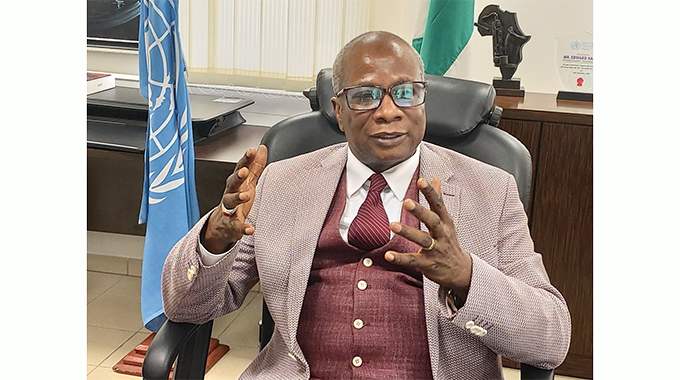
Mukudzei Chingwere Herald Reporter
The United Nations (UN) has praised Zimbabwe’s heritage-based education system 5.0 which has been configured towards improving the country’s local industrialisation capacity as a prerequisite for obtaining President Mnangagwa’s envisaged empowered upper middle income economy status by 2030.
The special praise was delivered by the UN Resident Coordinator in Zimbabwe Ambassador Edward Kallon when he addressed a public lecture at University of Zimbabwe (UZ) on United Nations Systems and Operations in Zimbabwe.
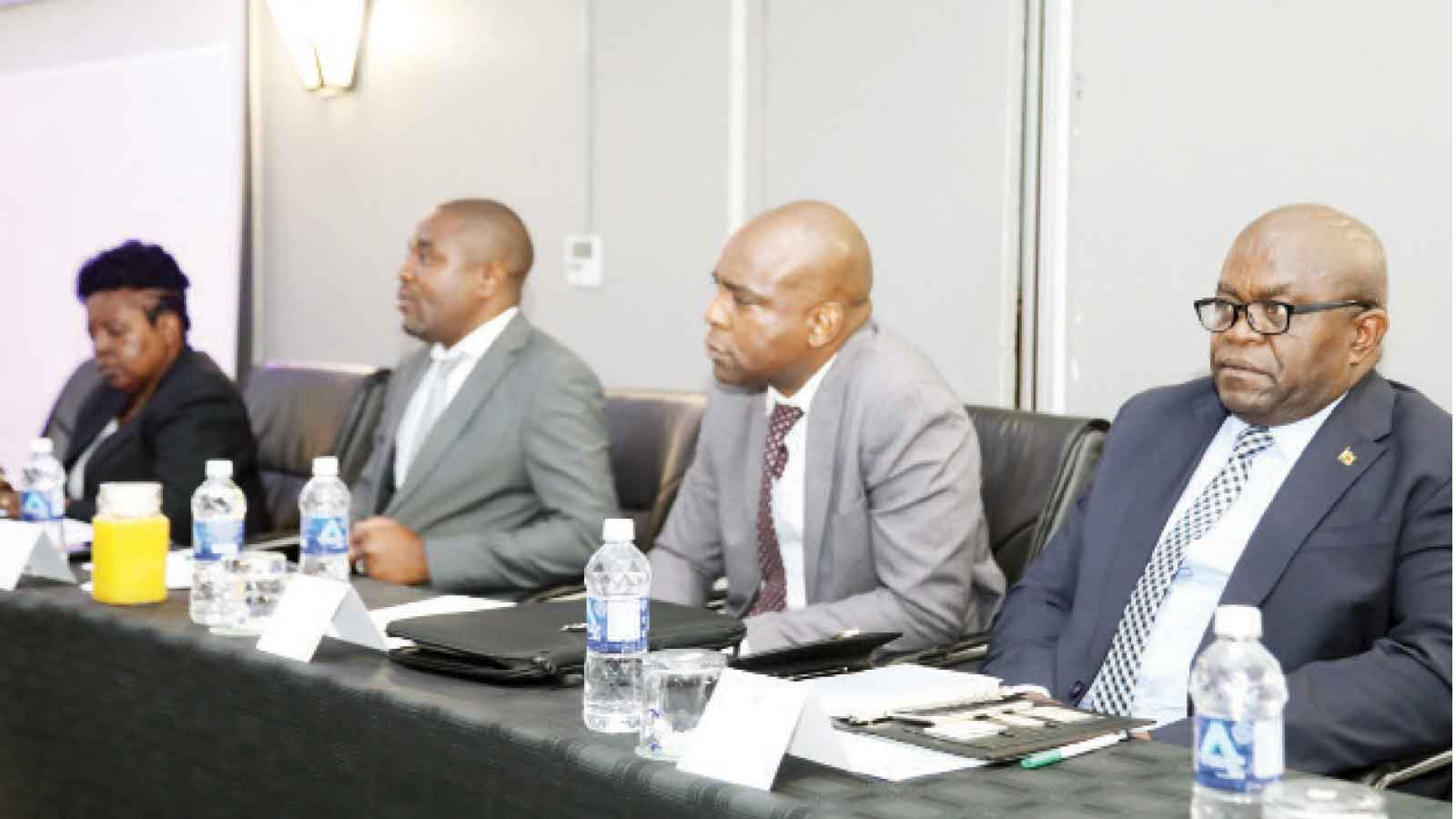
The lecture was organised by the Faculty of Social and Behavioural Sciences mainly for the benefit of students in the department of Governance and Public Management as part of the institution’s thrust to acquaint learners with real life or work experience as they prepare for a profession in diplomacy.
Under the education 5.0, Zimbabwe tertiary institutions have been configured to attain outcomes-focused on national development activities towards a competitive, modern and industrialised Zimbabwe and must zero in on problem-solving for value-creation.
During his lecture, the UN chief reserved special praise for Zimbabwe’s education system.
“Let me from the outset congratulate the Government of Zimbabwe for the education 5.0 strategy that they have developed over the years,” said Ambassador Kallon.
“To me it is in very simple terms making learning useful for you. For bringing education at the core of your development aspirations.
“It is a well-conceived concept and I am happy that transformation has started, you are now at a scholarship level where you want to deepen and entrench the concept of innovations, industrial parks etc. that will be critical in the development ethos of Zimbabwe.”
Ambassador Kallon’s lecture extensively focused on the Sustainable Development Goals (SDGs) three which focuses on good health and well-being and goal 13 which is to limit and adapt to climate change.
Zimbabwe, under the Second Republic, has had to navigate through rapid economic development under the albatross of illegal economic sanctions imposed by the West.
He touched on the illegal economic sanctions which have negatively impacted the country in forging ahead with its developmental plan, and Ambassador Kallon commented on the country’s debt resolution plan.
“You must have heard about the UN Secretary General’s SDG stimulus package, this was an initiative introduced in response to the Covid-19 pandemic.
“It aims to support developing countries in their recovery efforts and accelerated progress towards SDGs,” said Ambassador Kallon.
“We have the Zimbabwe high level debt and arrears clearance dialogue it has started. Unlike many other developing countries Zimbabwe faces significant challenges in accessing financing for development into important levels of debt and arrears.
“Madam (Cherryl) Mlambo has already talked about universal cohesive measures and its impact. The ongoing arrears and debts clearance dialogue with financial institutions such as the international monetary fund, world bank and other bilateral creditors is crucial for unlocking finance for achieving the SDGs in Zimbabwe.
“By addressing debt sustainability issues and implementing economic reforms Zimbabwe can attract investments and access financing that supports the achievement of SDG 3 and 13.
“These financing opportunities and initiatives provide avenues for countries to mobilise resources, attract investment and address key development challenges,” said Ambassador Kallon.
UZ Vice Chancellor Professor Paul Mapfumo said, “the University of Zimbabwe is undergoing a very radical transformation in which we have seen new programmes, entirely new programmes coming on board and retired old programmes.
“For the simple reason that we want a programmatic approach to teaching and learning, if we have oil we should see programmes on oil, if we have minerals we should see programs on minerals, if we have vulnerability to climate change we should see programmes that strengthen our resilience to climate change.
“So that you go to school for that which is relevant for your development, we have used a philosophy that anchors on our local language kuziva, kugona nekuita (ideate, innovate and industrialise),” said Professor Mapfumo.
Mrs Cherryl Mlambo who represented the Ministry of Foreign Affairs and International Trade at the lecture said Zimbabwe subscribes to the dictates of the UN.
She singled the Zimbabwe Defence Forces for being a leader in observing gender parity in UN missions.
“Regarding the Peace and Security pillar, Zimbabwe has 74 uniformed personnel deployed to the UN peace operations in Africa, 32 of them are male and 42 are females deployed in six different missions,” said Mrs Mlambo.
“The Zimbabwe Defence Forces has been applauded for being among the leaders of gender parity and its deployment to the United Nations peacekeeping missions at an average of 71 percent females’ ratio.
“Zimbabwe’s gender parity ratio is the second highest in the category of member States UN contributions, this ratio is far ahead of the recommended UN policy on gender parity,” said Mrs Mlambo.


 Online Reporter