

 dyton mupawaenda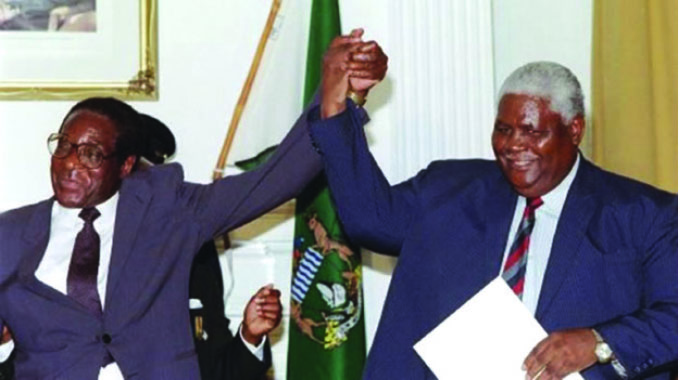
Bulawayo Bureau
YESTERDAY marked 36 years since two of Zimbabwe’s founding fathers signed the Unity Accord, which brought an end to civil disturbances also known as Gukurahundi in Matabeleland and parts of Midlands.
Since then, deliberate efforts have been made to try and rewrite the history of Zimbabwe that had been marred by the episode which includes fostering healing to the victims who suffered physical and mental wounds during the conflict.
Needless to say, what happened cannot be undone, we cannot wish away the traumatic memories but to usher in development in Zimbabwe, we have to get to a point where we talk about it in the spirit of forgiveness.
Many of us inherited the grudges that come with such sad memories from parents, and grandparents, and loved ones who became victims but we are not ready to talk about how this anger, carried on for years, is detrimental to individual well-being and the development of Zimbabwe.
The late former President Cde Robert Mugabe and the late Vice-President Dr Joshua Nkomo signed the historic Unity Accord, and the momentous occasion remains one of the pillars that hold Zimbabwe together as a republic and a unitary state.
While we reflect on how that one document brought an end to the disturbances, it’s a pain to note that thousands are still living in the shadow of that fateful moment through inherited grudges.
So deep are the grudges that they have even been passed on to other generations who despise forgiveness and would rather perpetuate hatred towards a certain group of people than foster healing which is essential for the development of Zimbabwe.
Health experts say those who struggle with forgiveness may bring anger and bitterness into new relationships and experiences and they become so wrapped up in the wrong that they can’t enjoy the present. They also become depressed, irritable or anxious, in addition to other challenges and the body cannot fully function with anger targeted at what happened years ago.
Loss of valuable and enriching connections with others is also another cost of inherited grudges and I can bet with my last dollar, hundreds have missed out on happy marriages, relationships, and even lifetime friendships simply because one belongs to a certain people whose forefathers did A, B, C years ago.
So this year, as we look back to that day, why not self-introspect and check if in any way we have tiny seeds of anger and hatred toward a certain section of society which if left alone can lead to another conflict?
Why does your heart pump faster than normal when you hear someone happily speak their mother language which is their right? Why can’t you accept that despite what happened, we are humans living on borrowed time; surely we cannot waste our short lives angry over what can be undone.
Bitterness is surely drinking poison and expecting someone else to die. Unforgiveness creates an emotional storm of distress in which feelings of stress, anxiety, depression, insecurity, and fear surface- which could be the root of why we, to some degree, are a sad and bitter nation.
Jacqueline Nkomo, a local psychologist said these generational grudges can eventually lead to hypertension, which is expensive to manage, and many other non-communicable diseases that we can do without.
“Some people are suffering from hypertension because they inherited anger from those who witnessed the atrocities in the 1980s. I am not saying we should forget, that will be sad but we cannot take a toll on our health because we want to cling to anger over something that happened. Even if we are angry, it won’t change the reality but our quality of health will erode slowly but surely,” she said.
“We model our children to react to the situation the way we want and sadly we have been spreading messages of hatred instead of unity. As we celebrate unity, may we foster healed communities and families, may we change history by accepting that the atrocities happened but that doesn’t mean we should be lifetime slaves of generation grudges.”
She said as the nation forges towards healing, people should face their fears and talk about what happened, not as a way to justify hatred toward other people, but as a way of releasing the anger that puts them at risk of deadly diseases.
“This year may we deliberately choose to open up, even to each other, cry, and heal as individuals so that we live longer to see the freed and developed Zimbabwe that our forefathers paid for with their lives,” she said.



 Online Reporter