

 Online Reporter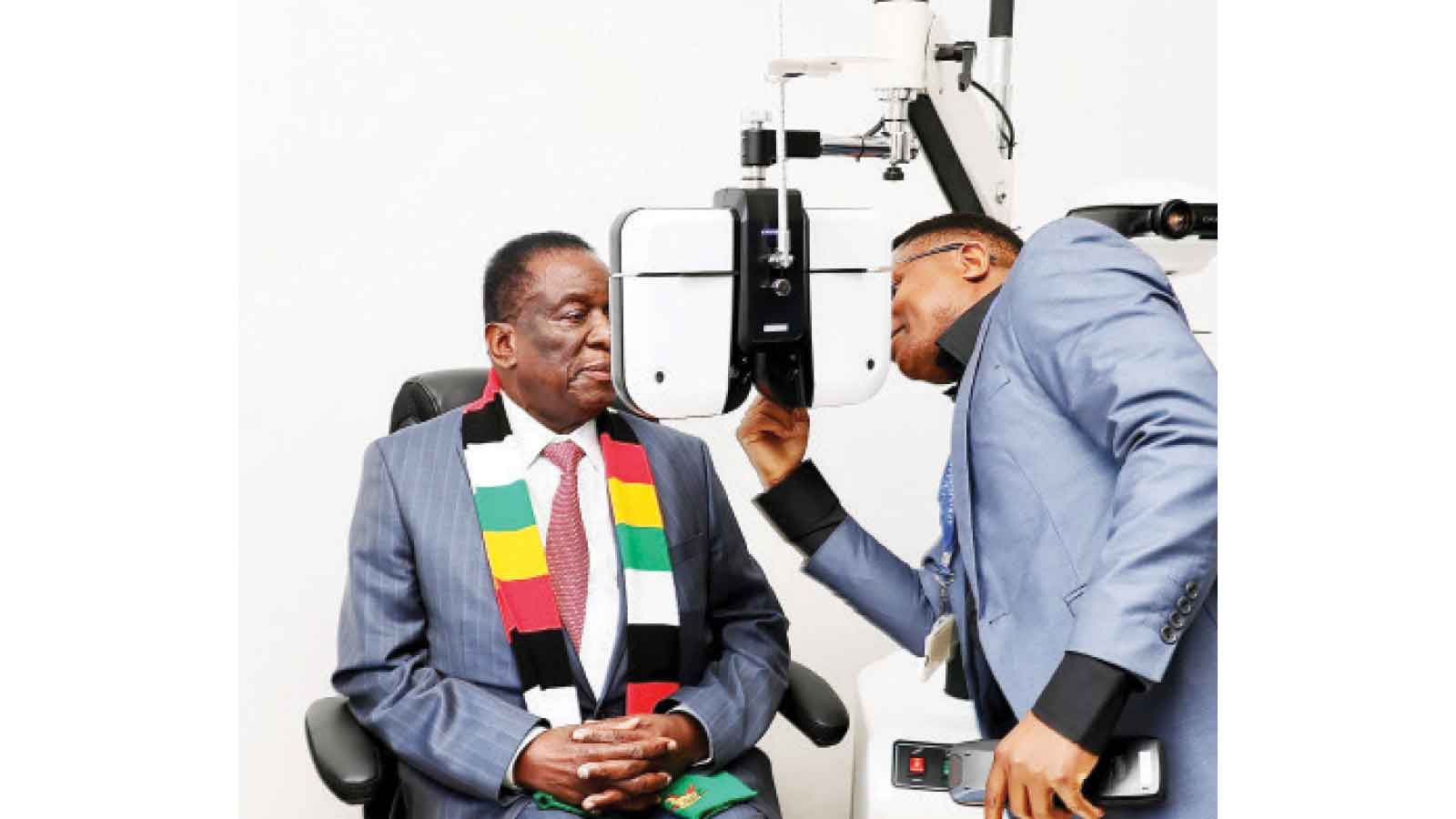
Zvamaida Murwira
Senior Reporter
UNIVERSITIES and other institutions of higher learning have transformed from confining themselves to being classrooms and lecture theatres to becoming active participants in research, innovation, enterprise development and industrialisation anchored on the Heritage-Based Education 5.0 that seeks to produce goods and services.
Higher and Tertiary Education,Innovation, Science and Technology Development Minister Dr Frederick Shava was speaking at the commissioning of the University of Zimbabwe Industrial Incubation Hub in Msasa and Specialist Medical Centre in Avondale by President Mnangagwa.
“My ministry is proud that the University of Zimbabwe has embraced, in both letter and spirit, Zimbabwe’s industrialisation and modernisation agenda through science, technology and innovation.
“Under your visionary leadership and as guided by the Heritage-Based Education 5.0 philosophy, our universities are no longer confined to classrooms, lecture theatres and libraries, but are now active participants in the innovation space, industrialisation, enterprise development and community transformation,” said Minister Shava.
In recent years, UZ had come up with major projects that had seen it winning several awards. Apart from that, he noted that there has also been tremendous progress in support of the country’s industrialisation and modernisation agenda.
He described the UZ Specialist Medical Centre, as a complete package with functional eye and oral health units.
“The equipmentation of the in-vitro fertilisation and trauma sections is ongoing. Your Excellency, this is a clear demonstration of your vision to provide specialised health care services for all by 2030,” he said.
“I am happy that the university has set up an Industrial Incubation Centre to accommodate innovators graduating from the Innovation Hub. This centre will not only support industrial productivity, but also give young people a greater chance to participate actively in our economy.”
He said there were several start-ups found at the Industrial Incubation Centre.
“The 11 start-ups resident at the Industrial Incubation Centre range from pharmaceuticals and health, cosmetology, transport, energy, education, agriculture, engineering, and ICT, and are slowly penetrating the market. For example, farmers in Muzarabani and Mt Darwin have entered into a climate-resilient sorghum seed multiplication scheme with the University’s VN Seeds (Pvt) Ltd start-up for the second year running,” he said.
UZ Vice Chancellor Professor Paul Mapfumo said the commissioning of the two projects came out of the institution’s growing research-innovation-industrialisation ecosystem.
“Since the coming in of Zimbabwe’s New Dispensation under your astute and visionary leadership, Your Excellency, the University of Zimbabwe has deliberately repositioned itself into a dynamic and comprehensive research and innovation-driven institution.
“The University of Zimbabwe Industrial Incubation Centre serves as a premier catalyst for start-up incubation, meticulously refining prototypes into market-ready enterprises capable of industrial-scale impact,” said Prof Mapfumo.
“I am pleased to inform you that the Industrial Incubation Centre is equipped with high-tech machinery that will enable the manufacturing and machining of engineering equipment and components that service the energy, water, agriculture, mining and manufacturing sectors.
“Most of these parts are currently being imported. This is part of our growing evidence that our start-ups will contribute to our day-to-day industrial and manufacturing processes.”
On health, Prof Mapfumo said the Specialist Medical Centre will make it possible to address the growing demand for specialist services in eye care and oral health.
“Data available indicate that 33.5 percent of children aged between 1 and 9 years in Zimbabwe have untreated dental caries in primary teeth, while 28.1 percent of individuals aged five years and above have untreated dental decay in permanent teeth. This highlights the significant burden of oral diseases and the urgent need for expanded specialist oral healthcare training and services,” he said.
“Approximately 125 000 Zimbabweans are blind, but nearly 80 percent of these cases are avoidable or treatable through timely intervention. Cataracts remain the leading cause of blindness, affecting an estimated 62 500 people and contributing to a national cataract surgery backlog of approximately 60 000 operations.”
He said Zimbabwe continued to face significant shortages of specialist eye-care professionals, with approximately one ophthalmologist serving more than 600 000 people and only about 65 optometrists currently available nationwide.
“This shortage contributes to long waiting times for specialist eye surgery, limited access to eye-care services, delayed diagnosis of glaucoma and retinal diseases, and increasing levels of preventable blindness.
“The University of Zimbabwe is the only university that trains dental surgeons and ophthalmologists. This facility will provide the specialist services and train the much-needed highly skilled human capital,” he said.
Earlier on, President Mnangagwa toured the Industrial Incubation Centre in Msasa and the Specialist Medical Centre in Avondale.
The event was attended by Vice President Kembo Mohadi, Cabinet Ministers, academics and senior Government officials.


