Online Reporter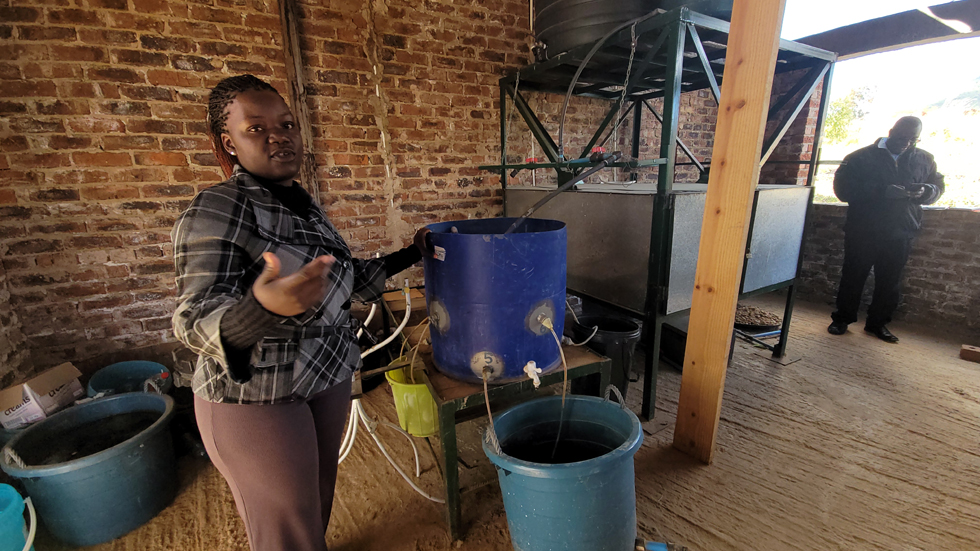
Ray Bande
Post Reporter
A GROUNDBREAKING innovation by Manicaland State University for Applied Sciences (MSUAS) – the Percolation Leaching Process – is poised to transform the artisanal gold mining sector as an estimated 300 kilogrammes of gold valued at about US$21 million will be recovered annually, The Manica Post has established.
The Percolation Leaching Process innovation won second prize at the Presidential Innovation Fair in 2024, and scooped US$3 000 in cash that enabled the institution of higher learning to pursue the patenting process to secure intellectual property rights and pave way for commercialisation.
In an interview, Executive Dean of Research, Innovation, and Postgraduate Studies, Dr Crispen Bhukuwani emphasised the potential impact of the innovation.
“Collectively, these innovations have the potential to yield transformative results. Even a conservative one percent increase in gold recovery across the artisanal sector could equate to an additional 300kg of gold recovered annually, representing approximately US$21 million in added value. Such gains will significantly boost incomes for miners, many of whom operate at or near subsistence levels, while also increasing gold revenue for the country,” he said.
Despite operating with limited resources, small-scale miners play a vital role in Zimbabwe’s gold sector, accounting for an estimated 67 percent of gold delivered to Fidelity Printers and Refiners, the country’s official gold buyer.
This significant contribution highlights the sector’s economic importance and presents a crucial opportunity for growth.
Improving gold recovery methods among artisanal miners could result in substantial gains for both miners and the broader national economy.
However, many small-scale miners currently rely on traditional percolation leaching techniques to extract gold from the ore, which faces technical and environmental challenges that limit its effectiveness.
Addressing these challenges and adopting more efficient gold recovery methods, small-scale miners can increase their yields, improve their livelihoods, and contribute even more significantly to the national economy.
Assistant lecturer in the Metallurgy Department, Ms Fortunate Charangwa said: “These include inconsistent solution concentrations, uneven distribution of leaching solutions, depletion of atmospheric oxygen in the leaching beds, and gold losses due to pregrobbing, where carbonaceous materials in the ore reabsorb dissolved gold. These inefficiencies, not only reduce recovery rates, but also lead to higher costs, longer processing times, and environmental risks. To address these persistent challenges, researchers with the MSUAS’ Department of Metallurgy have developed an innovative percolation leaching system specifically tailored for the artisanal mining context.
“This new design introduces several key features that together optimise the gold recovery process, improve safety, and reduce environmental impact. This ensures a uniform flow through the ore bed, minimising channeling and improving the contact between gold particles and the chemical reagents.”
Ms Charangwa said one powerful improvement is the replacement of timber components with durable, low-cost alternative materials that help distinguish between the ore and filter beds, while enhancing system longevity and safety.
“Additionally, a bottom-filling pipe is included to displace air evenly, allowing for better infiltration of the leaching solution. This method enhances oxygen availability within the system, which is essential for the chemical reactions that dissolve gold. A top-mounted mixing tank further improves the process by ensuring that reactants typically cyanide and oxidising agents are mixed to optimal concentrations before being introduced to the ore. This eliminates the variability seen in many traditional systems, where miners mix solutions by eye or estimation. The inclusion of arrowhead structures within the leaching tank increases the surface area for atmospheric oxygen dissolution, which is vital for efficient leaching reactions.
“One simple but powerful improvement is the replacement of timber components with durable, low-cost alternative materials that help distinguish between the ore and filter beds while enhancing system longevity and safety. These material innovations reduce operational costs and the risk of structural failure during processing,” she said.
Equally important is the introduction of a movable, low-cost tent system that shelters the leaching tanks.
The tent serves multiple purposes – it prevents chemical dilution from rainfall, helps maintain optimal temperatures for chemical reactions, and reduces the risk of spillages that can harm workers or contaminate the environment.
Being portable, the tent setup supports flexibility in mining operations; allowing miners to relocate easily while maintaining processing efficiency and safety standards.
This project is the result of a collaborative effort between academic researchers and artisanal mining communities, with funding provided by the Research Council of Zimbabwe and the Science Granting Council Initiative.
The partnership ensures that the technology is grounded in local realities, and can be effectively adopted by those who need it most.
Beyond immediate recovery gains, the benefits of the system are far-reaching.
“Shorter processing times will allow for more production cycles within a given period, while optimised chemical use and improved oxygenation will reduce overall reagent consumption. The introduction of safer, more sustainable practices will also help align Zimbabwe’s ASGM sector with international environmental and labor standards,” said Ms Charangwa.
The development of an innovative percolation leaching system tailored to the needs of artisanal gold miners is a significant breakthrough.
By improving recovery rates, lowering operational costs, and enhancing safety, the approach empowers small-scale miners who already contribute most of the country’s gold to become even more productive and sustainable.
With continued support, this technology holds the potential to catalyze widespread improvement in the sector and make a lasting impact on Zimbabwe’s economy.
Situated in Manicaland – a province richly endowed with mineral resources such as gold and diamonds – MSUAS was naturally inspired to pursue research and innovation in the mining sector.
This strategic alignment between local resources potential and academic inquiry led to the development of a groundbreaking innovation, which was adjudged as the second-best innovation in the Mining Category at the 2024 Presidential Innovation Fair.
The innovation was further recognised with a US$3 000 cash prize, affirming MSUAS’ growing reputation as a hub for applied research and impactful technological solutions.