Online Reporter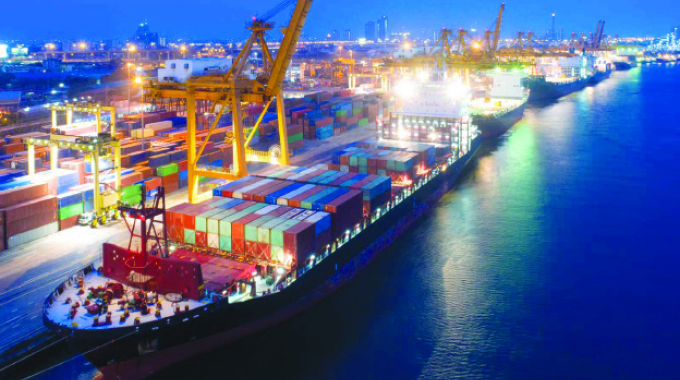
Lucid Chirozva and Gwinyayi A. Dzinesa
The Third United Nations Ocean Conference (UNOC3), scheduled to take place in Nice, France, from June 9 to 13, 2025, presents a critical opportunity for Zimbabwe to assert its interests in the international law of the sea and maritime affairs, which are essential for national and continental development.
Co-chaired by the governments of France and Costa Rica, the conference aims to accelerate action and mobilise all stakeholders to conserve and sustainably use the ocean, supporting the implementation of Sustainable Development Goal 14 (SDG14).
SDG 14 is titled; “Life below Water” and it emphasises the conservation and sustainable use of oceans, seas and marine resources.
UNOC3 will focus on three key priorities: completing multilateral processes related to the ocean, mobilising financial resources for SDG14, and strengthening and disseminating marine science knowledge.
This conference builds upon the previous UN Ocean Conferences held in New York, United States (2017) and Lisbon, Portugal (2022).
Although Zimbabwe is a landlocked country, which might seem to make it an unlikely participant in discussions centred on ocean health, this perspective is overly simplistic.
There was, indeed, quite a furore, particularly from opposition parties, when former president Robert Mugabe led a substantial delegation from Zimbabwe, including ministers of foreign affairs and environment, water and climate, to the 2017 UNOC in New York.
However, this viewpoint overlooks the fact that, like other landlocked nations in Africa, Zimbabwe is profoundly impacted by maritime activities, policies, and rivalries.
Engaging in multilateral processes related to the ocean and the law of the sea is crucial for Zimbabwe to secure its economic interests and improve its regional and international standing.
The law of the sea, particularly the United Nations Convention on the Law of the Sea (UNCLOS), provides a framework that can significantly benefit landlocked states, allowing them to navigate complex maritime issues and leverage potential opportunities.
Zimbabwe depends on coastal neighbours such as Mozambique and South Africa for access to ports and shipping lanes. By actively participating in discussions related to the law of the sea and maritime affairs, Zimbabwe can advocate for its rights to transit and access maritime trade routes.
Under UNCLOS, landlocked nations are entitled to “freedom of transit” through the territories of coastal states to access international shipping lanes.
Investing in the law of the sea allows landlocked states to strengthen these rights, ensuring smoother trade routes that facilitate their imports and exports.
This is particularly important for shaping the dynamics of the African Continental Free Trade Area (AfCFTA) agreement, especially concerning cooperation between landlocked and coastal states and ensuring the safety and security of shipping lanes vital for trade.
Participation in UN Ocean Conferences demonstrates Zimbabwe’s commitment to SDG14.
At the 2017 UNOC, president Mugabe highlighted that, although landlocked, Zimbabwe, like coastal nations, suffers from poor ocean management.
He stated, “The oceans and the seas are a vital resource to all of us, irrespective of our geographical location on this planet . . . Developments around or under the oceans affect coastal and land-locked countries alike, admittedly with varying degree.”
Therefore, it is essential for Zimbabwe to advocate for sustainable practices in oceans and waterways while aligning its development strategies with global standards, contributing to an international narrative that emphasises sustainability and environmental stewardship.
Zimbabwe’s support for SDG14 at UNOCs is strategically tied to the blue economy, which refers to the sustainable use of ocean resources for economic growth, social inclusion, and environmental protection.
Africa possesses abundant marine resources, including fisheries and offshore hydrocarbons, which are critical for advancing the blue economy.
Currently, this sector generates approximately US$296 billion in revenue and employs 49 million people.
These figures are projected to rise to US$405 billion and 57 million jobs, respectively by 2030.
While landlocked states like Zimbabwe do not directly control essential ocean resources, they can significantly benefit indirectly through collaboration with coastal nations, thus enhancing their economic resilience and contributing to a more integrated and prosperous Africa in alignment with the African Union’s Agenda 2063 vision.
Aspiration 1, goal number 6 of the Agenda emphasises the prioritisation of the blue/ ocean economy for accelerated economic growth.
For landlocked Zimbabwe, investment in international maritime processes such as UNCLOS and UNOCs is not merely a matter of legal or symbolic engagement; it is a strategic imperative that can unlock economic opportunities and enhance diplomatic relationships, crucial for the country’s growth and development.
By actively participating in global discussions and frameworks related to the oceans, Zimbabwe can ensure that its voice is heard, advocate for equitable access to resources, and foster cooperation with its coastal neighbours.
Additionally, Zimbabwe must continue to build its domestic legal and institutional capacity in the implementation of SDG 14 and to engage in the blue economy.
By developing expertise in maritime law, Zimbabwe can create stronger legal frameworks that protect its interests.
This capacity building can extend to training diplomats, lawyers, policymakers and practitioners, enabling the country to engage more effectively in international negotiations, such as at UNOC3, and to efficiently implement any outcomes domestically.
Lucid Chirozva is a member of the Department of International Relations and Diplomacy at Africa University
Gwinyayi A. Dzinesa is a Senior Research Fellow with the Institute for Pan African Thought and Conversation (IPATC), University of Johannesburg and the Institute for Justice and Reconciliation (IJR), South Africa