Online Reporter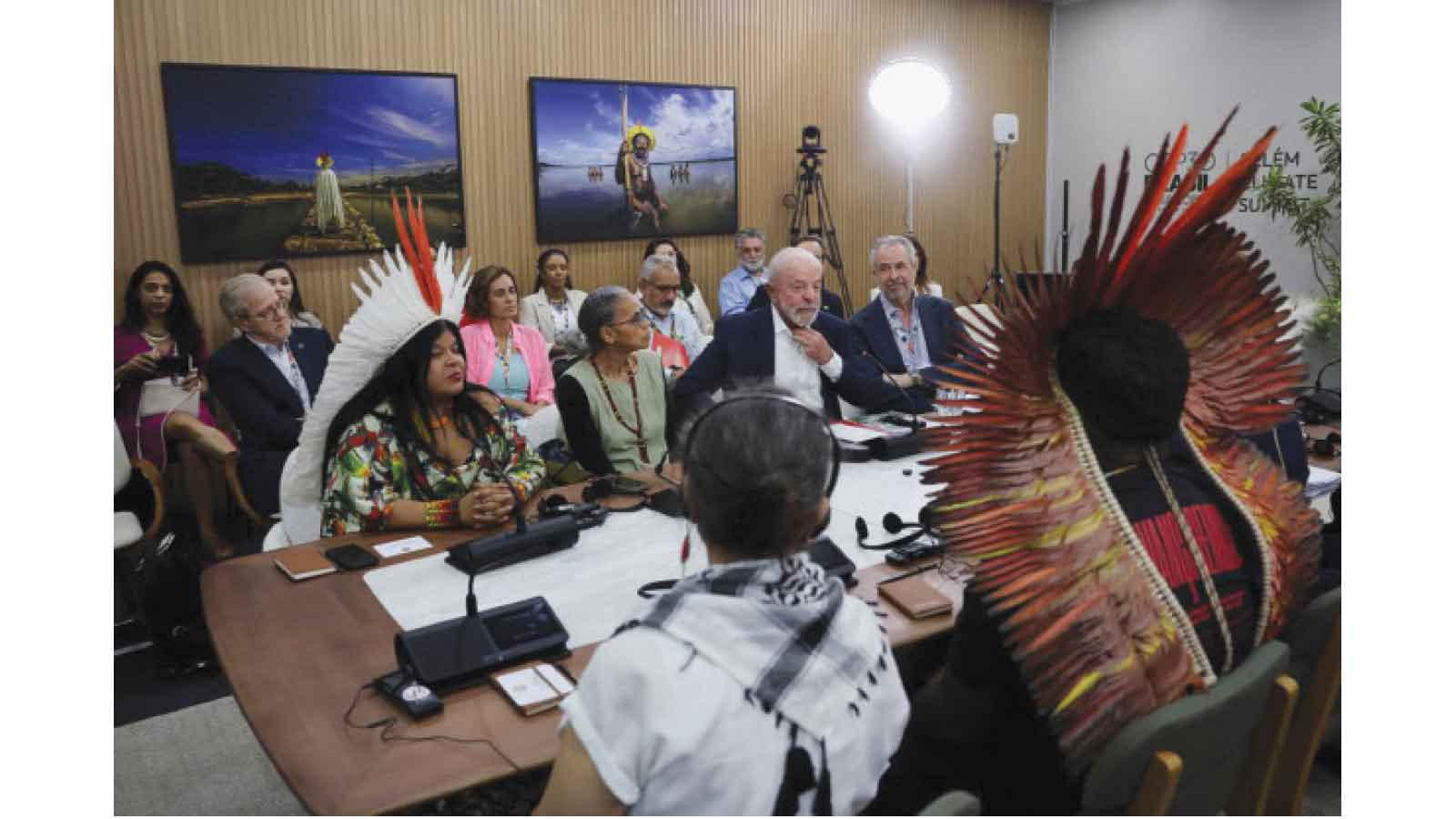
Sam Matema-Correspondent
As the Conference of the Contracting Parties (COP30) under the banner of the United Nations Framework Convention on Climate Change (UNFCCC), which ran from November 10 to 21, 2025, came to a close in Belem, Brazil, there were too many empty chairs.
Top leadership in the chairs was sparse and uninspiring, looking ahead at the future life of the Paris Agreement. All the indications and gap reports are pointing to and painting a gloomy picture as far as the climate change war is concerned.
We seem to be chasing a moving target and fighting a losing battle, if not a lost one. The current emission, adaptation, implementation, and finance gap reports indicate that we are far away from where we are supposed to be in terms of set global targets and agreed Nationally Determined Contributions (NDCs) with respect to both mitigation and adaptation.
Country profiles
The G20 countries contribute upwards of 80 percent of the greenhouse gas emissions and the attendant global warming and the planetary crisis. Africa contributes less than five percent of the total greenhouse gas emissions, but bears the greatest burden in terms of climate change shocks. At the opening ceremony in Belem, the notable empty chairs were for the United States, China and India.
In light of the aforesaid differentiated contributions, it is clear that there is need to push hard and ensure that there is some mechanism to cause the global north and the G20 countries to do more in terms of availing resources for both mitigation and adaptation in the global south.
Voluntary COP
Post the Paris Agreement in 2015, COP remains a voluntary organisation which does not have the legal stamina to get members to account for their transgressions. Therein lies the major limitation to the intentions.
The US, China and India are not attending Belem and that is telling and instructive. On October 31, 2025, the US, through its Department of Energy, issued a Notice of Funding Opportunity (NOFO) for the restoration of America’s coal plants.
A US$100 million fund is available as a vehicle to actualise the initiative. In terms of the green transition and the net-zero target, this is a massive contradiction and a scandal and disaster of Hiroshima proportions.
Resource mobilisation
Mobilisation should be towards instruments that are green and clean, and everyone must participate within an enabling legal framework, which our parliaments must help craft.
The role of the private sector in the climate change space in the global south has been minimal and insignificant because they don’t seem to see where their money and value reside.
Mandatory ESG reporting for every corporate body can only be possible if there are binding legal provisions. There is need for deliberate and intentional legislation that will cause all corporate bodies to be climate sensitive in terms of their budgeting and corporate social investment (CSI) allocations.
There has to be some minimum threshold for climate change provisions in terms of budgetary allocations across sectors, bearing in mind that we are inter-sectionally intertwined and interwoven to the health and state of the environment with sustainability being front and centre of all interventions.
Strategic role of Parliament
The role of Parliament is broadly to legislate, represent, pass the Budget and oversight. It is about time that parliaments in different jurisdictions, given the transboundary nature and intersectional impact of climate change, begin to be climate-sensitive across all sectors and roles.
Legislatively, there has to be a deliberate effort to align legislation, so that it speaks to current and emerging issues around mitigation and adaptation with respect to planning and anticipation.
In the Zimbabwean context in the third session of the 10th Parliament, the Mines and Minerals Amendment Bill, and the Climate Change Management Bill that are before Parliament are a good example of what parliament can do to remain relevant to obtaining contemporary issues. This is an attempt to arrest, as responsible stewards, the environmental degradation that has ravaged the natural state to the extent that it cannot self-regulate and self-correct.
With respect to budgeting, Parliament, because it holds the purse, should push for a bigger percentage that is allocated to climate change programmes alive to the existential nature of the subject.
In other words, there has to be some deliberate effort to come up with a national Budget that is climate sensitive.
Representatively, legislators are relevant to the extent of their knowledge of the climate change discourse. It is, therefore, pertinent that legislators are capacitated on matters of the environment and climate change, so that they interface with their constituencies from an informed position.
In terms of programming and projects, there is need to be intentional, to the extent that a sizable chunk of the Constituency Development Fund (CDF) should be allocated to climate change activities. After all has been said and done, it counts for nothing if there is no implementation in the context of the provided legal follow-up mechanisms via some prescribed oversight.
Parliamentary portfolio committees should be thorough, strategic and capacitated in order for them to be effective and relevant as they carry their mandates with respect to the ministries they preside over.
Green, clean communities
We now need to be deliberate and set up green and clean energy corridors looking inwards for resource mobilisation.
In other words, this must be structured and anchored on domestic resources. Our energy mix must reflect the realities on the ground and the inherent threats. Severe drought makes hydropower vulnerable, but solar is in abundance.
How do we leverage on the abundant lithium we locally have and the green alternatives?
All stakeholders
climate conference
This is long overdue if ever we entertain the chances of aligning everyone on this existential matter. There is need for a conference that will give birth to a position paper with clear deliverables, action items, funding mechanisms and timelines.
Legislators will be key again as they will be at the forefront of implementing green and clean energy projects in their constituencies in a deliberate and intentional manner. The quantum of the Constituency Development Fund (CDF) for Zimbabwe should be reviewed upwards.
In Zambia, Members of Parliament get 40 million kwachas, which is the equivalent of US$ 1,8 million, in Botswana and Nigeria, they are given US$1 million for projects in their constituencies. With a paltry US$50 000 for Zimbabwe’s National Assembly members, implementation of mitigation and adaptation efforts and programmes will remain a pipedream if we don’t address the quantum of our CDF and other critical aspects that facilitate seamless execution.
Sam Matema is the National Assembly Member for Buhera Central Constituency, Portfolio Committee Chairperson of the Parliamentary Portfolio Committee on Environment, Climate and Wildlife, and Provincial Secretary for Administration (Manicaland Province). He writes here in his personal capacity.