

 admin
admin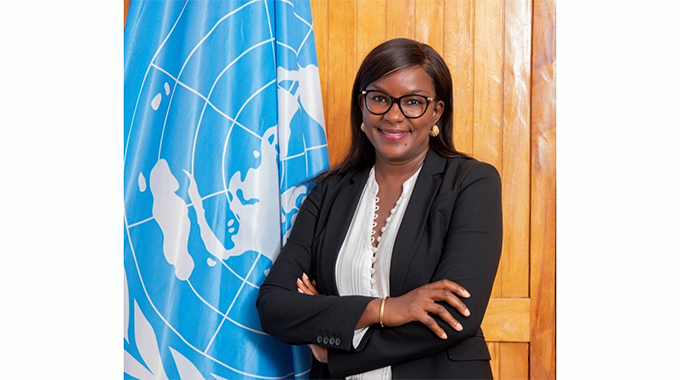
Elita Chikwati-Features Editor
IN a move demonstrating the country’s commitment to investing in women’s free participation in politics and decision-making processes, women politicians last week launched the Women’s Charter to ensure they equally contribute towards the creation of a conducive environment for their involvement in the forthcoming 2023 harmonised elections.
The charter is a step to ensure that women’s views, perspectives and needs are heard, actioned upon and actualised into practicable efforts to realisation of gender equality.
The charter notes that patriarchy has remained rooted in cultural and religious beliefs, stereotypes and myths and societal construct which shape the notion of men being comparatively more able to lead, making leadership a predominantly male domain.
The document calls upon Government to enact a broader sexual harassment law which incorporates harassment in political spaces and ensure that perpetrators are held accountable.
Political parties are required to design a gender responsive candidate selection process in consultation with members representing women of all ages and abilities.
The political parties are also expected to ensure gender responsive budgeting and funding of candidates.
“Political parties must create a special independent fund available to financially support women of all ages and abilities accepted as electoral candidates,” read the charter.
The parties were also urged to review and update party policies and procedures to ensure provisions of zero tolerance of violence against women.
At the launch, it was noted that women constituted 52 percent of the population, but were under represented in politics due to several reasons such as lack of confidence to join politics, inadequate political networks, lack of resources and funding for campaigns, low access to information, negative coverage by the media and violence including hate speech, cyber bullying, and physical and sexual violence.
Political parties represented at the launch; Zanu PF, CCC and MDC–T welcomed the development and pledged to work hard to ensure the Women’s Charter becomes a reality.
Launching the charter, Minister of Women Affairs, Community, Small and Medium Enterprise Development Sithembiso Nyoni urged women not to be discouraged, but to unite for a worthy cause.
“We are getting somewhere, let us not be discouraged. We are learning from our leadership,” she said. “The leadership positions in the public sector of the 58 entities we considered, more than 10 of those are 50 percent and above women, over 10 of those are also 40 percent and above percent, 30 percent and above, we are 62 percent.
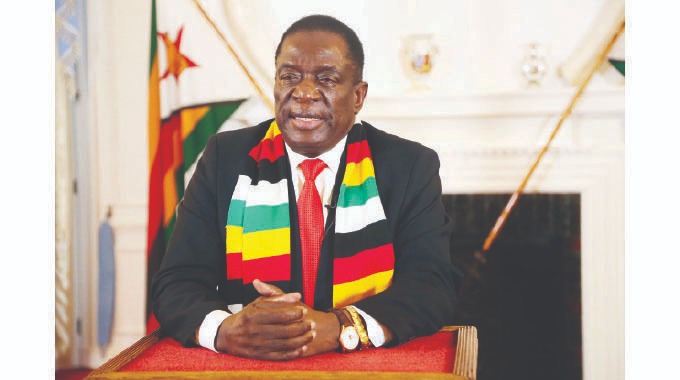
“I assure you that our President, President Mnangagwa, is committed to the issues of women. These statistics show he is leading by example. For instance, when you look at the Ministers of State, he has 50-50 when you look at the principals for State owned teachers’ colleges there are 57 percent. We are more than 50 percent. Others parastatals we are 50-50.
“Let us keep pushing. We have a starting point to move forward.”
Zanu PF deputy secretary for Legal Affairs Cde Fortune Chasi said the party recognised the role played by women in liberating the country and came up with strategies to ensure an increased participation of women in politics.
Cde Chasi said there was also need to include men when talking about gender issues to achieve equality.
“We have a vibrant and strong Women’s League which is an integral part of the politics of this country,” he said. “Our women played a significant role in the liberation of this country. Women fought side by side with man and so there was equality in terms of responsibility.
“Sadly, after independence we have not given sufficient credit to the role played by women during the liberation of the country.
“This is the context in which as a party we consider that the major political actors in our political activities are women.
“Consider attendees at rallies, it is mainly women. Look at the numerical supremacy of women in the national demographics, there more women than men and the irony is that when it comes to occupations of critical positions, there are more men than women.
“We also recognised that unless men are part and parcel of these discussions, we are not going to achieve much. Women play a critical role in the family. There is a natural association between a women and a child and so women have an important role in terms of training children inculcating them with the ideology of equality between male and female.”
Cde Chasi urged women to work hard so they could unlock opportunities.
“This is a matter close to the hearts and minds of Zanu PF,” he said. “We are taking measures to ensure that there is greater and increasing participation of women in our political activities and Governmental process.
“There is great work underway to advance the women’s cause. The charter will be the subject of spirited discussion within our part.”
UN Women country representative Ms Fatou Aminata said women’s equal political participation and representation was key to unlocking the transformational change needed to achieve a sustainable future.
“Numbers are important in challenging stereotypes, changing mindsets and negative perceptions. Women leaders must aim to wield influence, use their voice and platforms to transform systems and help build more gender equal societies,” she said.
She expressed concern that globally, women were under-represented in leadership positions in all spheres.
“Only 21 percent per cent of government ministers globally are women, with only 14 countries having achieved 50 percent or more women in cabinets,” said Ms Aminata. “Only 26 percent of all national parliamentarians globally are women and only 32 countries in the world have over 40 percent women representation in parliament, five of which are in Africa.
“This low political representation of women remains a significant setback to the achievement of democracy and a failure to adhere to international and regional normative standards on gender equality as articulated in CEDAW, Beijing Platform of Action, Maputo Declaration and SADC Protocol among others, of which Zimbabwe has committed to uphold.”
Ms Aminata urged political parties to help fulfil women’s rights to equal participation and representation.
Malawi Women’s Parliamentary Caucus chairperson said there was need for women participating in politics to have access to resources so they could fund campaign activities at their constituencies.
“Who stigmatises a woman, is it a fellow woman or the other gender? After elections we should get the answer.
“We also hope our stakeholders will avail funding to women early before and after elections,” she said.
Zimbabwe Gender Commission chairperson, Commissioner Margaret Mukahanana Sangarwe said the Constitution of Zimbabwe in Sections 17, 56, 67 and 80 supported the equal participation of women in political and other decision-making positions.
“A number of barriers continue to hinder women’s full and effective participation in politics and public life. In 2019, the Commission with support from HIVOS commissioned a Gender Audit of the three main political parties in Zimbabwe,” Commissioner Mukahanana Sangarwe.
“The audit noted that persistent under-representation of women in politics and decision-making is influenced by various factors which range from legal, structural and administrative barriers entrenched in patriarchal norms and values. Chief among the barriers are gender blind political parties’ constitutions, processes, policies and structures.
“Political parties continue to act as gatekeepers to women’s increased representation and participation as they determine who can compete for political leadership and by extension, who can then be considered for appointment by the executive.
“Actions such as allocation of constituency seats with minimum opportunities for women to win, direct or indirect gender-based discrimination in party procedures and practices, hostile environment and lack of gender-sensitivity in candidate selection and outreach, coupled with an inequitable distribution of party resources among party structures and candidates are some of the complex challenges faced by women within political parties. These challenges should be addressed.”
MDC-T vice president Ms Paurina Mpariwa said women should unite and work together despite political affiliation.
She raised concern over negative coverage of women by the media.
“We should unite in flesh as women before we have out won political parties. We are sisters and we should work together,” she said.
CCC councillor Kudzai Kadzombe said the major obstruction was culture which denied women space in other spheres other than the kitchen.
“Men dominate financial systems to dominate and manipulate women,” she said. “At times as women we also fight each other on behalf of male counterparts. We should unite if we are to emancipate ourselves.”


 Online Reporter