malvernmugadzikwa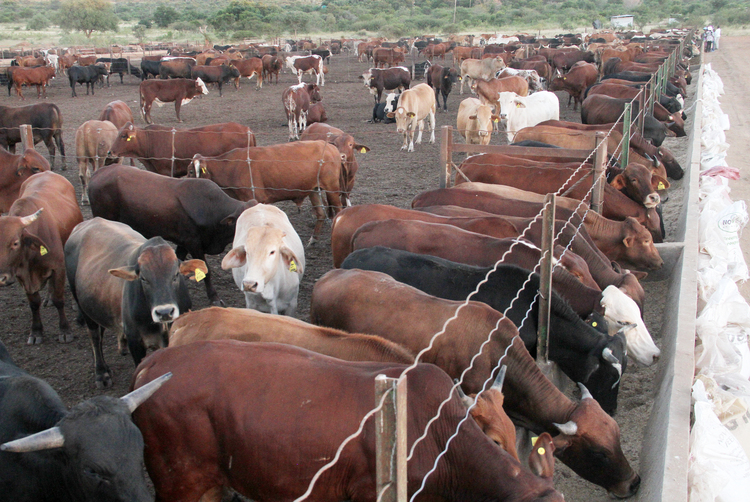
Word From The Market with Simon Pande
Agricultural production plays a significant role in Zimbabwe’s National Development Strategy 1 (NDS1), which seeks to achieve an upper-middle-income economy by 2030.
Livestock production is a key factor in this transformation, as it is critical for rural development.
Most rural households are involved in this sub-sector, which directly contributes to the livelihoods of the majority of Zimbabweans.
It is critical to the growth of the agriculture sector and the economy, as well as to food and nutrition security.
The livestock sub-sector is also potentially a significant foreign currency earner for Zimbabwe.
It is against this background that the Government has embarked on several programmes that seek to empower the rural populace through enhanced production and productivity along the livestock value chains. This is particularly so with the cattle value chain.
Notable programmes introduced by the Government include the Presidential Tick Grease Scheme and the Presidential Goat Scheme, with the former aimed at preserving good animal health.
The 2023/2024 agricultural season has been characterised by dry weather conditions induced by the El Niño phenomenon, which resulted in deterioration of grazing lands and livestock condition.
The dire situation involving cattle production has been aggravated by cases of both the January disease and the foot-and-mouth disease.
Despite concerted efforts by the Government to develop and modernise livestock production among rural cattle rearers, market access remains a challenge to these farmers.
Like in most African countries and other less-developed nations across the globe, small-scale farmers face several challenges in marketing their cattle.
Chief among these challenges is the absence of formal markets for cattle sales.
Most small-scale farmers fall prey to middlemen, who buy their cattle for a song.
In most cases, these sales are conducted at household level, where the bargaining power of the farmers is completely eroded.
This usually becomes pronounced in periods such as the one we currently face, where the Government has already declared a State of Disaster due to drought.
It was always anticipated that cattle buyers would flood drought-hit areas to fleece vulnerable cattle farmers.
It is against this background that the Ministry of Lands, Agriculture, Fisheries, Water and Rural Development has made a statement detailing the establishment of village business units (VBUs) at ward level to create formal markets for cattle sales.
This is intended to help cattle farmers in vulnerable areas secure the best value for their livestock during sales.
These coordinated sales will attract multiple reputable buyers, which can drive up prices through competitive bidding.
According to Deputy Minister of Lands, Agriculture, Fisheries, Water and Rural Development Vangelis Haritatos, the Government will ensure that all cattle sales are conducted through ward-based business units, rather than at the household level.
This model will be applied nationwide to streamline and support the sales process, according to the statement.
The Agricultural Marketing Authority (AMA) will also play a leading role to ensure that this model realises its intended goal of empowering the rural folk.
AMA is targeting to develop farmer clusters to create coordinated marketing of cattle at these ward-based VBUs.
The authority is bringing markets to farmers’ doorstep.
This saves time and reduces the logistical burden of marketing and selling cattle individually.
AMA will, therefore, be embarking on raising awareness among farmers on the benefits of this cattle marketing model.
In addition, the authority will seek to coordinate activities of all key stakeholders in this value chain to create these VBUs.
If local farmers can adopt this cattle marketing model, Zimbabwe will surpass production targets, as well as achieve food and nutrition security, in line with the NDS1.
Simon Pande is a horticulture and livestock expert with AMA. Word From The Market is a column produced by AMA to promote market-driven production. Feedback: [email protected] or WhatsApp +263781706212.


 Online Reporter