admin
admin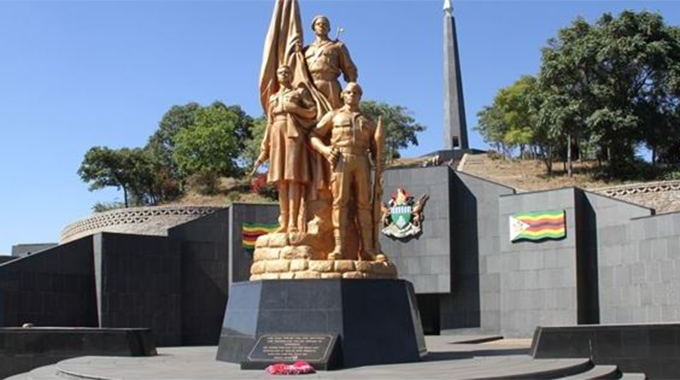
Elliot Ziwira, At the Bookstore
AS Heroes Day approaches, it is only pertinent to reflect on the bravery and selflessness of those who fought for our nation’s freedom.
Their sacrifices, struggles, and triumphs were not in vain as their legacy continues to inspire and shape our identity as Zimbabweans. However, we must also acknowledge the dark legacy of colonialism and the villains who sought to erase our identity, our culture, and our very existence.
As collective memory recalls, in 1896, a young Matabele chief dared to question Cecil John Rhodes’ claim to our land, only to be met with condescension and deceit.
As witnessed by Vere Stent, a journalist cited in Julie Frederikse’s “None But Ourselves” (1990), the young chief asked, “Where are we to live when it is over? The white man claims all the land.”
Rhodes’ response, “We will give you settlements. . . we will set apart locations for you,” was a thinly veiled attempt to mask the true intentions of colonialism— to dispossess, to oppress, and to exploit. Yet, the young chief’s courage embodied the spirit of resistance that would inspire future generations to fight for their rights, their land, and their freedom.
Every year in August, we honour the heroes who fought against colonial oppression, their bones scattered across the land and beyond, their memories etched in our collective history.
We remember the gallantry of those who lie at the National Heroes Acre, a symbol of our nation’s pride and resilience. We remember the likes of Mbuya Nehanda, Sekuru Kaguvi, and many others who refused to be silenced, who refused to be oppressed, and who fought to the end for our liberation.
As we move forward, let us remember the lessons of the past. Let us honour our heroes and heroines and confront the villains who sought to silence our story. Let us acknowledge the injustices of the past and work towards a future that is just, equitable, and prosperous for all.
Confronting the legacy of villainy: Rhodes and Founders Day
We must confront the dark legacy of colonialism and the villains who sought to erase our identity, culture, and history.
Cecil John Rhodes and his cohorts claimed to have “founded” a country, but in reality, they stole our land, erased our ancestors, and destroyed our heritage. The Union Jack’s hoisting on Harare Hill on September 12, 1890, marked the beginning of a brutal era of colonisation, with Rhodes and his Pioneer Column declaring themselves the rightful owners of our land.
For decades, beginning from 1903 to 1980, colonial governments celebrated Rhodes and Founders Day, honouring the legacy of a man who believed in the superiority of the white race and the subjugation of Africans.
The day was originally celebrated on July 5 and 6 to coincide with Rhodes’ birthday (July 5), and the date the Pioneer Column crossed the Shashe River in 1890.
In 1910, Colonel Raleigh Grey, a member of the Legislative Council and OC of Southern Rhodesia Volunteers, pointed out that the day should be celebrated on the first Monday and Tuesday in July. His reason, however, was to allow for four clear days for the annual camp and military training for his volunteers without courting the ire of employers.
After careful consideration of one of the members’ concerns that the wording could cause confusion should July 1 fall on a Tuesday as was the case in 1975, the Legislative Council moved the celebrations to the second Monday and second Tuesday in July.
This day, therefore, was a painful reminder of our oppression, a celebration of the atrocities committed against our people. The fact that it was originally celebrated on Rhodes’ birthday and the anniversary of the Pioneer Column’s invasion is a stark reminder of the colonial mentality that sought to impose itself on our land and our people.
The attempt to rebrand this day as a celebration of “founders” is a thinly veiled attempt to whitewash the crimes of colonialism. The truth is that Rhodes and his associates were not founders, but invaders, thieves, and oppressors. They did not “find” an unpossessed land, but rather stole it from its rightful owners. Their legacy is one of bloodshed, displacement, and cultural destruction.
It’s time to confront this legacy of villainy and reclaim our true history. We must reject the colonial narrative and assert our own identity, culture, and heritage. We must honour the memories of our ancestors, who resisted colonialism and fought for our freedom.
Heroes Acre: A beacon of gallantry, resistance
On May 15, 1982, at a rally at Dewa, Zvishavane, then Minister of State in the Prime Minister’s Office Emmerson Mnangagwa (now President of Zimbabwe), declared, “If we forget the struggle and the people who died for our freedom, we shall drift aimlessly.
“We who are alive link with those who have died and those who have yet to be born; and we must look after the heritage of our country, and teach our children what that heritage is and what it means,” (The Sunday Mail 16 May, 1982).
His words echo the importance of honouring our heroes and preserving our heritage. The National Heroes Acre, a revered shrine, stands as a demonstration to the bravery and selflessness of those who fought against colonial oppression.
The 57-acre (230 000m2) sacred site, built on a ridge at Warren Hills near Warren Park, Harare, is a symbol of resistance and gallantry to the Zimbabwean people. The graves of our fallen heroes are a reminder of the ultimate sacrifice made for our nation’s liberation.
With settler rule out of the way, the Patriotic Front Government lead by Prime Minister Robert Mugabe (late national hero and former President), obliterated from the calendar all days that celebrated colonial bastions of oppression, like Rhodes and Founders, which was replaced by Ancestors Day, no longer celebrated.
This decision was a bold statement of our nation’s commitment to celebrating its true heroes. The idea of a national hero accolade was mooted and passed just after Independence in 1980, leading to the construction of the National Heroes Acre.
Heroes Day was initially celebrated on August 11 and 12, though the dates had no special significance. There was a heated debate around the dates, with white Members of Parliament arguing that the celebrations should fall on Monday and Tuesday, instead of midweek, as it would affect business.
Contributing to debate in Parliament on July 28, 1980, Senator Joseph Culverwell, apparently irked by their attitude, reminded white MPs of the fact that for decades, blacks, who were in the majority, were forced to observe holidays that had no meaning to them.
Castigating white legislators’ “derogatory” references to workers and heroes, Home Affairs Deputy Minister Senator Tarisai Ziyambi, pointed out that the celebrations should be given significance independent of capitalistic considerations of production, and the desire for a “long weekend”.
This view was also shared by Home Affairs Minister, Dr Joshua Nkomo, (late Vice President).
Through a Bill passed into law in August 2001, Heroes Day was moved to the second Monday, and Defence Forces Day (celebrated on August 12 since 1990), to the second Tuesday of August.
The first burial at the National Heroes Acre was on August 12, 1980, with 40 000 people in attendance when the late ZANLA Commander, General Josiah Tongogara, and ZAPU Vice President Jason Ziyaphapha Moyo were finally laid to rest, having been initially interred in Mozambique and Zambia, respectively.
Father Alexio Muchabayiwa of the Roman Catholic Church presided.
The construction of the National Heroes Acre was a collective effort, involving Zimbabwean and North Korean architects, artists, and locals, starting from September 1981. The site’s design, featuring two AK-47s lying back-to-back, is a powerful statement of our nation’s resolve to defend its sovereignty.
The main structures are made of black granite quarried from Mutoko.
Other features of the national monument are The Tomb of the Unknown Soldier, The Eternal Flame, which was lit at Independence celebrations in 1980, and taken to Harare Hill
to mark the end of colonialism, Wall Murals on either side of the shrine, and the Museum.
As Heroes Day approaches, we must continue to honour our heroes and preserve our heritage, lest we forget the struggles of the past. Only then can we truly move forward as a nation, riding on the principles of justice, equality, and self-determination.



 Online Reporter