

 admin
admin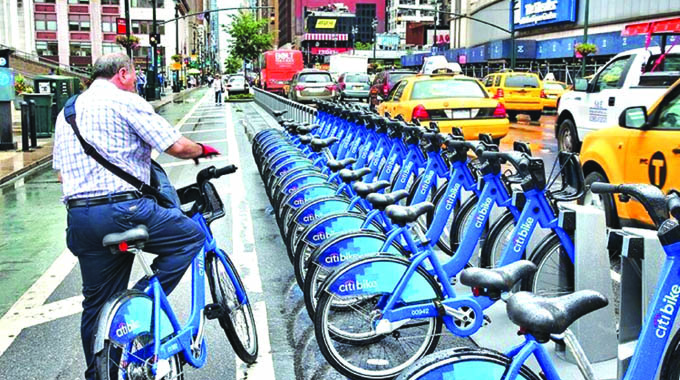
Walter Nyamukondiwa
Mashonaland West Bureau Chief
Is Zimbabwe or are Zimbabweans ready for a sharing economy where cars, bikes (motorbikes and bicycles) and chargers among others are shared riding on existing technologies, including mobile payment systems?
The sharing economy in Zimbabwe is at its nascent stages when compared to other economies of the world, including China where the bike-sharing phenomenon has grown in leaps and bounds.
It has extended to other items, including umbrellas and chargers where start-ups are moving in to bring convenience to the people and oiling the economy.
In China, it is easy to hire a bike for less than US$0,30 cents and use it for a 30-minute ride before dropping it off for someone else to use it for their own errand.
Quite convenient for someone intending to move from one part of town to another and evade vehicular traffic congestion in a city like Harare.
It could work wonders in university towns like Chinhoyi, Gweru, Mutare, Zvishavane, Bulawayo, Lupane and Bindura among others where students can have a cheaper and faster transport mode.
For context, one can take a bike from the University of Zimbabwe and ride to town for transport to their respective suburb or township. They can still proceed to their home on the same bike.
The same goes for a student cycling to CUT from White City, Chikonohono, Mzari and Orange Grove or vice versa. This can also be done in other university towns.
All one needs to do is unlock it and have money deducted from their mobile money wallet before logging out for the next person to do the same thing.
Experience from using the bike sharing system in Beijing showed a seamless process that brings convenience at little cost.
With a bike inventory of more than 20 million bikes for sharing across cities and towns in China and a market size of about US$10 billion, it is the largest in the world.
At a ratio of a bike for around 16 people, the bikes bring convenience while promoting a healthy lifestyle, which has led to reduced carbon emissions.
While some of the pioneers of the bike industry, which started some time in 2014 fell by the wayside along the way, major tech companies including Alibaba, Didi and Meituan took over the mantle.
The number of bikes and users has been increasing exponentially as more people adopt healthy lifestyles and seek convenient ways of navigating the traffic jungle often associated with urban centres.
Alibaba runs Hello Bike and the bikes have a distinct blue colour and is paid for using Alipay, a popular payment platform in China.
Meituan Bike, owned by Meituan, carries a prominent yellow colour and is one of the major bike sharing operators in China, with a bias towards top-tier market.
Another prominent brand is the Gingju Bike, which normally services second tier markets outside prominent cities.
What can Zimbabwe learn?
With three prominent mobile network operators running money platforms, they can provide seamless payment services for bikes.
They can go the extra mile and procure the bicycles themselves or better still, set up bicycle manufacturing plants in the country to cut costs.
This could go a long way in meeting the demand for transport, reduce the carbon footprint and curtail congestion in major urban centres.
While taxi hailing is fast gaining a foothold in the country, it does not cater for the majority of people who would rather walk than part with between $4 and $10 for an across the city ride.
For as little as ZIG3, one can take a bicycle ride across the CBD at relatively less time, especially during the peak period.
A healthy pocket and body.
The challenges!
It takes attitude and structural adjustments to be able to run such an operation and recoup profits from the investments as the traffic jungle has predators who have no consideration for other motorists.
What would an exposed cyclist face in the competitive world where everyone wants to be the first in total disregard of traffic control lights and signals?
The number of hit and run cases will spike.
This will demand of dedicated cycle tracks and bike overpasses alongside lanes for cars.
The benefits far outweigh the likely disadvantages.
In China, the system faced challenges of the bikes being damaged and haphazard parking before authorities stepped in while the bike companies have dedicated trucks that move around picking them and placing them at designated places.
If people can throw away litter without thinking twice, it would be difficult to imagine if they would take care of what they believe belongs to someone else.
With widespread cases of vandalism of critical infrastructure, sometimes for no apparent cause, one shudders to imagine what fate random bicycles face when they are left unguarded for the supposed attention of someone who wants to pay and ride.
Would the bikes not end up being stolen and stripped for parts and scrap metal? Such an arrangement works perhaps because of the philosophical grounding of the Chinese people and the assistance of surveillance cameras, which make it difficult for one to steal.
One of the major challenges would be how the bikes would be disposed once they have run their course.
The future!
For China, the future is here with the roll-out of Electric Bikes (EBs).
China is leading the way in terms of Electric Vehicles (EVs) and electric bikes are also on the menu as battery exchange centres for the batteries running the bikes are available everywhere.
The bikes go for as little as 2 000 yuan, which is about US$275 in China and have taken the cities by storm. These have become novel transportation means mostly for the young generation.
According to the Bicycle Association of China, there were about 350 million EBs in 2022 with the number expected to have grown exponentially in the last two years as China’s standard of living continues to improve.
So people, especially the young, including college students are buying the EBs as a sign of upward social mobility and also as a convenient way to navigate the urban traffic jungle.
The two wheelers, whether electric or cycling, have been key in connecting to other transportation systems, including trains and buses. Government should consider policies that promote the growth of the sharing economy and use of environmentally friendly transport systems, which help to reduce congestion and promote healthy lifestyles.



 Peter Tanyanyiwa
 Online Reporter