admin
admin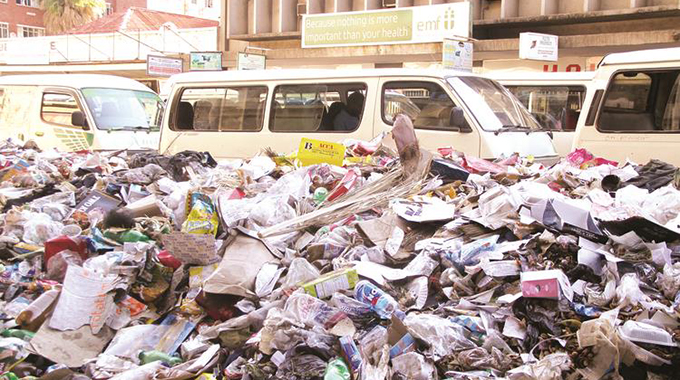
Vusumuzi Dube Zimpapers Elections Desk
“Lodgers allowed to vote, but poll postponed,” this was a headline in The Chronicle edition of 23 August 1980.
The article was based on the shifting of legislation to have tenants living in local government areas, together with their spouses, being franchised for the local authority elections that were going to be held in recently independent Zimbabwe.
Before independence only owners and occupiers of property qualified for enrolment as voters in municipal, town council and local board elections.
This sums up the journey urban voters have taken since 1980 to date, in terms of being able to vote for councillors of their choice.
On Wednesday, exactly 43 years later, the country goes for elections at a time the country has adopted a new format, where the elections are now harmonised.
Presidential, Local Authority and National Assembly elections are all being held at once.
Forty-three years on it is important for the nation to reflect on the journey that has been travelled from when tenants were not allowed to vote to the universal suffrage being practiced in the country today.
Urban councils in Zimbabwe play a crucial role in delivering essential services to residents, fostering development, and ensuring the overall well-being of urban centres.
The performance of opposition-led urban councils in Zimbabwe’s major towns and cities, including Bulawayo and Harare, has been a subject of scrutiny over the past two decades.
However, despite being given the task to lead the urban centres, the opposition has essentially run down the same.
Issues such as inadequate funding, limited resources, corruption, mismanagement, and political infighting have hampered their ability to effectively govern and provide necessary services. Consequently, urban areas have experienced a decline in service delivery, including water shortages, poor road conditions, sanitation challenges, and a general deterioration of infrastructure.
This has also resulted in Government resorting to setting up commissions of enquiry which have seen some of the councillors being either suspended or wholesomely expelled.
In the two major cities — Harare and Bulawayo — Government, under President Mnangagwa’s leadership, has stepped in to address the critical issues affecting major towns and cities. Interventions have included the initiation of water delivery projects, rehabilitation of roads, and infrastructure development initiatives.
These interventions, aimed at improving the living conditions of residents, have become necessary due to the failure of opposition-led councils to effectively address these challenges.
The performance of urban councils should serve as a critical consideration for voters in the upcoming elections.
Residents should evaluate the effectiveness and efficiency of their local council’s performance in areas such as waste management, provision of clean water, maintenance of roads and infrastructure, and responsiveness to citizen concerns.
The ability of urban councils to address these issues effectively will reflect their commitment to improving the quality of life for residents.
The track record of opposition-led urban councils in managing major towns and cities should serve as a significant factor influencing urban voters’ decisions in the upcoming elections.
Voters need to critically evaluate the ability of opposition candidates and parties to address the persistent challenges faced by urban areas, including service delivery, infrastructure development, and governance issues.
The intervention of Government in resolving critical issues within urban areas, which should ideally be the responsibility of elected officials, highlights the shortcomings of opposition-led urban councils and their inability to effectively govern.
Urban voters must consider whether the opposition has demonstrated the capacity and commitment to meet the needs and aspirations of urban communities, or whether alternative leadership is necessary to ensure sustainable development and improved living conditions.
President Mnangagwa has on numerous occasions highlighted concerns about the performance of urban councils in Zimbabwe, continuously calling upon urban voters to consider voting for the ruling ZANU PF party.
The President has noted that the challenges faced by urban councils, such as inadequate service delivery and deteriorating infrastructure, beg for a change in leadership to address these issues effectively. President Mnangagwa’s statements emphasise the need for voters to carefully evaluate the track record of the opposition-led councils and consider alternative leadership options, expressing the commitment of the ZANU PF party to improve service delivery, infrastructure development, and governance in urban areas.
Speaking at the 2022 Performance Evaluation Results and the signing ceremony of the 2023 Performance Contracts for Cabinet Ministers, permanent secretaries, chairpersons and chief executives of public entities, local authorities and State universities at State House, in March this year, President Mnangagwa declared that ineptitude and poor performance in local authorities was unacceptable and had no place in the Second Republic.
“The indicators of good governance are the provision of quality and timely services to the people, high performance, promotion of economic growth as well as the realisation of sustainable development. These can only be realised when Public Sector Officials have a high-performance culture and display commitment to wholeheartedly serve the people of our motherland Zimbabwe.
“The performance of local authorities as outlined in the assessment report remains worrisome and a huge draw-back in our march towards Vision 2030,” he said.
“While devolution funds have gone a long way to accelerate infrastructure development, the neglect and failure by the majority of local authorities to focus on their core mandate of service delivery is not acceptable,” added President Mnangagwa.
Commenting on the need for urban voters to vote wisely in Wednesday’s elections, Matabeleland North Minister of State for Provincial Affairs and Devolution, who is also the Zanu-PF provincial chairperson, Cde Richard Moyo said President Mnangagwa and the Second Republic’s works were there for everyone to see.
“I am sure urban voters see what President Mnangagwa is doing and fortunately, through the mantra leaving no place and no one behind, the President has ensured that every corner of the country feels the development trajectory, be it urban or rural.
“The Second Republic has come up with such projects as the Emergency Road Rehabilitation Project among other major initiatives all in a bid to push for development in these areas,” said Cde Moyo.
Bulawayo Minister of State for Provincial Affairs and Devolution, Cde Judith Ncube echoed the same sentiments noting that in the last five years the ruling ZANU PF had done a lot in terms of pushing projects meant to uplift the lives of people in Bulawayo.
“You talk of the Gwayi-Shangani dam, for the first time this project is now a reality and we are now sure that water will soon be reaching Bulawayo, all under the Second Republic. The Government has also intervened in our road infrastructure through the ERRP programme, this all showing the commitment the Government has towards the development of the city.
“We also know that Bulawayo previously suffered from heavy de-industrialisation but the Second Republic has come in and availed policies that have created a conducive environment for the revival of the city as the country’s industrial hub,” said Minister Ncube.
Bulawayo United Residents Association (BURA) chairperson, Mr Winos Dube said the time had come for urban voters to evaluate the journey they had taken since independence and also look at whether the opposition had done them any good since being at the helm of most urban councils.
“This is the time for introspection, setting aside any political beliefs and look at what these urban councils have brought us and whether they will bring any development if we give them another five years.
“Let us take Bulawayo, for example, this council came in when we were talking of perennial water challenges, five years later we are still singing the same song, serve for President Mnangagwa and his administration intervening through the Epping forest borehole projects and ensuring that we now talk about significant progress in the Gwayi-Shangani dam project,” said Mr Dube.
“We still have projects such as the Egodini Bus Terminus project which has now turned into a white elephant and which no one wants to tell us what really is happening, these are things which we all see, things which surely should guide our decisions come election day,” added the BURA chairperson. Therefore, the failures of opposition-led urban councils in effectively managing major towns and cities in Zimbabwe, resulting in Government intervention led by President Mnangagwa’s administration, raises pertinent questions regarding the capability and effectiveness of the opposition in governing urban areas.
Urban voters, as they prepare to cast their ballots in the upcoming elections, should critically evaluate the track record of opposition candidates and parties, considering their ability to address the persistent challenges of service delivery, infrastructure development, and governance. Informed decision-making based on these considerations is crucial to ensuring sustainable urban development and improved living conditions for all residents.


 Online Reporter