admin
admin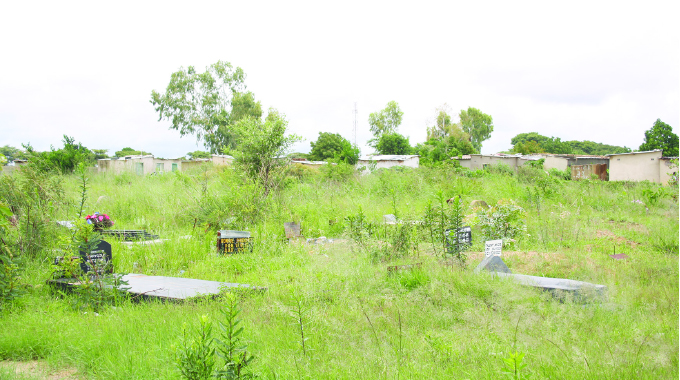
Herald Correspondent
For generations, graveyards were considered places at least worthy of respect, with the superstitious going further with such beliefs.
Besides the obvious potential health risks of living among graves, there are superstitions that it is bad omen to step over a grave, with some believing that doing so will lead to an early demise.
Pointing at a grave was also thought to bring misfortune, while pregnant women were warned not to walk on graves lest their children be born with club feet.
However, in the face of rapid urbanisation and a desperate shortage of land, these taboos are being cast aside.
In cities like Harare, the unavailability of land has forced residents to build their homes next to graveyards, rendering these once-sacred places mere extensions of residential areas.
The traditional buffer zones between cemeteries and settlements have disappeared, and with them, the reverence and respect that was once afforded to the dearly departed.
A visit to several cemeteries in Harare, including in Epworth, Chitungwiza, and Stoneridge, revealed a disturbing trend.
Illegal settlers have overrun these areas, erecting temporary shelters within the cemeteries themselves. The sound of children playing and plates now fills the air, where once there was only silence and solemnity.
In Epworth’s Stopover, adjacent to the Zinyengere graveyard, children roll over the graves. Their parents, seemingly unbothered, look on as the children climb on tombstones, utterly disregarding the traditional taboos.
“What’s scary about graves?” asked Tawona, a Form 1 pupil who lives adjacent to the graveyard.
“I even go and watch the English Premier League at the shops and come back home at 10 pm alone,” he added, boasting of his fearlessness.
Some of the residents claim that the area is the most peaceful and that they have never seen any ghosts.
“I have been living here for the past two years and life is as normal as it should be; no one has ever seen a ghost,” said a man who resides in close proximity to the graveyard, dismissing the idea that ghosts exist.
“The graves do not bother us at all, and I just wish I could buy my own house here because I am currently just a tenant,” he added.
In Epworth sand poachers have also dug deep pits in a graveyard extracting sand for their brick moulding businesses.
Other graves are no longer visible as residents and industrial companies reportedly use some of the disused pits as dump-sites for their waste.
Similarly, in Hopley, some residents have invaded Granville Cemetery where they dug shallow wells and built their houses.
The once-sacred ground has been transformed into a makeshift farm, with the graves serving as an unlikely backdrop for thriving crops that are being planted in the grave site.
“We are not planting on top of graves, but rather just close to them,” a woman who resides near Granville Cemetery said.
“However, as you know, pumpkin leaves have no boundaries and tend to spread out in all directions.”
She also claimed that they started to reside in the area more than a decade ago and that no harm had befallen them.
“We have always lived here for years and, to be honest, I don’t see the logic in building far away from the cemetery in a town that is already struggling to find enough space for residential stands.”
Chitungwiza is facing a grave crisis.
The town’s cemetery, Nyatsime, is also being overrun by illegal settlers, leaving the local authority scrambling to find space for the deceased.
Recently, Chitungwiza’s acting housing director, Mr Tendai Chinganga, told stakeholders during a strategic plan review workshop that the local authority was facing the risk of running out of land for cemeteries due to continuous invasions by illegal settlers.
“At Nyatsime Cemetery we have a big challenge of illegal settlers who are continuing to encroach into the cemetery.
“We run the risk of running out of grave space. We will be lucky to go to the year 2025 still having some land if nothing is done to address the issue,” he said.
In the past, the municipality experienced litigation from residents when they tried to evict them based on human rights, yet they are also infringing the rights of the deceased.
However, residents living in the affected area have a different story to tell. They are blaming the council for failing to demarcate the cemetery.
As the city continues to sprawl, it remains to be seen whether the traditional taboos surrounding graveyards will be revived or if they will be lost forever, casualties of the relentless march of urbanisation.



 Online Reporter