

 Chronicle Editor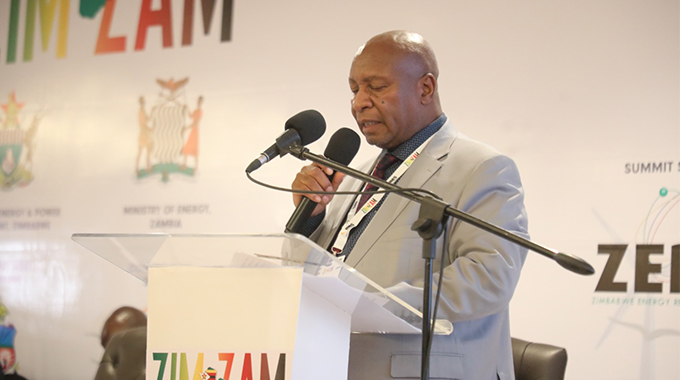
Leonard Ncube, [email protected]
ZIMBABWE and Zambia face an urgent need to address the triple challenges of energy poverty, energy security, and climate change which are bedevilling the region and impoverishing citizens.
Speaking at the inaugural Zimbabwe-Zambia (Zim-Zam) Energy Projects Summit, Energy and Power Development Minister Edgar Moyo said energy demand continues to increase, in response to the rapid industrialisation while generation has significantly decreased due to depleted water levels on the Zambezi River thereby affecting the shared Kariba Dam.|
“I am honoured to welcome you to the inaugural Zimbabwe-Zambia Energy Projects Summit. This is a pivotal gathering that underscores our collective commitment to powering a sustainable energy future in our two countries Zimbabwe and Zambia.
“As we convene this summit here today, we recognize the urgent need to address the triple challenges of energy poverty, energy security, and climate change which we are each faced with. Zimbabwe and indeed the rest of the Southern Africa region, has been negatively affected by the climate change, which is a result of anthropogenic activities globally,” said Minister Moyo.
He said there was a need to upgrade grid network to minimise the energy loses and to make it more modern and more climate smart, with losses currently at 18 percent which should be reduced to globally acceptable 10 percent by the year 2028.
His Zambia counterpart Minister Makozo Chikote said Zambia and Zimbabwe have so much in common including sharing the Kariba Dam, Mighty Victoria Falls and Zambezi River.
He said power is an enabler for everything we want to do hence the need to strengthen regional energy networks to increase resilience against dependence.
“Our focus today is on creating a cleaner and more efficient energy future. We are at a critical juncture in our countries, the demand for electricity continues to grow and we should adopt thinking strategies. This is a critical platform for local and international investors to learn about the investment atmosphere as we want to reach universal access to energy,” he said.


 Online Reporter