admin
admin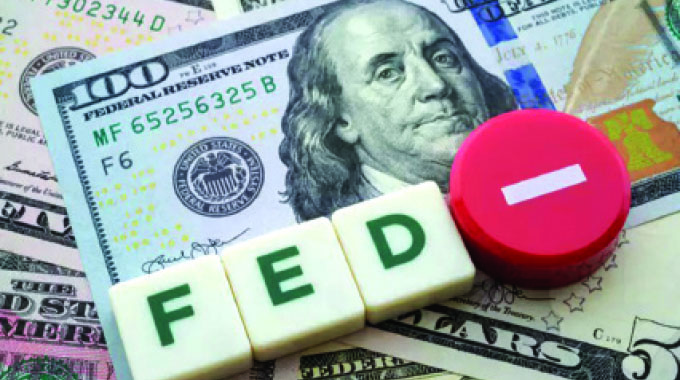
The US dollar eased yesterday following its best rally this month against major peers as a resilient US labour market bolstered the case for a Federal Reserve rate hike next month.
At the same time, bets for a peak in US rates in coming months spurred leading cryptocurrency bitcoin to top US$30 000 for the first time since June.
The rand was 0,4 percent stronger, trading at R18,36/US$1.
The Australian dollar jumped 0,46 percent to $0,66725, clawing back all of the previous day’s losses, amid a thawing of trade tensions with China, as the pair agreed to end a dispute over Australian barley.
The US dollar index — which measures the greenback against six major counterparts — slipped 0,16 percent to 102,31, following a 0,39 percent advance at the start of the week.
The index had dropped to a two-month low of 101,40 on Wednesday.
The euro added 0,26 percent to US$1,08885 after Monday’s 0,34 percent retreat. Sterling ticked up 0,2 to US$1,24085 having declined 0,23 percent overnight.
The dollar slipped 0,21 percent to 133,31 yen, after jumping 1,1 percent on Monday.
Selling pressure eased on the yen, which is highly sensitive to long-term US bond yields, as the 10-year Treasury yield edged lower in Tokyo trading after a sharp two-day climb.
The Japanese currency’s Monday slide was helped by new Bank of Japan Governor Kazuo Ueda, who vowed to stick with ultra-easy stimulus settings at his inauguration on Monday.
“The BOJ under Mr Ueda will intentionally try to be behind the curve and push up inflation expectations a little further, so he needs to keep the exchange-rate stable,” said Masayuko Kichikawa, chief macro strategist at Sumitomo Mitsui Asset Management in Tokyo.
“It is highly likely that the US economy will slow down in the second half of this year, leading to lower long-term interest rates over there, and if the BOJ does something to push up long-term interest rates here, that could strengthen the yen, undoing recent positive developments in Japan.”
Traders now see the Fed as 71 percent likely to raise rates by another quarter point on May 3, after data released on Good Friday showed US employers continued to hire at a strong pace in March, pushing down the jobless rate. Last week, money markets priced a hike next month as a coin toss.
The consumer price index (CPI), due on Wednesday, will be the next major clue for Fed policy direction.
“Financial markets have been too pessimistic about the US economy since several small US banks collapsed in March,” Commonwealth Bank of Australia strategists Joseph Capurso and Kristina Clifton wrote in a client note, referring to the demise of SVB and Signature Bank.
“Strong underlying CPI is likely to be the catalyst for a change in market pricing for May, and delay pricing for the start of rate cuts,” they said, postulating the dollar index could lift toward the 100-day moving average at 103.91 this week.
Traders currently expect the Fed to start cutting rates from around September.
Bitcoin touched a fresh 10-month high at US$30 438 yesterday before last fetching US$30 053, after breaking free of recent ranges yesterday.
The digital token had been stuck between about US$26 500 and US$29 400 for the previous three weeks. —Reuters



 Online Reporter