Online Reporter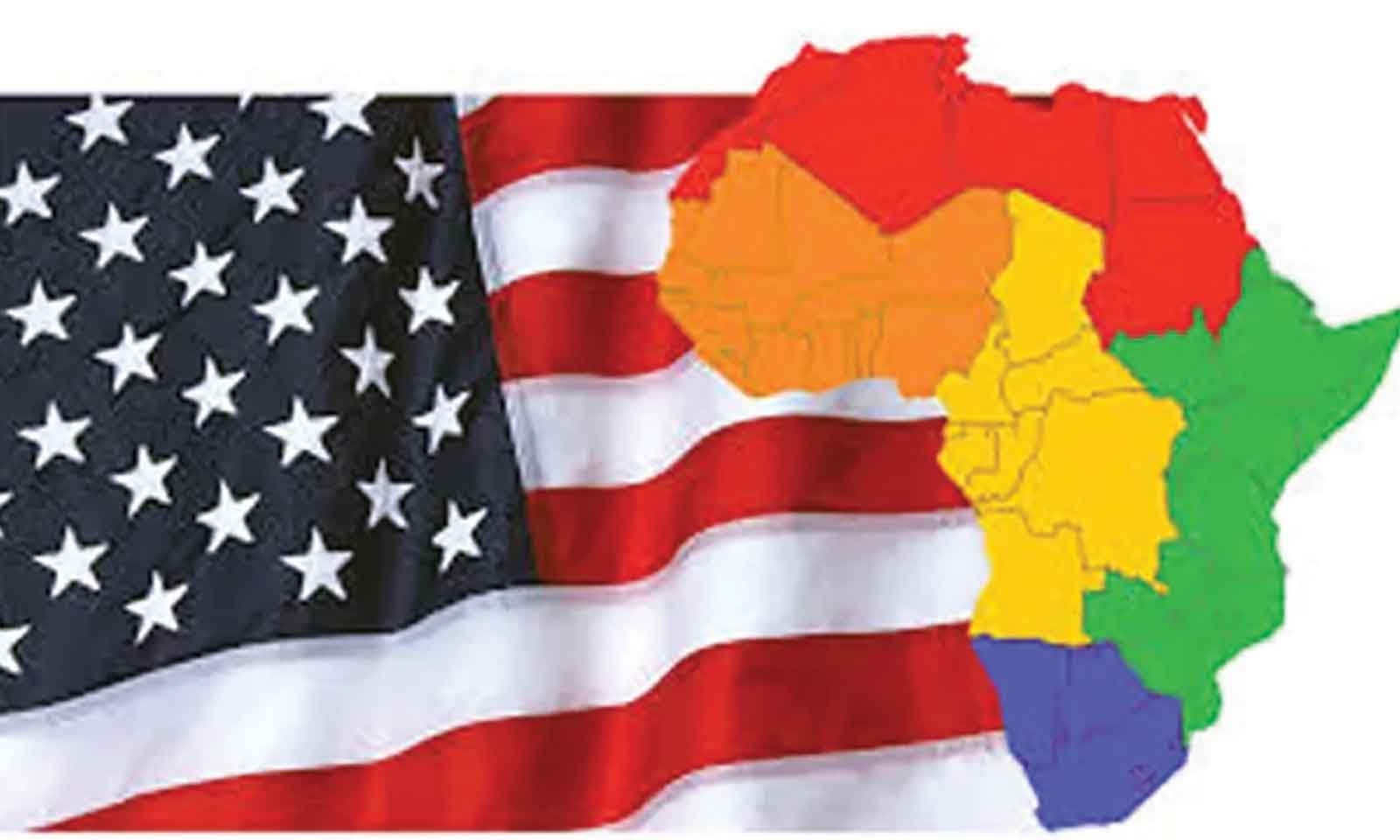
Gibson Nyikadzino
Zimpapers Politics Hub
THE United States, through the publication of its 2025 National Security Strategy (NSS) on December 5, sent an unmistakable message regarding its future intentions when dealing with Africa, Asia, China, Europe, Eurasia, Latin America, and the Middle East.
In a structured way, the NSS comprehensively lays out the US’ principles, priorities, and strategic worldview. It aligns these with its foundational ideals, which see the US walking away from a globalist framework and instead prioritising its own security, self-determination, and sovereignty.
The document provides a window into the mind of President Donald Trump’s administration, which is recalibrating the US toward the “America First” policy while seemingly breaking with the post-1945 liberal-internationalist order.
Europe is being abandoned in slow motion, yet it appears to be in denial. In Asia, Japan has been given a path to full sovereignty in the face of a powerful China, which Japan currently understands as an “enemy state” as defined in the United Nations Charter.
The US is retreating from Asia after years of using Japan to contain China, which now ironically holds the key to Japan’s liberation from the post-war order.
The focus of the US is now on returning to the Monroe Doctrine of 1823 which it says is the “Trump Corollary” where its influence is geo-locked to the Western hemisphere.
In essence, the US is now admitting that the world has gone multipolar; the world no longer needs policing; and no country should interfere, lecture and impose its values on another.
Part of the recalibration of its policy and reassertion of its influence in the Western hemisphere is reflected in the way the US is dealing with Venezuela, where it is playing out a script like the one it did in 2003 during the invasion of Iraq.
In Iraq the script was Saddam Hussein had weapons of mass destruction (WMD), allegations that turned out to be false.
The same is being applied that Venezuela’s President Nicolas Maduro is a narco-terrorist, which will turn out to be false, again.
This means Latin America is being pulled back into America’s orbit and foreign influence, meaning in that region China, Iran or Russia are no longer accepted, as the US now withdraws from Asia, Europe and the Middle-East. Each power has to be a regional hegemon in its sphere. It is Africa’s projection in the NSS that is worrisome.
Exploit Africa, Counter China
Because of the military footprint in US foreign policy, it is imperative to understand that the number of US troops in a particular region attaches to the strategic and geopolitical value it places in that region.
For instance, Africa hosts about 6 000 US troops across the continent, compared to Asia (Japan and South Korea) which hosts about 77 000.
In Europe, it is estimated the US has over 101 000 troops, while in the Middle East it has about 47 000 troops. Africa has not been of strategic political and military importance to the US.
It is not a territory where the US can make long-term commitments.
“And we must remain wary of resurgent Islamist terrorist activity in parts of Africa while avoiding any long-term American presence or commitments,” reads the NSS document.
The NSS document shows a shift in US policy towards Africa, especially driven by its mineral wealth. Africa is set to become the next battleground for geo-economic rivalry between major powers, considering that every major country or bloc wants to partner Africa.
As part of its thrust and emphasis in Africa, the US intends to be capable of “harnessing Africa’s abundant natural resources” with an immediate area with “prospects for a good return on investment, including the energy sector and critical mineral development”. No more aid!
From Africa the US wants minerals, energy access and influence, mainly to counter China. It’s shifting from humanitarian rhetoric to strategic investment.
It is not even subtle. This is a detailed, confirmed, and integrated roadmap by the US to achieve its goals in Africa.
Already, the US is looking forward to reaping these “benefits” after brokering the Rwanda-Democratic Republic of Congo (DRC) peace deal on December 5, known as the Washington Accords.
President Trump said the US is set to get critical minerals from the two countries for brokering the peace deal.
Washington wants security cooperation, technology partnerships and counterterrorism operations, but not another generation of long, messy wars. It is noticeably more pragmatic and less ideological.
New Geometry of Power
The world is now witnessing, for now, the dissolution of the American world order and its replacement by a multipolar system organised around continental spheres of influence.
The US is now consolidating and expanding or retreating more to the Western hemisphere as a reset of the Monroe Doctrine.
On the other hand, this leaves China dominating mainland East Asia and the South China Sea while Russia re-establishes influence in the post-Soviet space and the Arctic.
In this view, India is likely to emerge as the swing power in South Asia and the Indian Ocean.
For the European union (EU), it will likely be led by Germany as its biggest economy and France as the bloc’s political muscle.
However, this reluctant European bloc, possibly led by a Franco-German alliance, will try to find a modus vivendi with Russia while keeping the Americans at arm’s length.
In the Middle-East, an Israeli-Arab coalition is expected to police the greater Middle East.
This is the logic why President Trump always said since January, his administration stopped eight wars, implying the US is retreating from the world stage while leaving it as a peaceful place.
Africa’s Intellectual Revolution
The Japanese were the first non-European people to improve their society by launching an intellectual revolution under the Meiji Dynasty to respond to challenges caused by civilisational differences between Asia and the West.
The Chinese under Deng Xiaoping did the same.
The two nations took education as the cornerstone of economic development, something they both admitted they needed, in order to compete with the West. The same goes for Africa today.
There is a need for Africa to do some soul-searching about ways to respond to the danger knocking on its doorstep presented by the NSS.
Africans in general need to start painful conversations without any rhetorical posturing.
It is not important to envision a strong Africa without pragmatic actions that are backed by an intellectual revolution.
Nothing in Africa will succeed without responding to external interference through an intellectual rigour.
By doing so, that reflects the idea that as Africans, there is a need to start acknowledging that there is a need to rise above any existing poverty of thought.