admin
admin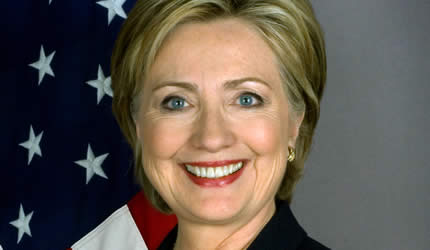
The US is set to hold presidential elections next Tuesday.
Mr Abbott, a member of the Republican Party, wrote to the Organisation for Security and Co-operation in Europe this week warning that their monitors would not be
allowed to maintain a presence within 100 feet (approximately 33 metres) of polling stations.
The OSCE is a 56-member inter-governmental body under the UN dealing with issues such as arms control, human rights and promotion of free and fair elections.
“It may be a criminal offence for OSCE’s representatives to maintain a presence within 100 feet of a polling place’s entrance,” said Mr Abbott.
“Failure to comply with these requirements could subject the OSCE’s representatives to criminal prosecution for violating state law.
“If OSCE members want to learn more about our election processes so they can improve their own democratic systems, we welcome the opportunity to discuss the measures Texas has implemented to protect the integrity of elections.”
Mr Abbot added: “However, groups and individuals from outside the United States are not allowed to influence or interfere with the election process in Texas.
“This State has robust election laws that were carefully crafted to protect the integrity of our election system. All persons — including persons connected with OSCE — are required to comply with these laws.”
Also see
Ambassador Janez Lenarèiè, director of the OSCE Office for Democratic Institutions and Human Rights, wrote to Secretary of State Mrs Hillary Clinton saying Mr Abbott’s threat put the state of Texas at odds with an agreement between the body and state authorities.
“The threat of criminal sanctions against OSCE/ODIHR observers is unacceptable,” Lenarèiè said.
“The United States, like all countries in the OSCE, has an obligation to invite ODIHR observers to observe its elections.”
Lenarèiè denied insinuations that officials in the group would meddle with elections, reiterating that they were bound by national laws and regulations, as well as their own strict code of conduct.
Comments on various websites showed deep divisions among readers on the subject of observing elections in the US.
“The UN has no business in our country, and our country has no business in the UN. GO TEXAS!!,” wrote one reader.
Another one said: “So, why wouldn’t you want a neutral party to observe an election. There is only one reason why you would object and that’s because you are afraid getting caught cheating.”
The OSCE has said it would send 44 observers to observe the US elections and monitor possible disputes that could arise in the voting process.
The move came in response to a petition from liberal-leaning voting rights groups, including the National Association for the Advancement of Coloured People and the American Civil Liberties Union, that suggested the OSCE’s presence could help combat what they feared would be a concerted effort to suppress votes from supporters of President Barack Obama.
Concerns among Democrats have mounted in the wake of reports that right-leaning groups, such as the True The Vote have plans to dispatch armies of poll-watchers seeking to root out invalid votes.
Opponents warn that the volunteer “poll challengers” will engage in intimidation of legitimate minority voters who tend to vote Democratic.
Moves by Republican controlled legislatures and governors’ offices to have strict voter identification requirements were rejected.
The federal state of Texas proposed a law requiring voters to produce strict identification documents with photographs before being allowed to vote.
The court ruled the law would prevent most poor people from voting. Local political analysts said the barring of the UN observers exposes the US’ double standards on democracy.
They said this vindicated Zimbabwe’s stance in barring some foreign organisations hostile to the country from observing the local electoral processes.
Former Ambassador to China Christopher Mutsvangwa said the Texas attorney general’s actions exposed the US.
“It is hypocritical of the US authorities to do that and shows their double standards,” he said.
“It shows the US view themselves as the paragons of democracy who would go any extents to teach the world about democracy. That is why there is the Carter Foundation in Atlanta and a host of other US NGOs that are involved in interfering in other countries.
“What that attorney general was saying in simple terms is that they are not perfect to be observed.”
Ambassador Mutsvangwa said even when there was a dispute following the US presidential elections between George W Bush and Al Gore in 2000, the US rejected the UN’s involvement in the matter.
“In other countries, the US would have called for the UN to come in and determine the winner,” he said.
“We should take a leaf from the behaviour of the Texas attorney general because what he was doing was defending what they call the US’s interests.
“Even what Zimbabwe has done in the past is justified because we also want to defend our interests.”
University of Zimbabwe analyst Dr Charity Manyeruke said the US would always prioritise its security.
“It is of course double standards on the part of the US, but I think sometimes people are naive when they look at the US,” she said.
“They will preach about transparency, but their security is always their priority, that is why they will not compromise on certain issues.”
Dr Manyeruke said it was important for Africa and Zimbabwe in particular to be on guard on whom they invite to observe the electoral process.
She said events in some Arab countries had shown that not all so-called observers and monitors were genuine.
“Some will come as if they want to observe your elections, but instead want to interfere in your process as was the case in countries like Libya and Syria,” said Dr Manyeruke.
“There is nothing wrong therefore for Zimbabwe to choose whom to invite to observe its elections because we are a sovereign country and have our national interests to protect.”



 Online Reporter