


 tawandamusarurwa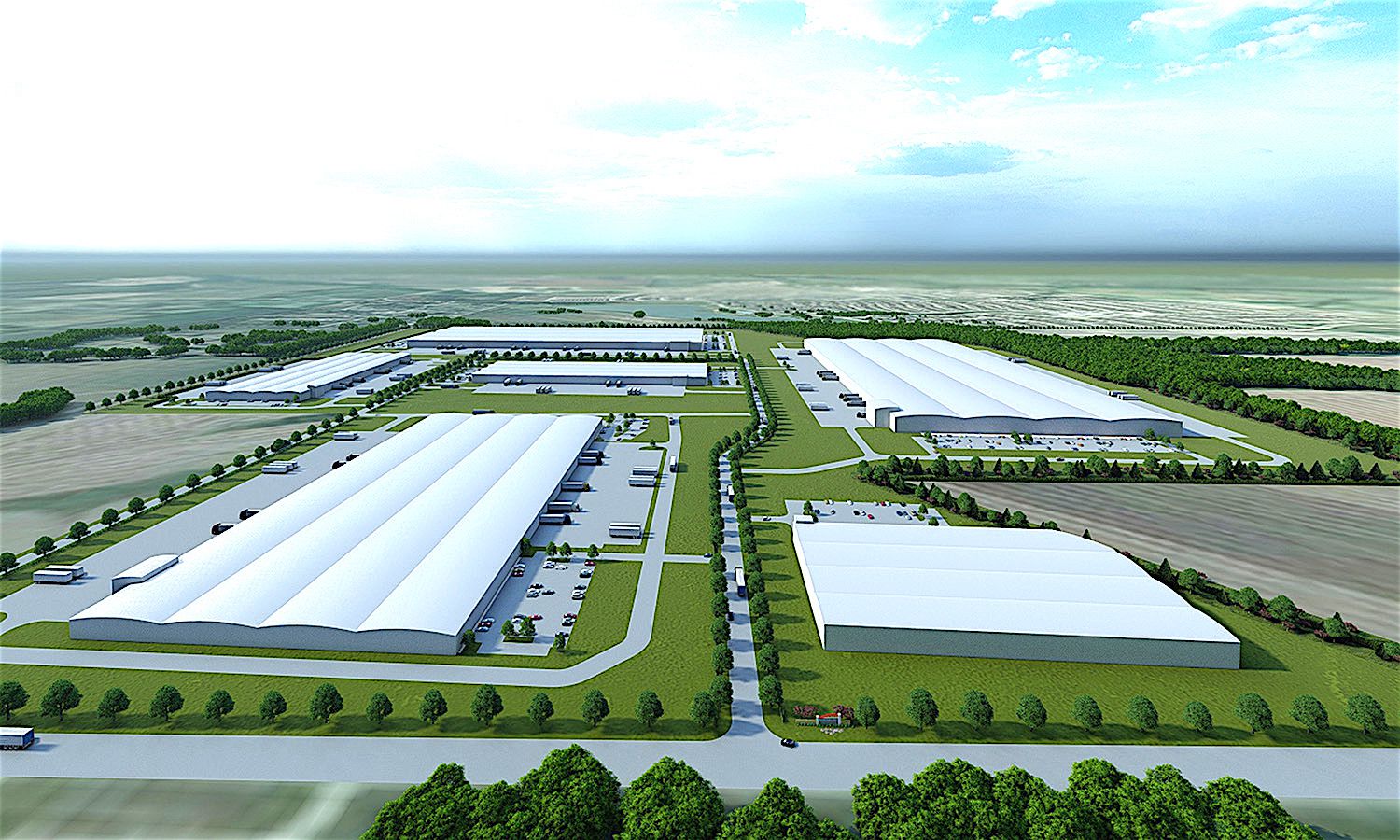
Oliver Kazunga
Senior Business Reporter
GOVERNMENT has begun a land valuation exercise in Mapinga, Mashonaland West province, in preparation for relocation of families presently occupying the proposed site for a US$13 billion mine-to-energy industrial park.
In September last year, Government and two Chinese investors — Eagle Canyon International Group Limited and Pacific Goal Investment — signed a memorandum of understanding for construction of the mine-to-energy industrial park.
The venture, to be developed on a 5 000-hectare piece of land, is expected to beneficiate local minerals and will be rolled out in phases.
In an interview with The Sunday Mail Business, Eagle Canyon International Group Limited director Mr Lionel Mhlanga said: “As you are aware that the proposed project is on 5 000ha of land, and that 5 000ha of land is occupied by farmers, we have been undertaking a land valuation exercise so that we can move the farmers who are affected.
“The Ministry of Lands, Agriculture, Fisheries, Water and Rural Development has been doing a valuation of all the developments the farmers have put in place so that, as they are moved, they will be compensated for the investments they have sunk in.” The families that will be relocated have reportedly been “very cooperative”.
However, it is believed that about 47 A2 farmers will be affected.
The planned investment will include construction of two 300MW power stations, a coking plant, lithium salt plant, graphite processing plant and a nickel chromium alloy smelter, as well as a nickel sulphate plant.
Mines and Mining Development Minister Winston Chitando has indicated that the planned US$450 million lithium salt plant will have an initial annual production capacity of 30 000 tonnes.
The mine-to-energy industrial park will also see the development of a local lithium-ion battery value chain, which potentially makes the country one of the producers of lithium-ion batteries used to power electric vehicles.
The investment is in line with the Government thrust to get the maximum possible value from the mining sector through value addition and creation of mineral value chains.
Currently, the mining sector, which is the cornerstone of Zimbabwe’s economy, accounts for 73 percent of foreign direct investment, 83 percent of exports, 19 percent of Government revenues, 11 percent of individual incomes and 2 percent of formal employment.
Under Vision 2030, the Government seeks to transform the country into an upper middle-income economy, whose pillars are underpinned by the National Development Strategy 1, a five-year economic development policy running between 2021 and 2025.
Eagle Canyon International Group Limited was founded in 1995 by Jun Liu.
It specialises in the investment and development of energy minerals; and real estate, as well as infrastructure projects in China and Southern Africa.
The group — through its subsidiary MaxMind Investments — owns the US$130 million Sabi Star Lithium Mine under development in Buhera, Manicaland province.
In December last year, President Mnangagwa presided over the ground breaking ceremony of the mine.



 Bongani Ndlovu
 Online Reporter