Online Reporter
Nqobile Tshili, [email protected]
THE US$30 million Enhanced Resilience for Vulnerable Households in Zimbabwe (ERVHIZ) programme, implemented in Matabeleland South by Government in partnership with development partners, has set a strong foundation for sustainable, community-driven development.
Funded by the European Union (EU) in partnership with the Food and Agriculture Organisation (FAO) and the United Nations Children’s Fund (Unicef), the five-year programme focused on improving livelihoods through the rehabilitation of dip tanks, establishment of horticulture gardens, and drilling of solar-powered boreholes.
With the project coming to an end, development partners have handed over its management to the Government.
Running under the theme: “End of project review and lesson learnt”, programme implementers converged in Bulawayo on a two-day workshop to take stock of its success and what can be learnt from it.
Some of its successes include ensuring that more than 22 500 households have access to clean water through tap water, while more than 45 000 households receive nutritional support in Matabeleland South.
Improved nutrition reportedly kept more children in schools while reducing distances travelled by women to fetch water.
The project saw communal farmers being taught on climate proofing initiatives where farmers were encouraged to prioritise crops relating to their ecological regions.
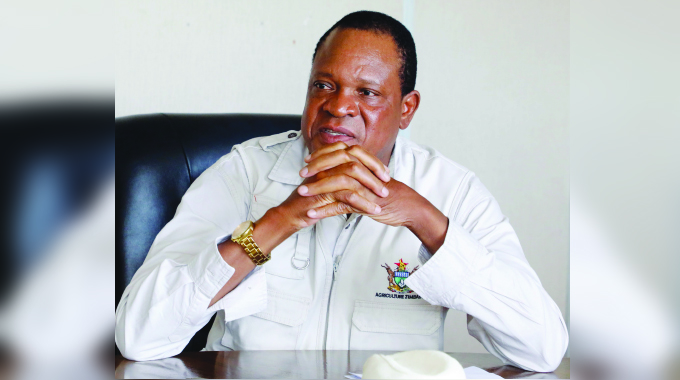
Speaking at the event, Lands, Agriculture, Fisheries, Water and Rural Development Minister Dr Anxious Masuka praised ERVHIZ as a replicable, scalable, and sustainable model for other regions in other parts of the country.
“The lessons learnt are that through planning together we can do more. What we have learnt is that when we go to a project and we have this concept of a village business unit, that village business unit concept must be implemented by Government, development partners, and the private sector,” he said.
Dr Masuka stressed that Zimbabwe is moving away from donor dependency towards self-reliance, seeking investment in its human resources, land, and natural endowments.
“Zimbabwe is looking for investment in our potential in terms of heritage and endowments, the human resources capacity, land, the climate so we can begin to produce more. Beyond the project’s lifespan, we should be able to sustain it and be able to trade,” he said.
Dr Masuka also noted that ERVHIZ aligns with President Mnangagwa’s rural industrialisation agenda, which aims to uplift communities and drive Zimbabwe towards Vision 2030.
“The elements of this project are the improving yields in dry-land agriculture, provision of irrigation, provision of water sanitation and health services in villages and schools rhymes with the President Rural Development 8.0 intervention designed to uplift communities,” he said.
He commended the European Union and their implementing agencies FAO and Unicef for their efforts.
UNICEF deputy country representative, Mrs Zeinab Adam lauded Government for creating an enabling environment.
“This whole-of-Government approach taken in the implementation of ERVHIZ has been a model of effective collaboration, bringing together multiple ministries, provincial and local governments, and development partners to ensure that no child is left behind,” he said.
“This is a testament to the Government’s commitment to decentralisation, resilience-building, and sustainable development.”
Mrs Adam commended European Union’s support in the implementation of the project saying ERVHIZ, has transformed the lives of thousands of children.
“Through this project over 22 500 households now have access to clean and safe water, ensuring children no longer have to walk long distances to fetch water, missing school and exposing themselves to dangers along the way,” she said.
Nearly 12 000 households have improved sanitation, drastically reducing the risk of water-borne diseases that claim the lives of young children.
Mrs Adam said over 45 000 households, including 20 000 children under five, have benefited from essential nutrition services, helping children grow up stronger, healthier, and better prepared for the future,” she said.
FAO sub-regional coordinator and country representative for Zimbabwe, Dr Patrice Talla said the project highly impacted the vulnerable communities in Matabeleland South through the implementation of integrated agriculture, water, sanitation and hygiene (WASH), nutrition, and crisis modification interventions.
“ERVHIZ programme stands as a shining example of the power of collaboration in addressing the complex challenges of climate change and food insecurity. Brought together by a shared vision, the Government of Zimbabwe, FAO, Unicef, and a diverse array of stakeholders have demonstrated the transformative impact that can be achieved when organisations and communities work in tandem,” said Dr Talla.
He noted that the collaborative nature of this project has been instrumental in amplifying its impact.
“By bringing together Government agencies, development partners, the private sector, and community members, we have been able to leverage our collective expertise and resources to create lasting change,” said Dr Talla.
He said the project has created the necessary knowledge resources for future reference by the Government and communities in addition to the infrastructure that has been established or rehabilitated.