Online Reporter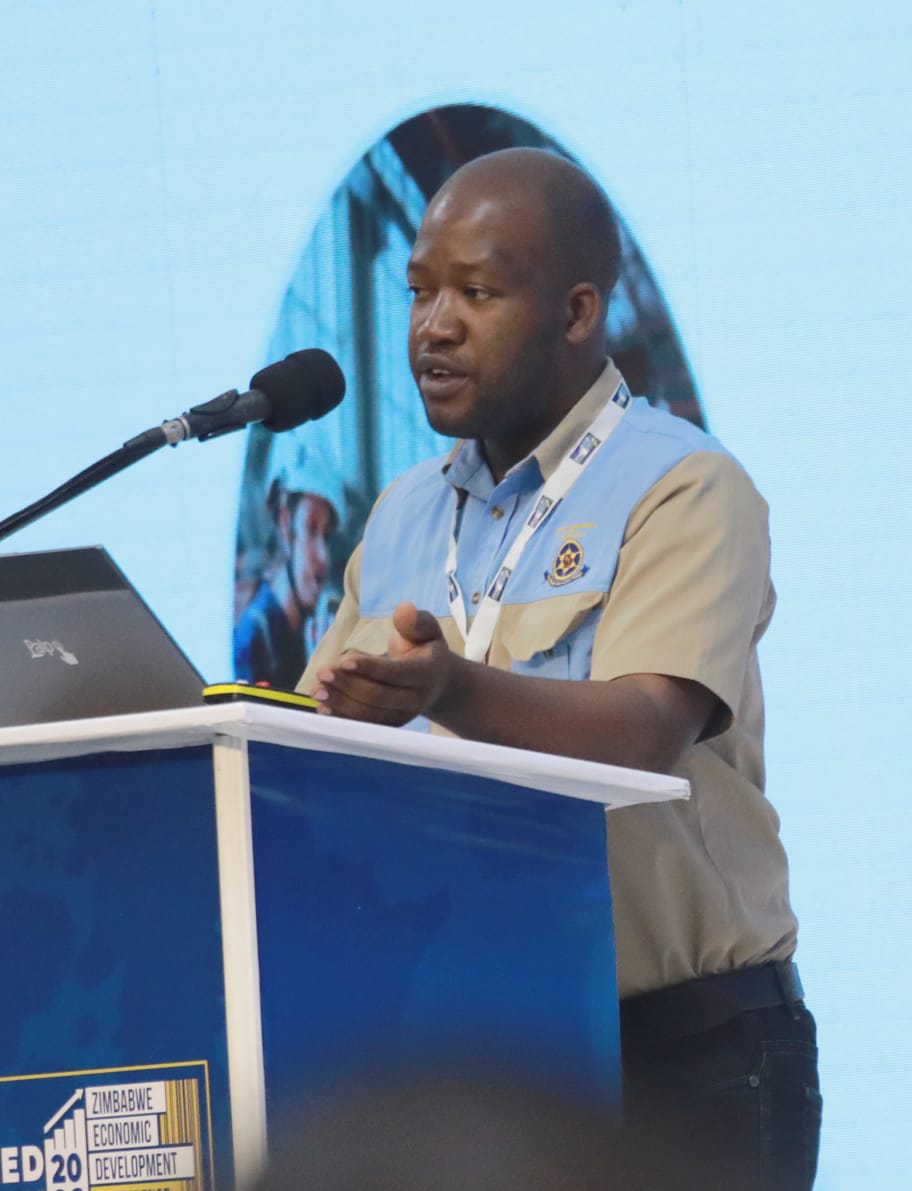
Nqobile Bhebhe [email protected]
Zimbabwe’s railway revival will require about US$400 million in short- to medium-term recapitalisation, with mining corridors emerging as the immediate anchor for rebuilding the National Railways of Zimbabwe (NRZ) and restoring its role in the economy.
Presenting a paper titled “Reimagining Rail Infrastructure in Zimbabwe: Innovative Financing and Operational Transformation for Upper Middle-Income Transition” at the ongoing Zimbabwe Economic Development Conference (ZEDCON) in Bulawayo, Mr Fradrexk Podzo said the railway recovery could not depend on capital injection alone.
“Zimbabwe rail system is a strategic economic asset but recovery requires more than capital injection,” he said.
Mr Podzo said the NRZ faced ageing tracks, obsolete signalling equipment, limited rolling stock and outdated information systems, while freight volumes had plunged from about 12 million tonnes annually to below three million tonnes.
He said the immediate priority should be corridors with sufficient freight demand to support investment and repayment.
“Revitalisation should start with bankable corridors and credible institutions not network wide borrowing without clear traffic and repayment assumptions,” Mr Podzo said.
Mining was identified as a critical anchor for the revival because of the sector’s bulk freight requirements.
“Mining sector have got high demand than in other sectors hence there is need to invest in those corridors,” he said.
The proposed approach would allow scarce capital to be channelled towards economically viable routes linking mines to processing facilities, markets and export gateways.
Mr Podzo said the deterioration of rail had also increased dependence on road transport, placing additional pressure on the fiscus through road maintenance requirements.
“Of course there are challenges related to low traffic volumes which have been observed over the past years declining from about 12 million tonnes per year to less than 3 million.
“And as well there is a stiff competition from the road and increased road dependence by former railway customers, regular customers and this action is also putting unnecessary pressure on the already strained fiscals due to road maintenance costs and poor road related costs.”
He said financing would have to be matched by institutional and operational reforms.
“Innovative financing must be followed by digital and operational transformation,” Mr Podzo said.
He said rail revitalisation was ultimately an industrialisation and regional trade imperative.
“Therefore, rail recovery is not only a transport issue, it is an industrialization and regional trade competitiveness issue.”
Mr Podzo said corridor integration would be essential to rebuilding sustainable freight volumes.
“Corridor integration sustains freight demand, revenue and regional competitiveness,” he said.
The strategy, he said, should support Vision 2030 through lower-cost bulk logistics and stronger regional connectivity.
“So our main issue here is to focus on policy issues operations and operational issues that will transform the current railway system,” Mr Podzo said.