Online Reporter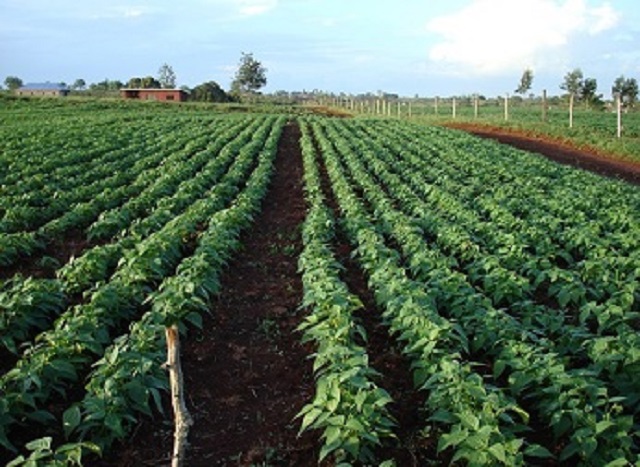
Patrick Chitumba
Midlands Bureau Chief
A US$66.5 million agricultural initiative, aimed at directly benefiting over 50 000 smallholder farmer households in the Midlands, Matabeleland South, Manicaland, and Masvingo provinces was officially launched in Gweru yesterday.
The Horticulture Enterprise Enhancement Project will establish 620 village business units while enhancing the 4Ps model of public, private and producers partnerships, enabling smallholder farmers to supply commercial markets.
Jointly funded by the Government of Zimbabwe (US$5,2 million), the International Fund for Agricultural Development (US$37,1 million), and the OPEC Fund for International Development (US$15 million), the initiative is expected to have a transformative impact on community livelihoods.
The first phase of HEEP in Matabeleland South is set to benefit farmers in Gwanda, Mangwe, Beitbridge, Insiza and Matobo.
In Manicaland, farmers in Chimanimani, Chipinge, Makoni, Mutasa and Nyanga will be the initial beneficiaries, while in Masvingo, farmers in Gutu, Chiredzi, Zaka, Masvingo and Mwenezi will benefit.
In the Midlands, the initiative will support farmers in Gweru, Chirumhanzu, Mberengwa, Zvishavane and Shurugwi, who will reap the first benefits.
This drive is expected to help Zimbabwe produce higher quality horticultural products and reverse the dominance of foreign imports.
Chief director in charge of Business, Development Markets, and Trade in the Ministry of Lands, Agriculture, Fisheries, Water, and Rural Development, Mr Clemence Bwenje, stated that the launch of HEEP in the Midlands followed a development journey characterised by rigorous planning, stakeholder engagement, and collaborative efforts dating back to 2021.
“The roadmap began with a comprehensive assessment of our horticultural sector’s strengths, challenges, and opportune areas for investment,” he told the gathering, which included representatives from ministries, departments, the private sector, development partners, and farmers.
“It involved extensive consultations with key stakeholders, including farmers, agribusinesses, local communities, and development partners.”
Mr Bwenje noted that the launch marks a significant milestone in the journey to transform the horticultural sector into an engine of the agriculture sector and the economy at large.
“The horticulture sector must reclaim its position as the fastest-growing sector and second-largest foreign currency earner to effectively contribute to driving Vision 2030,” he said.
“Our shared objective is to work together towards transforming the horticulture sector into a robust engine for growth. Each stakeholder has a crucial role to play, and it is through our collective efforts that we can bring about significant changes in our agricultural landscape.”
Mr Bwenje highlighted that the horticulture sector is a livelihoods enterprise with the potential to generate over US$2,5 billion in annual revenue, providing income for 600 000 farmers and those employed in the sector.
The sector holds immense promise for the nation’s prosperity, particularly for the Midlands, Manicaland, Masvingo, and Matabeleland South provinces.
“Through HEEP, we are on a mission to cultivate a dynamic horticultural sector that contributes significantly to Zimbabwe’s economic growth and development, leaving no one behind in the Midlands, Manicaland, Masvingo, and Matabeleland South,” he said.
The Government views the HEEP initiative as a strategic measure designed to elevate horticulture as a central driver of national economic growth.
Providing an overview of the project, HEEP National Project Coordinator Mr Pedzisayi Nemadziva stated that the project would improve rural livelihoods, enhance food security, and increase foreign exchange earnings.
“HEEP has three major components: village business units and the 4Ps, mobilisation and development, access to finance, institutional support, and project coordination,” he said.
“We will be establishing the village business units in the four provinces, and we will also introduce an export horticulture revolving fund to provide short- and medium-term financing, enhancing capacities through targeted capacity-building efforts and public infrastructure investments.”
Mr Nemadziva explained that HEEP would take a two-pronged approach to geographic targeting based on a combination of poverty and nutritional status, as well as potential for commercial horticultural development.
“Establishment of 620 village business units of 1,25 hectares each aims to increase income and nutritional outcomes for smallholder farmers in the four provinces. HEEP will establish 155 village horticulture gardens in each province, providing clean water for household chores as well as for the gardens,” he said.
To ensure the project’s success, he noted that the VBUs would be clustered in villages close to fully operational ARDA-managed irrigation schemes.
Mr Nemadziva added that villagers would also benefit from access to improved storage infrastructure and market linkages through the irrigation schemes and other anchor farms or firms.