

 admin
admin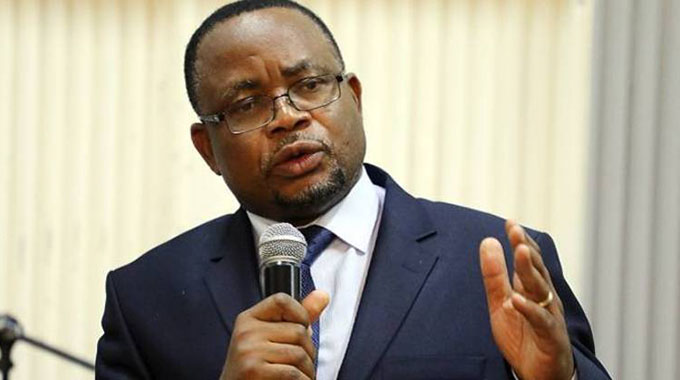
Deputy News Editor
Zimbabweans should have a mindset shift and consider using locally-available financial resources, instead of waiting for foreign funds to implement projects like road construction and power generation.
This was said by Public Service, Labour and Social Welfare Minister Professor Paul Mavima during the National Social Security Authority (NSSA) annual general meeting last week.
Prof Mavima said it was disappointing that the previous administration waited for three years to get a US$100 million loan facility for small-scale gold miners, when such funds could have been raised locally.
“Sometimes I think as Zimbabweans we tend to forget, generally, about, the resources we have locally. We almost always want to look elsewhere for resources that can turnaround this country,” said Prof Mavima.
“There was a time when I was talking to one of my Cabinet colleagues and he told me that they had been waiting for more than three years, that was in the old dispensation, for a loan facility from China of about US$100 million in order to ramp up productivity in the small-scale sector of gold, and they kept waiting, waiting, waiting until they realised that money was not coming.
“And I asked him were there no local resources that could have been used for that purpose? After all, US$100 million is not that much of a resource, and given the nature of gold mining, as one of our biggest foreign currency earners, that would be a worthwhile investment and we could start generating resources for ourselves.”
Prof Mavima said it was not just NSSA’s balance sheet of over $1 billion that could be used to fund local infrastructure projects, but many other source of finance.
According to NSSA’s 2018 financial results, the authority’s total assets rose from US$1,37 billion in 2017 to US$1,6 billion in 2018.
Prof Mavima said such resources could be used for national development, instead of lying idle in the bank.
“Whilst we say prudence, prudence, prudence, but use those resources (for the development of the country),” he said.
“I have been told that you (NSSA) currently have a glut of cash. You had a moratorium on investments and therefore NSSA money is sitting in bank accounts, and every day it is losing value and there are lots of investment projects that you could embark on, prudent investments which could help the development and turnaround of this country, instead of waiting for foreign direct investment (FDI) to come.”
Prof Mavima challenged the NSSA board to explore opportunities that will see the authority delivering value to pensioners through profitable investments.
NSSA holds 100 percent stake in the National Building Society (NBS), 67 percent in the Rainbow Tourism Group, 69,44 percent in First Mutual, 35,13 percent in FBC Holdings Limited, 35,09 percent in Fidelity Life Assurance Limited and 20,57 percent in OK Zimbabwe, among others.
But Prof Mavima believes there is scope for more profitable investments that the NSSA board could pursue and generate more revenue for pensioners.
“The first charge is prudence,” he said. “The second charge is ‘let’s do whatever is possible to invest in ways that give value to the pensioners’ but contributing to the general turnaround of this economy, and we can’t wait.
“It is the Government’s expectation that NSSA, given the size of its balance sheet and the long-term nature of its savings, should play a key role in promoting Vision 2030, through investing in projects that deliver wider positive economic and social impact such as job creation, poverty alleviation, health and enhanced social security coverage.
“This should, of course, be done within a fiduciary and market-return context that achieves fair return on contributors’ funds and also promotes long-term sustainability of NSSA and its schemes.”
Vision 2030 targets to turn the country into an upper middle income economy by 2030, premised on good governance, macro-economic stability, inclusive growth, infrastructure and utilities and social development.
The Government is making concerted efforts to stimulate production across various sectors and has declared 2020 as the year of production following the transition from austerity to prosperity.
NSSA is mandated by the NSSA Act and supporting legislation to provide a safety net to vulnerable members of society through social security and promoting occupational safety and health.



 Online Reporter