

 admin
admin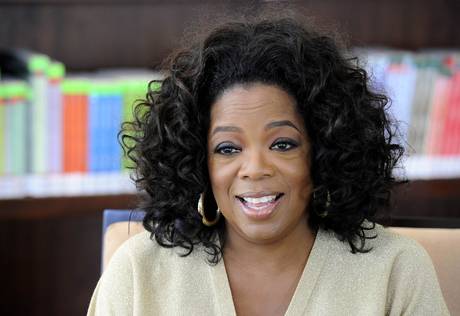
Lovemore Ranga Mataire The Reader
OPRAH Winfrey got her debut acting role in “The Color Purple”, an adaptation of Alice Walker’s novel published in 1982.
In her own words Winfrey says: “The Color Purple was a seminal moment in my life,” recounting how she woke up one morning and read the local paper’s review of Walker’s book and didn’t even bother to get dressed before throwing a coat over her pyjamas and heading down to the bookstore to pick up a copy and read it cover to cover.
Winfrey is not alone. Any reader who has come into contact with “The Color Purple”, is bound to feel some kind of elation that celebrates the indomitable spirit of most women depicted in the novel particularly Celie, the main protagonist.
“The Color Purple” is a story of two sisters. One, Nettie, leaves American with a missionary black couple to Africa while the oldest Celie, is a child wife living in the South but remain loyal to each other across time, distance, and silence through letters.
The most captivating aspect of the novel is that it is in the form of an epistolary through the use of letters first addressed to God and letter addressed to her sister Nettie upon reawakening and transformation of her captive spirit.
The use of letters, written by a semi-illiterate black girl in the South makes the book both revolutionary in presentation and emancipatory in perspective. It is revolutionary in that Walker seeks to present raw direct speech typical of black “uneducated” Americans and it’s emancipatory in that it trashes all recourse to grammar, syntax, spelling errors and lack of subject-verb agreement. However, this does not in any way blur the any comprehension of the text.
Commenting on Walker’s use of language in the Feng Chia Journal of Humanities and Social Sciences, Pi-Li Hsiao says the conscious use of language produces new narratives strategies, discloses unheard stories of women, and transforms traditional concepts of gender roles.
“Walker’s employment of Black English manifests her concern about the black cultural heritage and her challenge to the superiority of white people’s language. Her experiments with the epistolary novel make the silenced women hear in a double-voiced narrative.”
Pi-Li Hsiao says Walker’s experiments with the epistolary novel is meant to expose the polarity between gender roles, an arbitrary division resulting from language construction as her black characters adhere to the hierarchical gender structure, which is further fuelled by skin colour and tone.
While the use of unconventional black English language, may pose a problem to some readers, it does not in any way disfigure the depiction of Celie, a poor, barely literate Southern black woman who struggles to escape the degradation and ill-treatment meted out against her by men.
There are several reasons why the novel is regarded as a straightforward feminist narrative. First, it exposes the brutal treatment of uneducated women in the South by men in a cyclical environment where the men are also victims of white racism and segregation.
The second factor is that the books seeks to debunk traditional gender roles through the portrayal of Sofia as a belligerent and no nonsense woman who does not let anything stand in her way as she challenges patriarchy so entrenched in the American system. Even Shug Avery’s independent spirit is an anti-thesis of the expected meekness of women. The third factor is that towards the end of the novel all women in the book are bonded by their common struggles and men seem subdued and tamed.
Walker’s writing techniques are exceptional in that Celie’s and Nettie’s letters exhibit two different “narrative voices” which complement each other in a larger cultural context.
In light of Walker’s radical experiment with the epistolary form and her strategy to “attain linguistic self-assertiveness,” it is justifiable to treat the text as a postmodern novel for its aesthetic manipulation of voice and discourse so as to contest and disrupt the form within.
The author’s special use of language creates new narrative strategies, discloses unheard stories of women, and transforms traditional concepts of gender roles.



 Online Reporter