admin
admin
Dr Tony Monda Art Zone
HELPING a community begin to understand its historic, cultural, economic, and social context is an essential foundation for developing and building sense of place. This context includes a variety of community characteristics: population, demographic, and linguistic characteristics; physical and natural resources; artifacts and antiquity, the contemporary artistic history; cultural history; climate; customs; landscape features; design and architectural elements; local educational institutions; and temporary artistic and cultural exhibits, events, and spaces. A comprehensive reading or inventory of a place can help a community begin to develop a face and voice for its narrative.
The urban planning process plays an important role in assisting residents as they inventory and explore their community context. In this way, the planning process provides a grounding mechanism to ensure that the wealth of information latent in the community is revealed, enhanced, and maintained over time. This allows a narrative about the authentic elements of a community’s talent to emerge and thrive.
Artistic and cultural inventories allow a community to assess its historic, cultural, economic, and social context. These inventories include the identification, assessment, and mapping of a community’s artistic and cultural resources. Conducting such an inventory allows city planners to play a role in revealing the creative assets of a community and create ways of how to exploit its cultural resources for the benefit of its people.
This role is strengthened by collaboration with other stakeholders, such as cultural writers, artists, designers, landscape architects, corporate business entities and representatives from other cultural institutions. Arts, cultural, and educational institutions are particularly skilled at capturing these special qualities and helping citizens understand their community through new eyes.
An inventory can often be the first step in community character discovery — or a guided cultural reconnaissance exercise that engages residents from all segments of a community’s population in an interactive, creative process of developing a vision for the future of the community.
According to the Culture, Creativity, and Communities Programme at the Urban Institute, in Boston, US, however, traditional cultural inventories conducted by local governments often overlook non-traditional cultural resources, venues, and activities.
Cultural inventories typically focus on cataloguing the variety of arts and cultural organisations within a community, analysing aspects of the natural environment (such as natural and archaeological resources), and describing traditional arts and cultural sites such as theatres, art galleries, and other performance or exhibition venues. By expanding the scope of a traditional cultural inventory, planners can better explore the wealth of artistic, cultural, and creative opportunities at municipal and neighbourhood levels.
A comprehensive artistic and cultural inventory for Zimbabwe combines quantitative and qualitative methods and includes a variety of stakeholders — such as artists, cultural researchers, residents, and community cultural workers, schools, municipal authorities, corporates, community leaders, and religious leaders — in community-based participatory research into the artistic, cultural, and creative characteristics of a community or neighbourhood.
Community character is something a community has inherently. It is conveyed not only by buildings and public spaces but a whole range of urban elements: residences of all sizes and scale; commercial, government, and institutional buildings; street cross-sections; street furniture and graphics; public places, large and small; ceremonial buildings; informal activities such as street markets and stalls, food, language, and the personalities that contribute to a community’s narrative.
While a visual inventory of a place provides the initial context for building a sense of place and establishing community identity, the combination of context and the reinforcement of the current climate and culture of a place create community character or identity.
Reinforcing this sense of place therefore, requires first a comprehensive understanding of a community’s historic, cultural, economic, and social context. The visual arts as a discipline provide the correct media for the recording and dissemination of this type of information.
Only through the understanding and reinforcement of its character can a community flourish civically and economically. Planners together with visual artists are uniquely qualified to guide citizens in this process of discovery and celebration of community character.
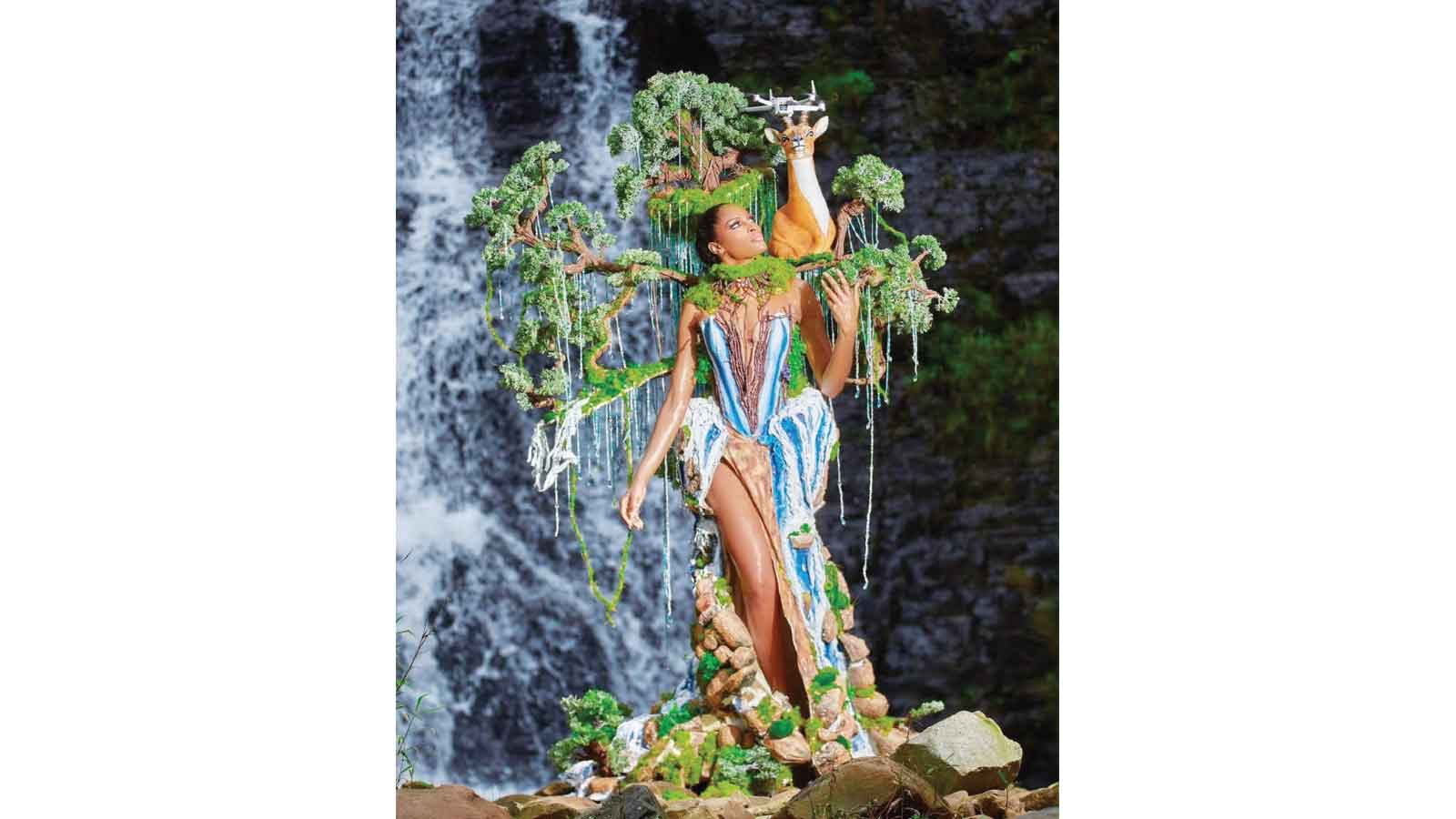
The visual arts of Zimbabwe can be used effectively as a vehicle to reinforce and celebrate cultural community character.
- Dr Tony Monda holds a PhD in Art Theory and Philosophy and a Doctorate in Business Administration (DBA) in Post-Colonial Art and Heritage Studies. He studied law and photography at the Corcoran School of Art, Washington and holds a Law and Art Diploma from Georgetown University, Washington, DC. He worked with WALA (Washington Area Lawyers Association). He undertook an internship in Psychology of Art and Remedial Art Therapy at the Lafayette School of Art Therapy for the Mentally Handicapped Children, in New Orleans, USA. He is an author, art critic, art consultant and a practising visual artist. He is also a musician, and corporate image consultant.


 Online Reporter