admin
admin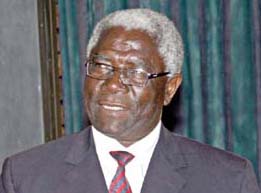
dwelling too much on theory and start infusing practical issues into their curriculum to influence the country’s approach to farming.
Speaking on the sidelines of a seminar by Chinese academics from Jiangsu Animal Husbandry and Veterinary College yesterday, Professor Nyagura said the Faculty of Agriculture was not impacting on development in the country because focus was centred too much on theory.
“We need such seminars to expose our people to the new way of thinking in which training of personnel should have a direct link to production and development. They also expose people to developments taking place
elsewhere across the globe,” he said.
Professor Nyagura said partnerships with Chinese universities were part of the strategic thinking of the 21st century in which the faculty needed to re-position itself and be oriented to the new way of thinking that has seen China’s agriculture and economy growing in leaps and bounds.
“We are aware that agriculture in China is doing very well with Beijing alone feeding its population of 18 million people courtesy of improved farming methods,” said Professor Nyagura.
Jiangsu Animal Husbandry and Veterinary College lecturer Professor Wang Li-gang said he was happy to share China’s animal husbandry development experience with Zimbabwe and help improve the latter’s animal husbandry as well.
“We will co-operate with the University of Zimbabwe and send students to China for short-term training and also go to pastureland to conduct on-site experience exchange programmes and share China’s successful experiences,” Professor Li-gang said.
China’s total area is 9,6 million square kilometres with a population of 1,33 billion, people half of whom depend on agriculture.
On the other hand, the Department of Animal Science is one of the four departments in the Faculty of Agriculture.
It produces an average of 30 graduates per year and also offers postgraduate training.
It has a long history of co-operation with other institutions in the region and abroad part of which enabled the launch of the Msc degree in Animal Science in1992 that is currently running with an intake of eight students.
The department’s last group to graduate on a regional programme included five students from Zambia, Botswana, Malawi and Nami-bia. It also offers short courses and advice to livestock farmers and non-governmental organisations designed to improve the farmers’ capacity using the latest technologies.
Such outreach programmes have so far benefited over a hundred farmers in the area of artificial insemination, feed formulation and production.
“The demand for such courses is increasing and the department looks set to expand its product portfolio to assist farmers venture into new production systems and new livestock species,” commented Professor Nyagura.



 Online Reporter