admin
admin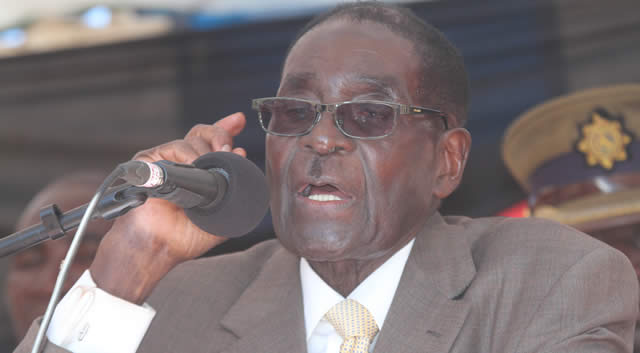
Farirai Machivenyika Harare Bureau
THE Southern African Development Community (Sadc) must free itself from economic bondage and reliance on
donors by funding and implementing value addition strategies for its abundant natural resources, President Robert Mugabe said yesterday.
Opening an extraordinary Sadc summit on industrialisation in Harare, President Mugabe who is the regional group’s chairman, said it was imperative for the trade bloc to adopt and fund its drive to beneficiate its mineral and agricultural resources without looking elsewhere for support.
Sadc leaders adopted a Regional Industrialisation Strategy and Roadmap and the Regional Indicative Strategic Development Plan.
Value-addition and beneficiation were critical in creating employment and eradicating poverty in a region endowed with immense natural resources, the leaders observed.
“It’s only through adding value to our products that we can make the first step. Value addition and beneficiation will lead to increased returns from the export of our tobacco, cocoa, coffee, cotton, wood and sugar, among others. If we continue as exporters of raw materials, we’re sure to remain trapped in the jaws of underdevelopment, while those who add value on our behalf flourish at our expense,” President Mugabe said.
Exporting the region’s resources in their raw form had resulted in the countries earning little profits and failing to uplift the standards of living of the majority.
“Despite the rich and diverse endowments of our region, about 70 percent of our people continue to live below the poverty datum line. By exporting our natural resources in their raw form, we aren’t only earning marginal profits, but are, in essence, compromising our efforts to create jobs, or diversify our products, or even develop our industries and are ultimately exposing our economies to the vagaries of the fluctuations of the global resource markets.
“The situation is equally discouraging in other sectors. In agriculture, Sadc countries have remained as sources of unprocessed agricultural produce, thus earning a mere 10 percent of the actual value of our products.
“This sad story extends beyond Sadc to fellow African countries. It’s imperative for us to reverse this trend if we’re to achieve self-sustaining development for our countries,” he said.
President Mugabe said Sadc countries were blessed with many natural resources and held approximately six percent of the world’s coal, seven percent of nickel, eight percent of copper, 13 percent of uranium, 15 percent of manganese, 18 percent of cobalt, 21 percent of zinc, 26 percent of gold, 41 percent of chromite, 55 percent of diamonds and 72 percent of platinum group metals.
He said it was critical that Sadc countries increased trade amongst themselves in light of the initiatives they had taken to reduce tariffs within the region.
“As you’re aware, the volume of intra-Sadc trade remains very low. This is notwithstanding our persistent endeavours to boost trade within the region through the Free Trade Area. Statistics show that import figures between ourselves and the Asia Pacific region account for 45 percent, while with the EU, it stands at 27 percent. Sadly, imports from within the region are a paltry 10 percent with raw material and semi-processed goods accounting for the bulk of the exchange,” President Mugabe said.
He acknowledged that many countries in the region had adopted various industrialisation strategies, but said the integration of the policies should bring better results.
“Cognisant of the critical role that industrialisation plays in winning the fight against poverty, the majority of us, at national level, have already embraced industrialisation policy frameworks and programmes that emphasise value addition and beneficiation,” he said.
“It’s therefore imperative that, driven by that conviction, we adopt the same paradigm shift at regional level through embracing a regional integration and development strategy that prioritises industrialisation. The potential benefits that we stand to derive from exploiting comparative and competitive advantages as well as local and regional value chains are immense.”
The President said he was hopeful the Regional Industrialisation Strategy and Roadmap, if implemented effectively, had the potential to unlock opportunities that would go beyond the region’s borders. He said improving the region’s infrastructure was also critical for the roadmap to succeed and that it was necessary that it be implemented together with Sadc’s Regional Infrastructure Development Master Plan.
“Most important is the need for the region to work out effective financial mechanisms to fund the regional industrialisation strategy. We cannot expect those who benefit from our status as exporters of raw materials to fund our efforts to wean ourselves from this unequal relationship, a relationship in which they have the prerogative of dictating the terms of trade,” he told fellow leaders.
“Just as we were our own liberators from the colonial bondage and oppression, we’ve to find the resources to free ourselves from economic bondage. In short, we’ve to fund our industrialisation strategy.”
President Mugabe said the involvement of women and youths in the implementation of the strategy could not be overemphasised as they were an important part of society especially in the micro, small and medium enterprises sector.
Addressing the same conference, Sadc executive secretary Stergomena Lawrence Tax said the region’s economic transformation strategy would be based on three pillars — industrialisation, competitiveness and regional integration.


 Online Reporter