Online Reporter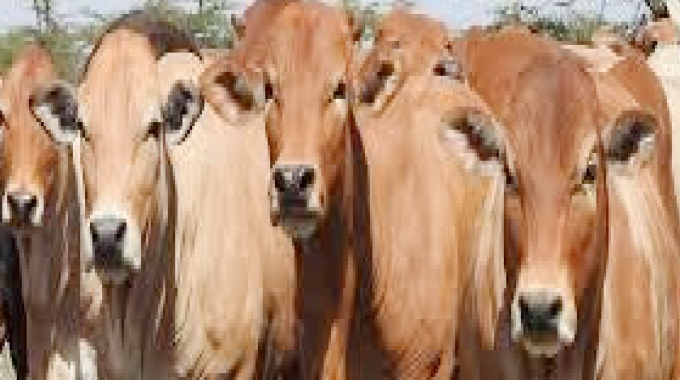
Rutendo Nyeve, [email protected]
THE decisive step by the Southern African Development Community (SADC) towards a coordinated regional response to foot-and-mouth disease (FMD) is critical to improving production and promoting trade for the benefit of local communities.
This follows a resolution at last week’s Victoria Falls meeting to establish a regional FMD vaccine bank in Botswana, a move expected to strengthen disease control, protect livestock-based livelihoods, and unlock trade opportunities across the bloc.
The resolution was adopted at the recent Meeting of the SADC Committee of Ministers of Agriculture held in Victoria Falls, where regional leaders acknowledged that the current FMD crisis, which has affected eleven of the region’s 16-member states, requires collective action rather than isolated national responses.
The chairperson of the SADC Ministers of Agriculture and South Africa’s Minister of Agriculture, John Steenhuisen, said the decision marked a catalytic moment for the region.
“There was an agreement that we are going to have a regional approach to foot-and-mouth disease, establish a regional vaccine bank to be able to react swifter to FMD outbreaks and work together across SADC to beat foot-and-mouth disease so that we can open up those important markets for trade that are so fundamentally important for the red meat and livestock value chains,” said Minister Steenhuisen.
The decision is expected to enhance regional preparedness and improve the speed at which member states respond to outbreaks, while helping restore confidence in Southern Africa’s livestock sector, which has been hampered by recurring disease outbreaks and trade restrictions.
FMD has ravaged cattle populations across Angola, Botswana, Democratic Republic of Congo, Eswatini, Lesotho, Malawi, Mozambique, Namibia, South Africa, Zambia and Zimbabwe.
The outbreaks have led to trade bans on red meat and livestock products, crippling rural economies that depend on cross-border livestock sales and threatening food security in affected countries.
The vaccine bank will be managed by the Botswana Vaccine Institute (BVI), a state-owned entity that has been producing FMD vaccines since 1978.
The facility will maintain a stockpile of antigens, enabling the region to respond to outbreaks within ten days instead of waiting months for fresh vaccine production.
Mr Keabetswe Moagabo, acting chief executive officer of the Botswana Vaccine Institute, described the initiative as transformative.
“This is a big game changer. If we are able to detect and control FMD early, we will definitely protect countries, especially the livestock economies and enhance protection of the livelihoods and food security,” Mr Moagabo said.
He explained that having an antigen bank reduces turnaround time.
“If you are to start from the beginning of the process, it will take long to get the vaccine out. But if you have a bank, you are quick, you reduce the turnaround time. Basically, you reduce it to 10 days to make sure that we combat the disease on time,” he said.
Zimbabwe, whose farmers have suffered repeated FMD-related export bans, stands to benefit significantly from the regional bank.
The country’s beef exports to high-value markets like the European union remain restricted due to FMD status, costing millions in lost revenue annually. Improved regional disease control is expected to strengthen prospects for restoring access to lucrative export markets while safeguarding the livelihoods of farmers who depend on livestock production.
Minister Steenhuisen noted that the meeting produced 18 resolutions covering food security, plant standards, product standardisation, harmonisation of fertiliser requirements, and joint fertiliser buying, but the FMD vaccine bank stood out as a game-changer for the livestock sector.
The Victoria Falls meeting also addressed broader agricultural challenges, including climate resilience, fertiliser costs, and grain reserves. Minister Steenhuisen emphasised that the region must adapt to climate shocks rather than merely complain.
“Climate change was also discussed today. It is a reality and we can moan about it as much as we like. We need to adapt. If we don’t adapt our agricultural food systems in Africa to the climate change crisis that we’re facing, we’re going to always be on the back foot,” he said.
Mr Moagabo noted that BVI is already optimising its processes and building a new blending and filling laboratory, scheduled for completion by December 2027, to increase production capacity. The institute currently supplies FMD vaccines to Zambia, Malawi, South Africa, Namibia, Zimbabwe, Botswana and even beyond SADC to Tanzania and Uganda.
“This is the first time that we have the region really under a huge outbreak. But what we are doing right now is optimising our processes so that we can meet the demand. We are also working on a long term plan to increase our capacity for the vaccine production,” he said.
The vaccine bank is expected to become operational in phases over the coming months. This development will not only save livestock but also protect the livelihoods of millions of smallholder farmers across the region who depend on cattle as their primary asset.
Minister Steenhuisen said future generations would look back on the Victoria Falls meeting as a turning point.
“When we look back in five to six years, this particular meeting will be remembered as one of the more catalytic meetings where we really took some very firm decisions to determinedly move forward together,” he said.