

 Online Reporter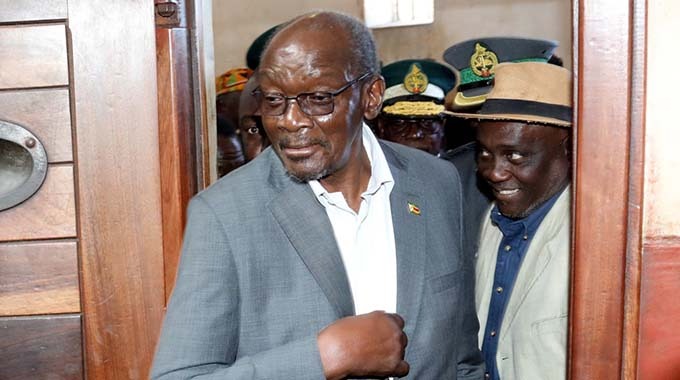
Peter Matika, [email protected]
VICE-President Kembo Mohadi retraced the steps of his painful past yesterday as he returned to Khami Prison, the site of his incarceration during the country’s liberation struggle.
His visit, marked by raw emotion, comes ahead of the country’s Heroes Day commemorations. It served not only as a return to a physical place but a deep reconnection with a defining chapter in the nation’s path to independence.
“These walls hold memories of our collective struggle. Each cell represents a chapter in our nation’s fight for freedom and dignity,” said VP Mohadi, standing just metres from the cells where he and other political prisoners were once held.
VP Mohadi was arrested in May 1975, although prison records document his entry in August. At the time, he was only 25 years old, convicted of distributing arms in then-Rhodesia, a sentence that earned him 15 years behind bars. He became inmate number 73/75 at Khami Prison. His ordeal included months of torture and transfers across the region before he arrived at Khami, where he was eventually held in cells 28 and 61, alongside President Mnangagwa, who was detained in cell 44.
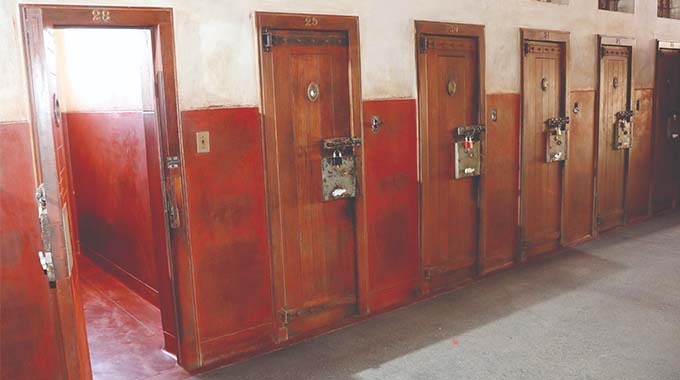
As he walked the prison corridors, VP Mohadi was reunited with former detainees, including Cde John Maluzo Ndlovu, in a reunion that bridged history and legacy.
“This is where we grew up. Not eating your chips and fancy foods. It was a place of pain, but also one where the revolution lived and grew stronger,” said the Vice President.
VP Mohadi recounted how political detainees continued the struggle from within the prison walls, creating what they called a “High Command” that covertly communicated with external liberation leadership in Lusaka.
“We came up with what we called a High Command in prison, which then communicated with Lusaka from here. I was in charge of intelligence inside,” he revealed.
“Some sympathetic wardens helped us relay messages. That’s how we kept the fight alive, even behind bars.”
VP Mohadi also shared a harrowing twist in his story of how he narrowly escaped a death sentence after a fellow fighter who had been caught with arms in Gweru convinced the Rhodesian authorities that he had defected. The man received a suspended sentence while VP Mohadi was handed down a decade-and-a-half in prison.
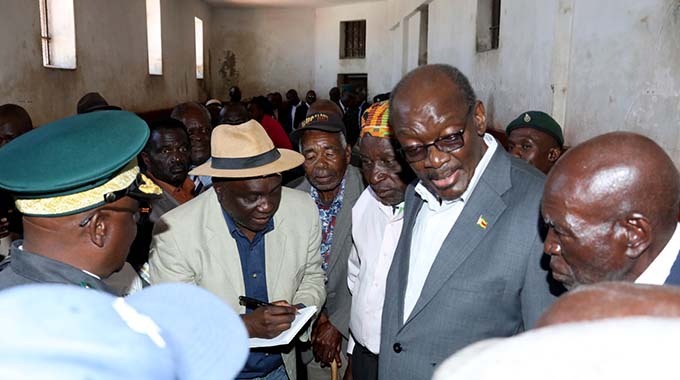
“I was meant to be hanged, but I survived,” he said solemnly.
“After being transferred from solitary confinement, I stayed in this ward. Despite being incarcerated, we never stopped fighting for the liberation of the country because we had a cause and a reason to persevere during the struggle.”
Beyond the hardship, the prison became an unlikely school of revolution. Many of the young detainees, upon release, received military training, some becoming so proficient they could disassemble and reassemble an AK-47 blindfolded.
“Some of us were intercepted when they were going for the liberation struggle. When they were released, they were trained to the extent that they knew how to strip an AK-47 and reassemble it without any hassle,” said VP Mohadi.
He said even in chains, they were preparing for freedom.
The Vice President also warned that colonialism had only changed form, transforming into modern mechanisms of economic bondage through debt slavery imposed by global financial systems.
“We are still fighting. Young people must rise and resist the new face of oppression. Slavery became colonisation and colonisation has become debt,” said VP Mohadi.
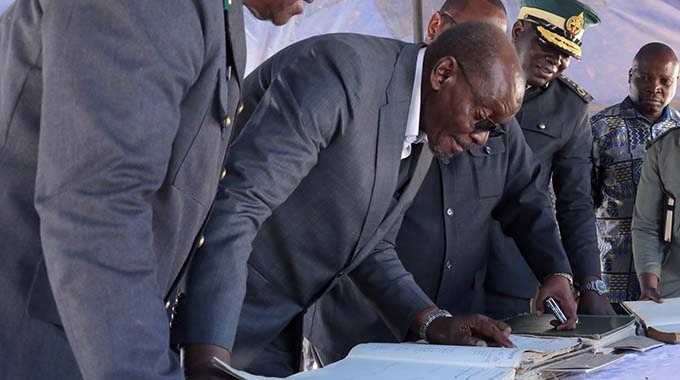
The Vice President’s visit was more than a personal pilgrimage; it was a national call to memory. He emphasised the importance of ensuring younger generations understand the sacrifices that laid the foundation of an independent Zimbabwe.
“Our history must not fade. The youth must know where we came from so they can defend where we are going.”
Cde Maluzo Ndlovu, one of the first liberation fighters imprisoned at Khami, echoed VP Mohadi’s sentiment.
He said the colonial government did everything in its power to make their conditions unbearable, but they never deviated from the course of fighting for the country’s liberation.
“They tried to break us, but we never gave up. We endured because we knew Zimbabwe would be free,” he said.
Cde Ndlovu recalled how their death sentences were later commuted to life and eventually overturned with independence in 1980.
He also spoke of his bond with VP Mohadi, describing him as his junior and comrade in arms.


 derick.khumalo