admin
admin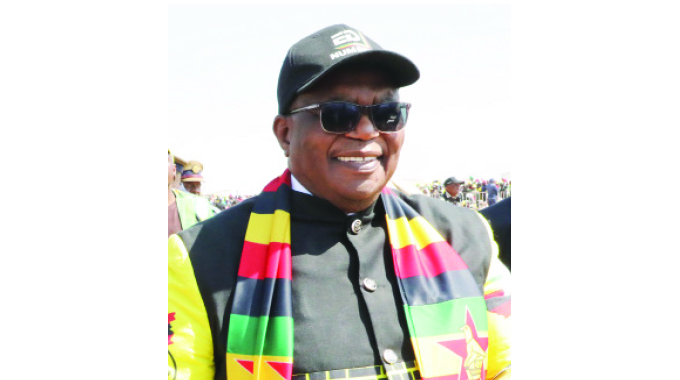
Sikhumbuzo Moyo, [email protected]
MATABELELAND North province played a critical role in the liberation struggle as the cradle of bold anti-colonial resistance in both the First and Second Umvukela/Chimurenga, which led to Zimbabwe’s independence in 1980, Vice President Dr Constantino Chiwenga, has said.
As the country readies to commemorate the National Heroes and Defence Forces holidays next week, Zimbabweans have been urged to cherish the gains of the liberation struggle and to honour the living and departed cadres who sacrificed their lives for everyone to enjoy freedom.
This year’s commemorations coincide with the holding of the harmonised elections on August 23, which should inspire citizens to vote in their large numbers for the revolutionary party, Zanu-PF, which ushered in Uhuru, said the Vice President.
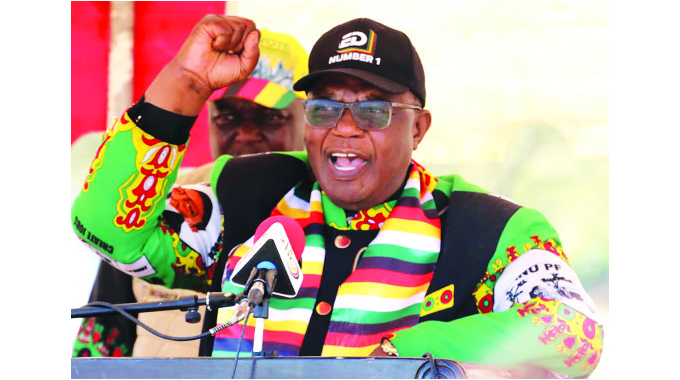
Speaking during a recent Zanu-PF rally in Dete, Hwange District in Matabeleland North, General (Retired) Chiwenga spoke glowingly about the brave liberation exploits exhibited by Matabeleland North citizens from the pre-colonial past.
He noted how, before the start of the First Chimurenga, the country’s forefathers, under King Lobengula, had unsuccessfully battled the white settlers from the late 1890s until 1904 when Ndebele warriors were eventually defeated by the British mercenary fighters who had the advantage of fighting using guns when compared to traditional spears and shields.
“The first chimurenga actually started in Matabeleland North in 1893 under King Lobengula and spread throughout the country until 1904 when it ended in Mutoko when our forefathers were defeated. Our forefathers perished during that time,” said Dr Chiwenga, a liberation war stalwart and an expert in military history and research.
“If you go to Bulawayo, there is an area where you find a tree called Christmas (Hanging) Tree where people were being hanged by a white man called Golden Powel.
“If you go to Harare, there is a similar place again where people were being ruthlessly hanged. Despite all these atrocities, Mbuya Nehanda swore and bravely declared that our bones were going to rise again.”
Decades later, the Hanging Tree, situated along JMN Street between Connaught and Masotsha Ndlovu Avenue, is still standing, looking healthier than most trees on the street, and has grown to be one of the reminders of how our forefathers lost their lives so that we could enjoy independence today.
VP Chiwenga said the defeat of the country’s forefathers could not deter brave and patriotic owners of the country from continuing with their resolve to fight for majority rule and self-governance.
“Having seen the first resistance against the minority white rule coming from this province of Matabeleland North, the Second Chimurenga, the real gun battle, again started off in this province and more particularly in this very district in 1967,” he added.
“The famous Hwange battle kickstarted the Second Chimurenga and there was never to be a retreat. Our heroes who were in this battle had received training in the then-Soviet Union under ZAPU.
“From there onwards, blood was shed, our mothers, brothers and fathers were injured while others lost their lives and they never got an opportunity to see a free Zimbabwe, which eventually came through the barrel of the gun,” said Dr Chiwenga.
History records show that the famous Wankie battle, the first contact between the liberation war guerillas and the Rhodesian forces, was on August 13 in Inyantuwe village. At that time the Zimbabwe People’s Revolutionary Army (ZPRA), the military wing of the Zimbabwe African People’s Union (ZAPU), and Umkhonto Wesizwe of the African National Congress (ANC), had crossed the Zambezi River on July 31 into Rhodesia on a two-fold mission.
Umkhonto weSizwe were to embark on a long walk across the country to South Africa while some of their comrades would assist ZPRA guerrillas to set up a military base in Lupane and in doing all this, contact with the Rhodesian forces was to be avoided at all cost. It was, however, not to be as many clashes occurred between August 13 and September 4, 1967. ZPRA forces were under the command of General Nikita Mangena while Chris Hani led the Umkhonto weSizwe.
The August 13, 1967 clash was against a platoon made up of British South African Police (BSAP) led by patrol officer Barry Tiffin (pictured) and Rhodesian African Riffles (RAR). Five Zipra guerrillas, two RAR fighters, three European and one African security force members were killed on the day while Tiffin was injured and taken to a hospital in Wankie before being flown to Bulawayo with bullet-buttered buttocks, according to the Chronicle report of August 22, 1967. The clashes marked the start of a full-blown brutal war of liberation that led to the country’s independence in 1980.
Dr Chiwenga said covet enemy attack operations had already started in 1964 with President Mnangagwa among those who led from the front mainly through sabotage works like train bombings, not real contact gun fighting. President Mnangagwa was eventually arrested in 1965 and sentenced to death but managed to escape the hangman’s noose after his lawyers successfully argued that he was under 21 and hence underage for the hangman’s noose.
He nevertheless was, however, brutally tortured by the ruthless white regime and spent 10 years in jail where he met and became friends with the late former President Cde Robert Mugabe. After his release, President Mnangagwa was deported to Zambia where he studied law.
With such a rich revolutionary and historic liberation background, Dr Chiwenga said Matabeleland North province should stand tall and proud and express this through voting for Zanu PF.
“I took you through the liberation struggle journey so that you understand why we are saying that this country must never again be returned to the colonisers and we must jealously guard and defend it by overwhelmingly voting for President Mnangagwa, our national assembly representatives as well as our councillors,” he said.


 Online Reporter