admin
admin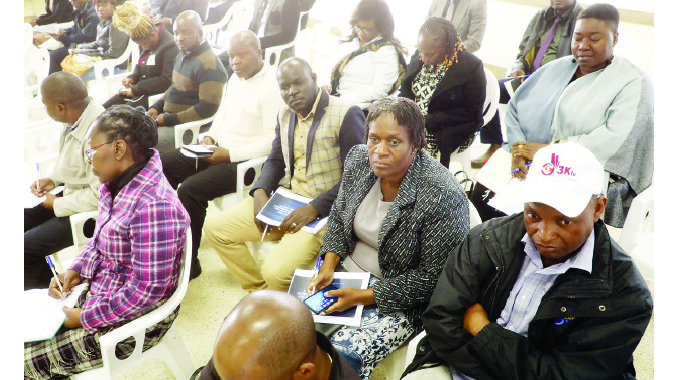
Nqobile Tshili, [email protected]
GOVERNMENT paid school fees for 44 000 pupils in Bulawayo under the Basic Education Assistance Module (BEAM) out of a target of 60 359 while a local resident received US$11 000 for special medical treatment in India at the height of Covid-19.
BEAM was set up in 2000 to enhance access to primary and secondary education for orphans and other vulnerable children. Through the programme, thousands of children have gone through primary and secondary education.
The Second Republic Government took the issue of providing social protection seriously and Zimbabwe is among the leaders in Africa in providing comprehensive social support through social welfare interventions to assist vulnerable people.
Government has been working on strengthening social protection systems, with its Covid-19 allowances complementing normal food aid programmes and has called on local and international partners to assist vulnerable communities.
Presenting the 2023 National Budget in November last year, Finance and Economic Development Minister Professor Mthuli Ncube set aside $50,4 billion to support vulnerable citizens through food, school fees and cash transfers.
The major chunk of the budget allocation towards social protection of $23 billion was channelled towards BEAM.
A further $1,2 billion was channelled towards assisting children in difficult circumstances in keeping with President Mnangagwa’s mantra of leaving no one and no place behind.
Bulawayo Provincial Affairs and Devolution Permanent Secretary Paul Nyoni said shocks that emerged following the outbreak of Covid-19 left so many households vulnerable but Government came through to assist them.
He was speaking during a Provincial Development Committee meeting held at Mhlahlandlela Complex where Government departments took stock of the achievements that the Second Republic made in the past five years.
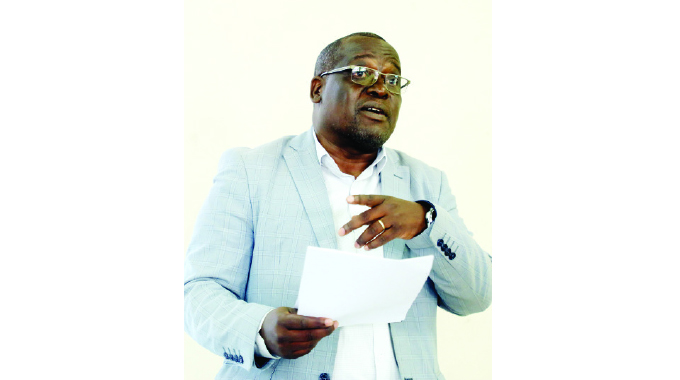
Mr Nyoni said a multi-sectoral approach should be commended for transforming vulnerable people’s livelihoods.
“That total shutdown during the peak of the Covid-19 outbreak meant people who relied on trading had no opportunity to do that. Before Covid-19, we had about 10 000 children who were on BEAM but post Covid-19 we are hitting 65 000. This is an issue that needs to be interrogated and we need to ventilate that there was that impact,” he said.
“You can then cast your minds and say how it affected health because if you can’t afford education you can’t afford health. How did it affect the city council in terms of rates and bill payment?”
Mr Nyoni said it is important for the public to appreciate Government interventions in such circumstances.
In his presentation on Government’s social protection interventions, Mr David Hove from the Department of Social Welfare said Government working with development partners provided cash transfers, food and paid expenses for vulnerable members of the public.
“I’m going to look at some of the interventions that we implemented and the first project is the BEAM. This is the assistance that you must give to those who cannot pay school fees,” he said.
“In our province, the department managed to look at 146 Government primary schools and 57 secondary schools and our main target was 60 359 of which some achievements were made during that period as 44 494 pupils who could not pay fees benefitted from the programme.”
Mr Hove said through the Harmonised Cash Transfer programme target, Government targeted to financially cushion 2 566 households and 1 134 households benefitted from the programme.
Mr Hove said Government also runs the Monthly Maintenance Allowances programme which is benefitting 807 residents with beneficiaries expected to jump to 1 500 this year.
He said 2 240 residents applied to benefit from Government’s medical assistance programme with three residents seeking assistance to be treated in India.
“Three had applied for special medical assistance to be treated in India and one of them received the money amounting to US$11 721 while the other two are still pending,” said Mr Hove.
He said some of the social protection nets were through empowerment projects such as the Presidential Poultry Scheme which saw 20 000 chicks being distributed across the city.
Mr Hove said Government also distributed 107 058 tonnes of seed to 50 380 urban farmers.
He said Government partnered with development partners such as Unicef and World Vision under the Emergency Social Cash Transfer Programme (ESCT) where about US$1,1 million was disbursed to 3 547 beneficiaries.
“The project came to an end on June 30 this year and some of the beneficiaries will be transitioned to the Government’s HSCT programme as per Unicef and Ministry of Public Service Labour and Social Welfare agreement,” said Mr Hove.
He said in partnership with the World Food Programme, European Civil Protection and Humanitarian Aid and World Vision, Government implemented a Mzilikazi Cash Based Programme where US$1,85 million was distributed to 9 995 residents from Mzilikazi district. — @nqotshili


 Online Reporter