Online Reporter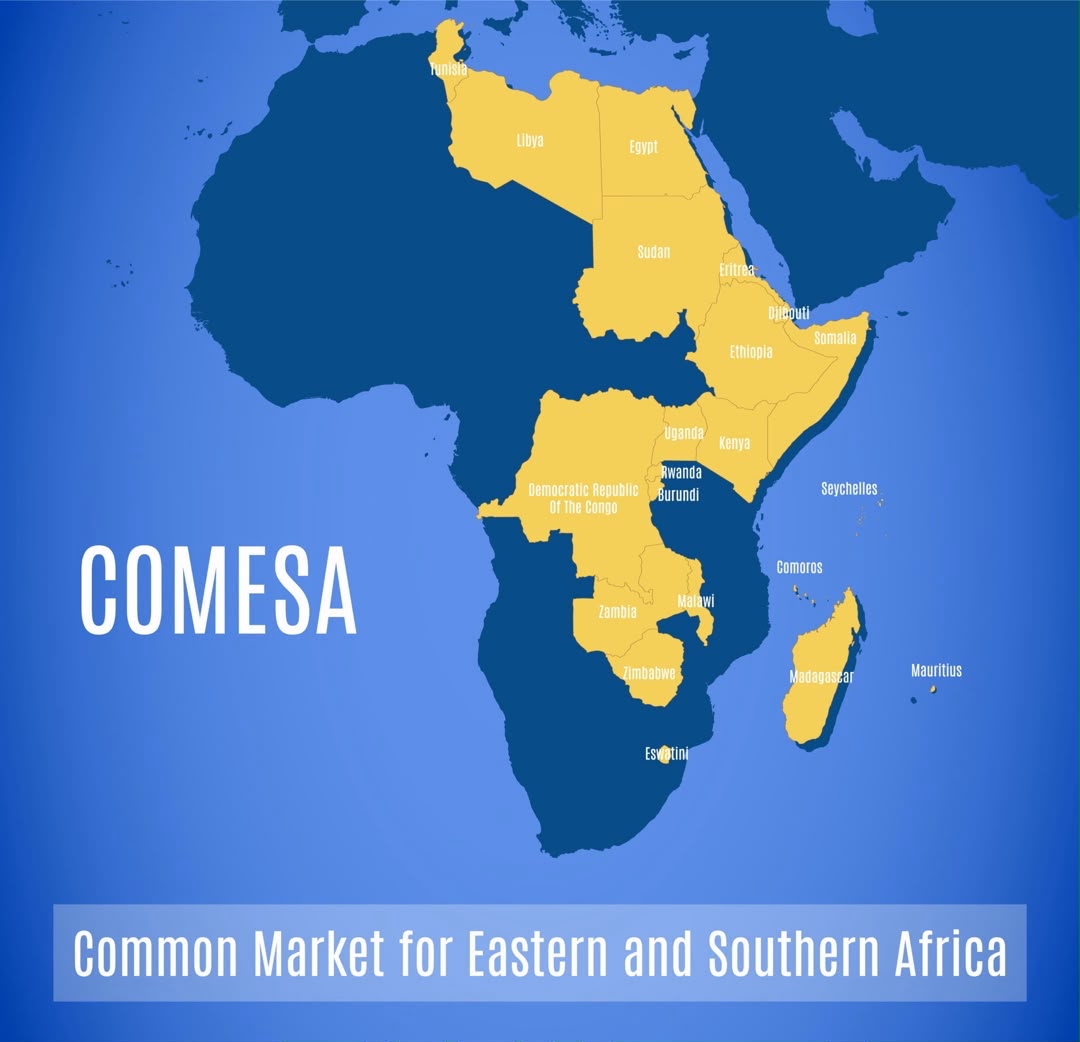
Rutendo Nyeve [email protected]
AS Zimbabwe prepares to assume the chairmanship of the Common Market for Eastern and Southern Africa (Comesa) next month, the diplomatic spotlight will fall on Harare.
Yet in the bustling stalls of Victoria Falls’ Comesa Market, the story of regional integration is written daily in far more modest, and far more human, terms.
Comesa Market, known locally as Emaplankeni, a reference to the wooden pallets on which traders display their wares, sits in the heart of the resort town, a stone’s throw from the Zambezi.
It is one of the most vibrant cross-border trading hubs on the Zimbabwe-Zambia frontier.
For a country about to host a Comesa summit, the market is not merely a historical curiosity. It is living proof that regional trade, at its best, reaches ordinary citizens. Zimbabwe’s ties to Comesa run deep.
In June 2009, also in Victoria Falls, Former President Robert Mugabe took over the Comesa chairmanship and launched the Comesa Customs Union, a milestone in the bloc’s journey toward deeper integration.
Now 17 years later, as Zimbabwe again prepares to lead the 21-member organisation, which represents more than 600 million people, Comesa Market still stands as a physical testament to what the customs union was meant to achieve. The market’s origins are themselves a story of cross-border movement.
Its founder, Mr Misheck Mpofu, died on 4 September 2022 at the age of 66.
A teacher by profession, he later became a curio trader, selling artefacts across neighbouring countries before being elected as a local councillor in the early 2000s.
It was during his time in local Government that he confronted a growing problem, as large numbers of Zambians and other foreign nationals were coming to Victoria Falls to trade, but risked being branded illegal vendors.
“My father, Mr Misheck Mpofu, is the founder and the owner of the place that is called Comesa Market here in Victoria Falls,” said Ms Amanda Mpofu, his second daughter who now manages the property.
“We adopted the name Comesa Market sometime in 2009 because my father had formed an organisation with other partners that was called the Cross Border Traders Association of Zimbabwe.
“This organisation worked with Comesa headquarters in Lusaka. The whole idea was that the Victoria Falls City Council was trying to find ways of accommodating Zambians and other people from other countries who were coming to work and trade in Victoria Falls. Basically, to avoid being called illegal traders or illegal vendors, sometime in 2006-2007, my father had a meeting.”
She explained how the site evolved.
“Sometime in 2006-2007, this place began to blossom as a place of trade. It used to be called Victoria Falls Auction Centre back in the day. It began to blossom as a place of trade. We used to have Zambians coming in here after doing orders of sugar, mealie meal, eggs, cerevita, mazoe, they used to buy these products here in Zimbabwe and take them to Zambia.
“So, the beginning of this place was that Zambians and people of other nationalities used to come here to the Comesa Market and store their goods. So, it used to be a safe keeping first. But when my father met with the people from Comesa, they then formed an organisation that was called the Cross Border Traders Association of Zimbabwe,” Ms Mpofu said.
She said they used this organisation to round up Zambians that were working in Victoria Falls as informal traders.
“So, for some reason, my father was very fluent in African languages. He could speak Swahili with Tanzanians and he could speak a lot of Zambian languages, for example, Nyanja and the others. I don’t know them all.
“But he could also speak Tonga really fluently, which is a language from the southern part of Zambia, which is the part that we are connected to as Zimbabwe. He would speak those languages and he rounded up all Zambians and other people of other nationalities,” Ms Mpofu said.
“For example, Tanzanians used to trade here in Victoria Falls. He built a shed and he created a market for them. That market would later be called Comesa Market.”
For a Zambian trader Mrs Rose Tshanzi, who began trading in Zimbabwe from Zambia in 2004, the market has been transformative.
“This place has empowered me,” she said.
“When I started coming here, I had nothing. Through buying and selling across the border, I have been able to feed my family, pay school fees for my children. Comesa Market gave me a place to stand when others called us illegal traders.”
Fellow Zambian Ms Edna Daka, who travelled from Lusaka, said the market had given her a formal foothold for her goods.
“I got a stand at this market to trade my wares from Zambia,” she said.
“Regional trade is important because it allows people like me, ordinary traders and not big companies to sell across borders. If we did not have this market, many of us would have no way to do business here.
Comesa should make sure that small traders like us are included,” she said.
Their testimony speaks to the central promise of Comesa. Intra-regional trade remains far below its potential.
According to recent analysis, Comesa’s total trade with the outside world reached about US$479 billion in 2024, yet exports within the region stood at only around US$13 billion in 2025, down from about US$14 billion the previous year.
The gap between ambition and reality is precisely what markets like Emaplankeni help to bridge, one consignment of sugar or mealie-meal at a time.
Comesa has also moved to support small-scale traders through digital retail payment platforms designed to allow cross-border traders to settle transactions instantly in local currencies, cutting costs and reducing risk.
Such initiatives matter most at markets like this one, where margins are thin and trust is everything.
As Zimbabwe prepares to take over the Comesa chairmanship next month, with President Mnangagwa expected to prioritise food security, peace and increased trade, Comesa Market offers a reminder of what is at stake.
The wooden pallets that gave the market its nickname may be gone, replaced by permanent stalls. But the spirit of Emaplankeni endures, Zambians crossing the border at dawn, Zimbabwean traders sourcing goods for their neighbours, Tanzanians and others finding a place to earn a living.
When the Comesa flag is raised in Harare, the true measure of regional integration will not be found only in communiqués and tariff schedules, it will be found in Victoria Falls, where a market founded by a former teacher to protect traders from being called illegal vendors remains a symbol of what Comesa can mean for ordinary people, a place to trade, a way to earn and a future worth building across borders.