Chronicle Editor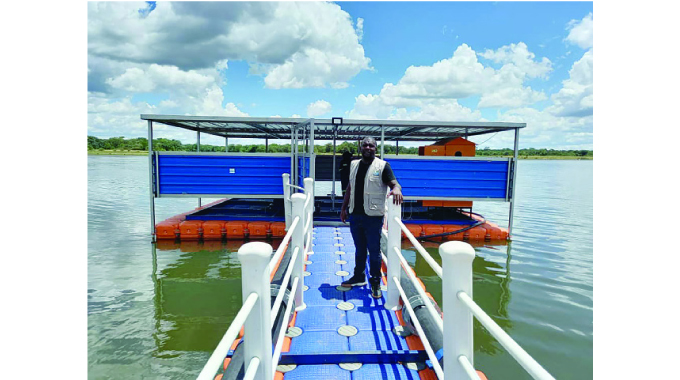
Patrick Chitumba, Midlands Bureau Chief
AT its inception in 1992 Mayorca Irrigation Scheme in Ward Five, Sessombe Village in Zhombe in the Midlands province was the life giving artery for about 76 farmers.
Zhombe is generally dry and experiences seasonal and mid-season droughts such that dry land farming is almost impossible making irrigation the only sustainable way of achieving some semblance of food security.
Through the scheme, farmers produced sugar beans, wheat, maize and small grains, making life a lot more comfortable for the whole community and beyond where even those who did not own plots had easy access to fresh farm produce at cheaper prices.
The scheme was funded by the Government and had been saving the community religiously from persistent droughts.
Around 2004, the scheme’s capacity significantly lowered after the breakdown of sprinklers and other pipes.
The situation remained dire until 2006, when it was rehabilitated under Operation Maguta that had been launched the previous year as an input scheme run by the Zimbabwe National Army aimed at boosting agriculture production and ensure food security, and by extension guarantee a stable security environment in the country.
In the 2016-17 season, flash floods washed away part of the dam wall while the transformer got vandalised, forcing farmers to abandon the irrigation scheme as they looked for alternative ways to fend for their families.
In 2021, the 76 hectare irrigation scheme was rehabilitated under the Smallholder Irrigation Revitalisation Programme (Sirp) by the Government in partnership with the International Fund for Agriculture Development (IFAD) to the tune of US$900 000 bringing joy to the farmers.
The scope of work done under Sirp include the installation and electrification of two pumping units on a pontoon, installation of 480m of PVC line, installation of 315kva transformer, erection of a boundary fence while five double leaf gates and five pedestrian gates were also erected.
This gave a new lease of life to the irrigation scheme whose beneficiaries are 18 females and 58 males and each farmer has an acre to his or her name.
Mayorca irrigation scheme has transformed subsistence agriculture at household level into commercial agriculture as part of rural development and industrialisation in line with the country’s vision of creating an upper middle-income economy by 2030.
Already, the members are expecting a bumper harvest from 38 hectares they put under maize. The other 38 hectares are being cleared for sugar beans.
Mr Nyasha Masare (45) the chairman of the irrigation scheme commended Government and IFAD for prioritising the revival of the irrigation which is their lifeline.
“This scheme began in 1992 and was then rehabilitated under Operation Maguta in 2006, but in years that followed, the 11km Zesa power line was vandalised, a development that resulted in our wheat wilting.
It was so painful I tell you, but in 2016 the power line was rehabilitated,” he said.
Mr Masare said unfortunately the 2016/17 season saw the dam being swept away by flash floods bringing all operations at the scheme to a halt.
“Most of us were forced to go into artisanal mining and some moved to Kwekwe and other places looking for jobs so that they could fend for their families,” said the father of four.
He said Sirp started rehabilitation works at the scheme, including the dam.
“In November 2021 rehabilitation works were completed.
The scheme is now using the drag hose system.
In January we managed to plant 38 hectares of maize (0.5ha per farmer).
The remaining 38 hectares is going to have sugar beans planted,” he said.
Mr Masare said they were looking at improving their livelihoods through farming.
“When the irrigation scheme was down, we were also down, but the rehabilitation is very commendable because we can improve our livelihoods from selling produce from the scheme.
We are also employers because we hire villagers when ploughing and harvesting,” he said.
Ward 5 Councillor Cde Elliot Mutero commended the Second Republic for engaging partners to rehabilitate irrigation schemes in the country.
“We want to thank the ruling party for this irrigation scheme.
It really shows that our President has the interest of the public at heart.
With this programme, we are positive that we will have fairly good yields despite the dry spell that is currently being experienced in the country,” he said.
Midlands Agritex Provincial Crop and Livestock Officer Mrs Medlinah Magwenzi said the scheme has a functional irrigation management committee (two females and five males) who ensure its efficiency in terms of its running.
She said there is also a resident Agritex officer at the irrigation scheme.
“The scheme signed a finance agreement with ARDA.
They were approved for a loan for top-dressing fertiliser for the 38 hectares under maize crop and 7.6 hectares sugar beans,” said Mrs Magwenzi.
The irrigation scheme members are also into bee-keeping and 39 members were trained and provided with 10 beehives and beekeeping materials and suits.
Lands, Agriculture, Fisheries, Water and Rural Resettlement permanent secretary Dr John Basera said the Government is targeting to put 307 000 hectares under irrigation as it intensifies efforts to climate proof Zimbabwe’s agriculture.
Agriculture is critical to Zimbabwe’s economy, providing 30 percent of export earnings and contributing 19 percent to the gross domestic product, while more than 70 percent of the population survives on farming.
Dr Basera said Zimbabwe has the potential to put over two million hectares under irrigation, but currently only 175 000 hectares is under irrigation making the country vulnerable to drought and climate change.
“We need to climate proof our agriculture by rolling out irrigation schemes. Our target is to put 307 000 hectares under irrigation by 2023,” he said.
“We have water bodies that can irrigate over two million hectares and Zimbabwe is the most dammed country north of the Limpopo.
We need to take advantage of that comparative advantage.
At the moment we can irrigate two million hectares, but we have 175 000ha and when we discount 40 000 to 50 000 hectares under sugar cane, we are left with 125 000 under irrigation so we are obviously not utilising our irrigation capacity.”


 Online Reporter