admin
admin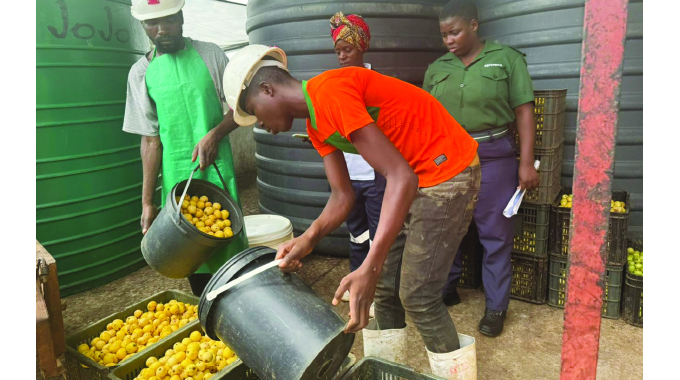
George Maponga, Masvingo Bureau
In a remarkable turn of events, villagers from Mwenezi and neighbouring areas are on the cusp of earning nearly US$20 000 yearly from the sale of approximately 400 tonnes of wild mapfura (marula) fruit.
This economic windfall comes as the annual harvesting season unfolds, having commenced in mid-January and is expected to conclude by mid-next month.
The initiative not only provides financial relief, but also uplifts the community, particularly the youth and women, who have been actively involved in gathering the fruit.
The processing plant at Rutenga Growth Point, owned by the National Biotechnology Authority of Zimbabwe (NBTAZ), has already processed over 90 tonnes of marula fruit.
With favourable rainfall contributing to a bumper crop, community members are optimistic about reaching the projected 400 tonnes by the end of the season.
This year’s harvest is already being hailed as one of the most successful in recent memory, a testament to the dedication and hard work of the villagers.
Over 1 000 villagers, many of whom previously faced unemployment, have taken part in this lucrative venture.
The initiative has not only provided a source of income, but has also fostered a sense of community as participants come together to gather and sell the fruit.
“This is more than just about the money; it’s about coming together and supporting one another,” says local elder, Mrs Teererai Nyoni.
NBTAZ chief executive Dr Dexter Savadye, highlighted the significant economic impact this venture is having on the community.
“So far, we have purchased 90 tonnes of the fruit, disbursing approximately US$4 500 to the villagers. By the time the buying season wraps up mid-next month, we expect to purchase up to 360 tonnes from the locals,” he stated.
The payment is particularly vital, as many villagers rely on seasonal activities for their livelihoods.
The revenue generated from the sale of mapfura is expected to alleviate some of the financial burdens faced by families in the region, allowing them to invest in education, healthcare, and other critical needs.
The NBTAZ is not only focused on the immediate economic benefits, but is also committed to enhancing the quality of products that can be derived from mapfura.
These include cosmetic oils, wines and animal feed. Dr Savadye mentioned ongoing research efforts aimed at improving the scent and quality of cosmetic oils, with significant enhancements expected by next month.
In addition, the authority plans to commercialise mapfura/marula brandy by mid-year, with extra products like charcoal briquettes launching in May. By September, they anticipate the introduction of vinegar and bio-oils to the market.
“Our goal is to diversify the product range and tap into international markets,” Dr Savadye explained, emphasising the potential for lucrative export opportunities.
Future plans extend beyond immediate profits.
The initiative aims to empower rural communities in districts such as Mberengwa, Gwanda, Zaka, Bikita, and Chiredzi, where the fruit is abundant.
Establishment of mapfura/marula nurseries and plantations will ensure a sustainable supply of this valuable resource, providing ongoing economic benefits for years to come.
The Rutenga processing plant, inaugurated by President Mnangagwa in 2021, aligns with the Education 5.0 initiative, which emphasises using local resources to drive economic growth through research and innovation.
This alignment underscores the Government’s commitment to supporting rural development and enhancing the livelihoods of local communities.
As the harvesting season progresses, the villagers of Mwenezi are filled with hope and anticipation.
The successful sale of mapfura not only represents a financial boon, but also embodies a collective effort to uplift the community.
This initiative highlights the potential of local resources to foster economic growth, proving that with collaboration and innovation, even the most marginalised communities can achieve remarkable successes.
With the promise of ongoing research, product development, and community empowerment, the future looks bright for the villagers of Mwenezi.
As they gather their harvest, they are not just collecting fruit; they are cultivating hope, resilience, and a sustainable future for generations to come.



 Online Reporter