Londile Moyo
Thupeyo Muleya, Beitbridge Bureau
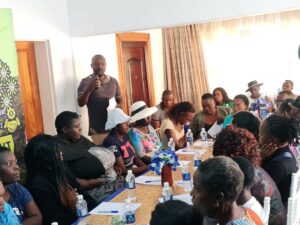
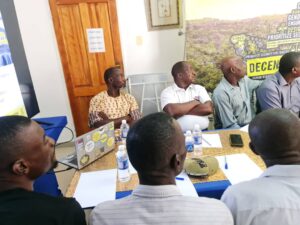
The Vendors Initiative for Social and Economic Transformation (VISET) on Tuesday launched the informal cross-border trade campaign in Beitbridge, in partnership with Amnesty International Zimbabwe.
The campaign aims to enhance literacy among informal traders, particularly women, who face challenges at border posts.
VISET Executive Director, Mr Samuel Wadzai highlighted the importance of the campaign, citing a research study that showed informal traders’ lack of awareness about their rights.
“The campaign is a culmination of a research previously conducted in Malawi, Zambia, Zimbabwe, and South Africa, from 2022-2023, with a view to having an understanding of the challenges that women informal cross-border traders particularly, are faced with in the conduct of their day to day duties,” he said.
Mr Wadzai said the organisation was pleased to note the recent adoption of the Formalisation Strategy, led by the Ministry of Public Service Labour and Social Welfare, which will address traders’ challenges at border posts.
He added that the campaign seeks to promote gender equality, empower women, and harmonize national laws on social protection and gender-based violence.
The official also assured participants that VISET will engage several Government agencies on the recently introduced Statutory Instrument 59 of 2026, Control of Goods (import and export) Regulations 2026, which consolidated earlier regulations and introduced a single framework governing regulated imports and exports.
“We also urge the Government to conduct awareness campaigns of new regulations before implementation and publish them in simplified local languages in order to avoid the current challenges where traders are having goods confiscated, long waiting hours that inconvenience women, some of whom will be nursing babies,” said Mr Wadzai.
“In addition, we hope that the Government will also invest in modern childcare infrastructure at the border posts, and come up with Public Finance Management reforms that enable Local Authorities to benefit from revenue generated at the Port of Entries, for enhanced health service delivery”.
A representative of Amnesty International Zimbabwe, Mr Tinashe Mujuru unpacked the Bill of Rights and international protocols protecting women informal cross-border traders.
He also covered the Africa Continental Free Trade Agreement and SADC Protocol on Gender and Development and its associated benefits, which promotes gender equality, empowers women, and harmonizes national laws on social protection and gender-based violence.



 Online Reporter