Sam Matema, Correspondent
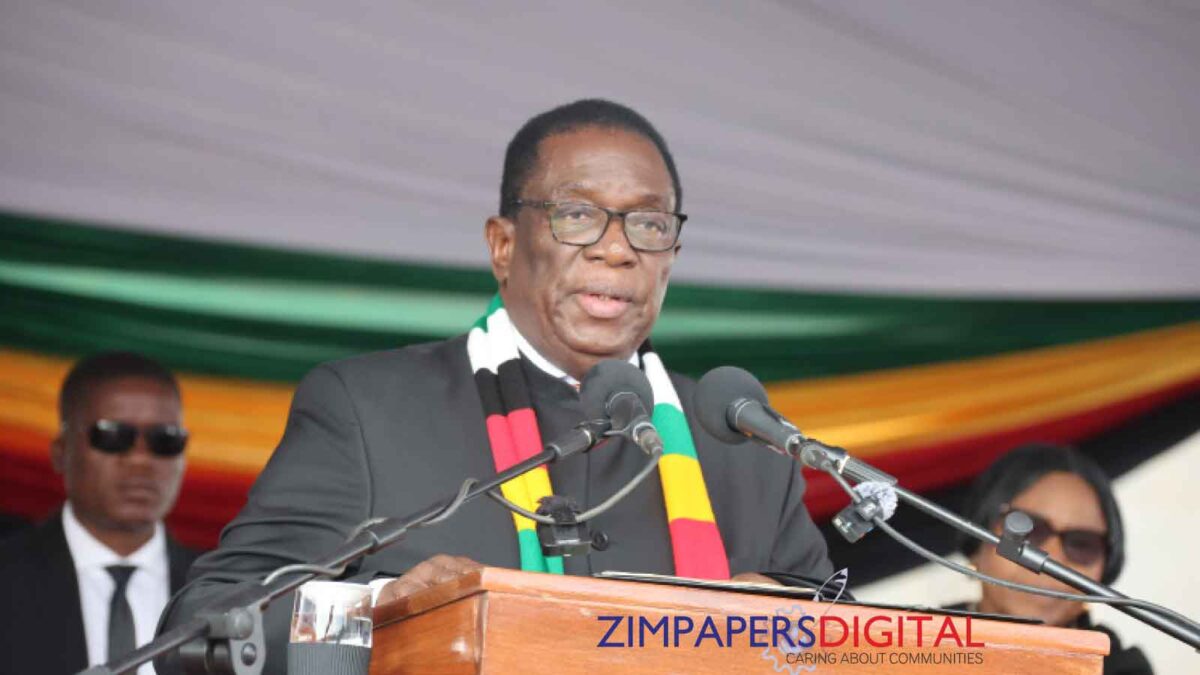
Mr Speaker sir, I rise to add my voice in support of and celebration of the State of the Nation Address (SONA) delivered by the President Mnangagwa, on September 29, 2026, particularly its content, strategic thrust and direction.
In more ways than one, the President reminded Parliament of its legislative role while setting the legislative agenda for the fourth session of the 10th Parliament.
I want to dwell on the President’s closing call relating to the collective duty, obligation and responsibility we have to ensure that the enabling environment created by the Second Republic under the leadership of President Mnangagwa is sustained as we work towards realising Vision 2030, underpinned by its implementation vehicle, the National Development Strategy 2 (NDS2), which rests on 10 pillars.
The macroeconomic stability pillar, for instance, finds expression in single-digit inflation and the stability of the ZiG. This is a testament to the work being done by the Executive to put the country on a growth trajectory and a more sustainable economic footing.
The President also made reference to the engagement and re-engagement drive under Pillar Nine, as well as the peace and security obtaining in the country under Pillar 10. These speak to diplomacy, governance and the broader environment within which national development takes place.

The transformative leadership of President Mnangagwa has attracted international attention and endorsement. Zimbabwe won a vote for a non-permanent seat on the United Nations Security Council on June 3, 2026, securing 182 of the 191 votes cast. The country is also the incoming chair of the Common Market for Eastern and Southern Africa (COMESA), while currently chairing the Ramsar Convention.
If these developments are not evidence of regional and global confidence in Zimbabwe, then what is?
Our engagement and re-engagement drive, predicated on the philosophy, “A Friend to all and an enemy to none”, is bearing fruit and opening opportunities for the country.
Having said that, I am convinced that NDS2, as the vehicle intended to translate Vision 2030 into reality, can deliver the inclusive and accelerated growth towards an upper-middle income economy envisaged by the national vision.
However, we should do more and better in pursuit of the agenda set by the President.
The Water Act, Forest Act and ZINWA Act speak to critical environmental issues and natural assets that we should conserve and deploy efficiently and effectively as we seek to protect the environment.
I want to dwell primarily on environmental issues and juxtapose them with the President’s address, conscious of the fact that our survival, as well as the interconnected and overlapping performance of our various sectors and ministries, is ultimately a function of the state and health of the environment.
We must raise the bar and change course in our approach to environmental stewardship.
In terms of environmental degradation, we are confronted by significant challenges nationally, while working towards land degradation neutrality, through mitigation and adaptation efforts in the face of shocks associated with climate change, biodiversity loss and desertification.

The natural environment has the capacity to self-correct and regulate in the absence of excessive human interference. It is the heart, lungs and kidneys that sustain humanity and the wider biodiversity.
We, therefore, need to find ways of living at peace with nature while pursuing a path of sustainable growth and development.
The integrity of our environment, particularly in the context of the fourth NDS2 pillar — food security, resilience and environmental protection — and the 27,9 percent growth in agriculture cited in the SONA, is my point of departure.
The question is: How do we sustain or improve this performance under the circumstances?
We are operating in an environment where all seven catchment areas and the 117 dams under the direct management of ZINWA are threatened by a plethora of environmentally harmful human activities, ranging from unregulated settlements and agriculture to mining, giving rise to numerous informalities and their attendant negative externalities.
Our water bodies are choking.
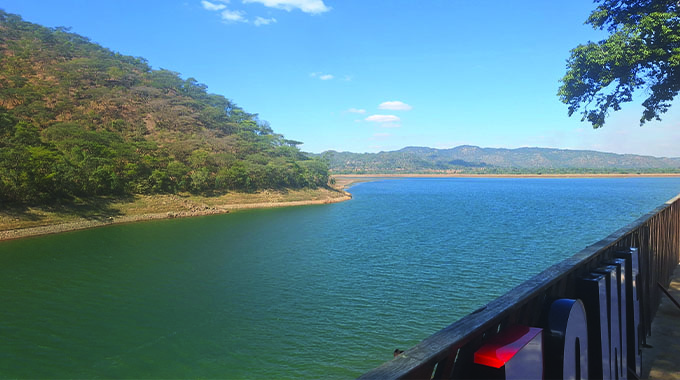
Lake Chivero, in the Manyame catchment area, is a case in point, with an eight-metre decline in its depth and a corresponding reduction in its storage capacity.
Our major rivers are also under severe pressure, raising the risk of some ceasing to flow in the coming years if serious river rehabilitation measures are not implemented. Statutory Instruments 91 and 92 of 2026, relating to river rehabilitation and the polluter pays principle respectively, speak to the need for action.
The Mazowe River in the Mazowe catchment area provides another example, as does the reduced inflow into Mazowe Dam.
While average national dam inflows stood at 93 percent by April 2026, Mazowe Dam was at 14,8 percent, mainly because illegal mining activities have caused serious siltation and diversion of water within the catchment.
A study conducted on sedimentation of water sources in the Upper Runde catchment area between 2000 and 2016 recorded a sediment load of 6 272 milligrammes per litre against an expected maximum of 3 000 milligrammes per litre.
This is consistent with the Revised Universal Soil Loss Equation (RUSLE) model, which showed an increase in soil loss from 1,2 tonnes per hectare per year in 2000 to 1,7 tonnes per hectare per year in 2016, representing a 41,67 percent increase in sediment yield (Kusena Winmore et al, Midlands State University, Physics and Chemistry of the Earth, 2021).
Water is both a human rights issue, as provided for under Section 77(a) of the Constitution of Zimbabwe and Sustainable Development Goal 6, and a national security issue because it has a direct and cross-cutting bearing on agriculture and food security, industry and commerce, energy, tourism and transportation, among other sectors.
This is precisely why the Water Act and ZINWA Act are before this august House during the fourth session, providing an opportunity to refine the legislative framework so that it responds to current circumstances and aligns with the strategic thrust of the President.
Our forests are similarly linked to land use, temperature changes, precipitation, biodiversity, agriculture, tourism, timber and non-timber forest products, as well as forest foods.
Unsustainable harvesting of timber risks leaving Zimbabwe as a net importer of a resource in which it has historically had significant natural and economic value.
We are losing forest cover at alarming rates. Over the past 25 years, Landsat imagery has reportedly shown a 43 percent decline in forest cover in Chimanimani District in Manicaland Province amounting to about 63 000 hectares lost to human settlements, agriculture, firewood and timber harvesting.

The Save catchment area was also significantly altered between 2000 and 2015, losing 38,8 percent of its vegetation cover, although there were localised improvements, including in Ward 4 and parts of Ward 5 in Buhera District.
The Forest Act (Chapter 19:05) and Communal Land Forest Produce Act (Chapter 19:04) are before this august House at a defining moment, given the situation on the ground and our direction of travel towards Vision 2030.
It is worth noting that a key driver of deforestation is tobacco curing, which is primarily firewood-dependent.
To that end, the tobacco levy, provided for under the Income Tax Act (Chapter 23:06), Section 36A, and the Tobacco Industry and Marketing Act (Chapter 18:20), and intended to support woodlots for tobacco farmers, should be aligned so that farmers benefit through the Forestry Commission or the Tobacco Industry and Marketing Board (TIMB).
l Continues on www.chronicle.co.zw
The same applies to the carbon tax, which should support the Environmental Management Agency (EMA), but has not been disbursed once it reaches the Consolidated Revenue Fund.
Enforcement of existing and refined legislation must, therefore, be a priority.
Our collective duty and obligation to execute our legislative mandate must not escape us. Our work is cut out by the agenda set by the President in his address to this august House.
In closing, the President said: “I call upon all of us; the elected leaders of our nation, along with players across sectors of the economy, entrepreneurs, women, young people, chiefs, traditional leaders and communities at large, to confidently march on, shoulder-to-shoulder, towards realising the Zimbabwe we all want and, indeed, deserve.”
Those words are as telling as they are instructive. They are timely and speak directly to the moment.
We have no option but to embrace the humility required of us and do the needful under the prevailing circumstances, leaving no one and no place behind.
submit, and thank you, Mr Speaker sir, for lending me your ear.
Sam Matema is the National Assembly Member for Buhera Central constituency, ZANU PF Manicaland Province Secretary for Administration, Climate Parliament Zimbabwe Chapter chairman and chairperson of the Parliamentary Portfolio Committee on Environment, Climate and Wildlife. He writes here in his personal capacity in response to the SONA.