Africa Moyo, [email protected]
ZIMBABWE is positioning to leverage its forthcoming chairmanship of the Common Market for Eastern and Southern Africa (COMESA) to unlock greater trade within the region, at a time when intra-COMESA trade remains marginal despite the bloc’s US$1 trillion economy and 640 million people.
The COMESA bloc comprises 21 member States including Zambia, Egypt, Kenya, DRC, Malawi, Ethiopia and Zimbabwe, with a mission to achieve sustainable economic growth through trade liberalisation and regional integration.
However, trade among member States has remained consistently low, according to ZimTrade’s recent Zimbabwe-COMESA Trade Brief.
The brief shows that intra-COMESA imports increased from US$8,6 billion in 2019 to a peak of US$10,3 billion in 2022, before declining to US$8,6 billion in 2024 and recovering slightly to US$9,5 billion last year.
While this represents about 10 percent growth over the period, the contribution of COMESA to total imports has averaged around 4 percent annually, highlighting persistent reliance on extra-regional partners such as China, the United States, India and the United Arab Emirates.
On the export side, total exports within the bloc rose from US$15 billion in 2021 to a peak of US$18 billion in 2023, before declining to US$14 billion in 2024 and US$13 billion in 2025 – a cumulative drop of roughly 28 percent from the peak.
The decline, the brief says, reflects macroeconomic pressures, foreign exchange shortages, rising inflation and a shift towards trade outside the bloc, as well as barriers such as limited product diversification, infrastructure gaps and non-tariff barriers.
For Zimbabwe, trade with COMESA has been volatile but is recovering.
Between 2022 and 2025, Zimbabwe’s exports to COMESA rose from US$155 million in 2022 to US$229 million in 2023, up 47,7 percent, signalling strong regional demand.
But exports fell by 12,2 percent to US$201 million in 2024, attributed to the El Niño-induced drought, before recovering by 10,4 percent to US$222 million last year.
Zambia remains Zimbabwe’s most important COMESA market, accounting for the largest share, rising from US$52,6 million in 2020 to US$146 million in 2024, before easing to US$131,4 million last year.
Kenya and Egypt remain significant but uneven partners. Exports to Kenya rose sharply to US$29,8 million in 2023, fell to US$10,6 million in 2024 and recovered to US$20,1 million in 2025.
Egypt grew from just US$90 000 in 2020 to US$14,6 million in 2024 before falling to US$6,7 million in 2025.
The DRC is emerging as a promising but volatile market, with exports rebounding to US$16,8 million in 2025, while Malawi has grown steadily from US$3,3 million in 2020 to US$20,3 million in 2025. Uganda fell from US$127,2 million in 2020 to under US$20 000 by 2024, pointing to loss of market share or logistical constraints.
Zimbabwe’s major exports to COMESA include tobacco in various forms, coal and coal-based fuels, maize, paperboard and cartons, sugar, wood products, gypsum and electric accumulators.
Last year, iron and steel bars re-emerged after a three-year absence. At bloc level, COMESA’s total exports amounted to US$148,7 billion in 2024, up 8,6 percent from US$136,9 billion in 2023 and up 64 percent from US$90,5 billion in 2020, before easing to US$144,5 billion last year.
Total imports peaked at US$232,2 billion in 2022, from US$162,3 billion in 2020, before declining to US$215,4 billion in 2024 and US$203,5 billion last year.
To increase Zimbabwe’s share, ZimTrade says key issues must be addressed, including harmonisation of trade regulations and procedures, such as trading limits under the COMESA Simplified Trade Regime.
ZimTrade also called for increased market access and promotion through research for products with potential; stronger collaboration among trade promotion agencies through participation in regional trade fairs and exhibitions; development of digital platforms for market access; improvement of financial and payment systems and access to finance for exporters, including regional payment systems; and upgrading transportation infrastructure — air, land and sea.
Zimbabwean products with potential in the region include agricultural products such as tobacco, cotton, tea, coffee and fresh fruits; manufactured goods including sugar, textiles, footwear, furniture, fertilisers, pharmaceuticals and steel products; and emerging opportunities in engineering, agricultural extension, tourism and digital services.
The country will host the 25th COMESA Heads of State and Government Summit on October 21, in Mt Hampden, where it will assume the COMESA chairmanship for 2026-2027.
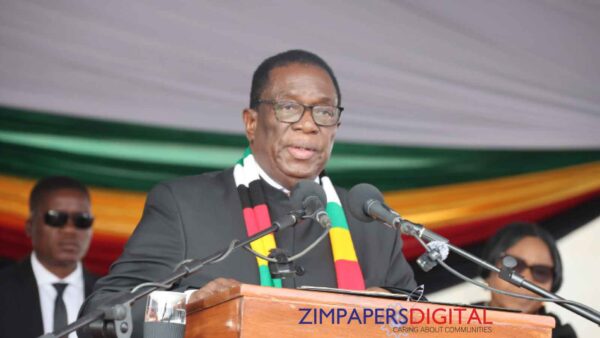
In his State of the Nation Address last week, President Mnangagwa said the country looks forward to hosting the 25th COMESA Heads of State and Government.
“These are heartening achievements which demonstrate the faith and confidence the international community has in our great motherland, Zimbabwe,” said President Mnangagwa.
The President said the chairmanship was a huge sub-continental duty that Zimbabwe would treat as a collective SADC responsibility, with priorities including food security, elimination of non-tariff barriers, value addition and digitalisation to deepen regional value chains.