Online Reporter
Mukudzei Chingwere in DUSHANBE, Tajikistan
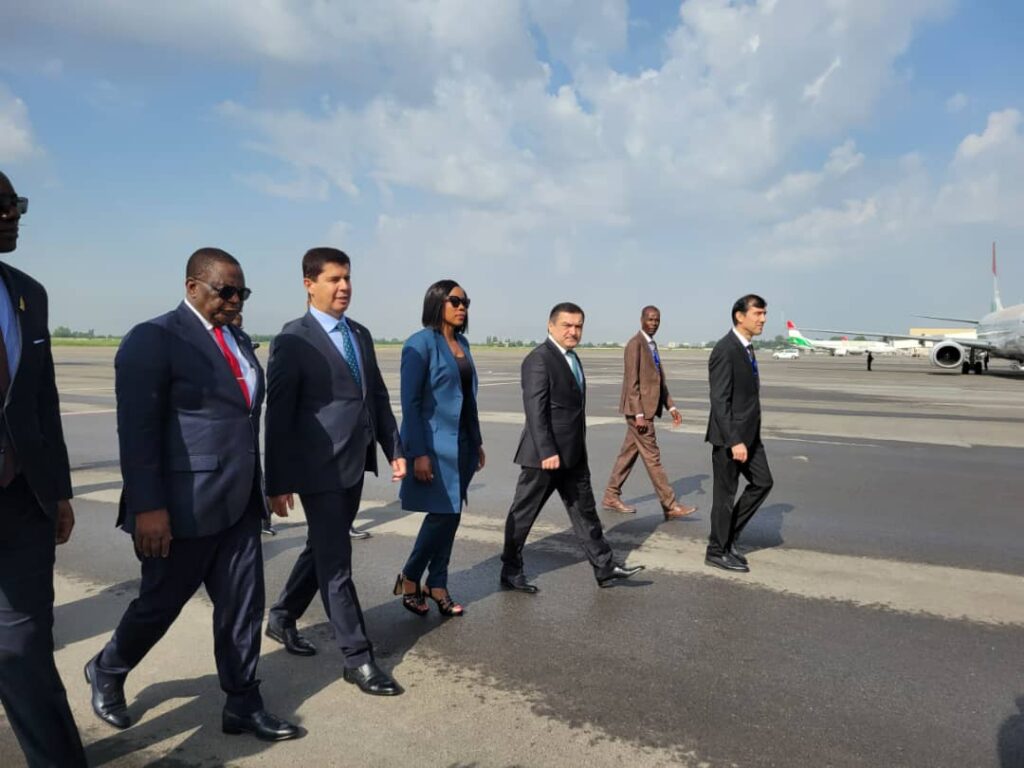
Vice President Dr Constantino Chiwenga has arrived in Tajikistan for a working visit and is scheduled to meet host President Emomali Rahmon.
The visit is part of Zimbabwe’s broader economic diplomatic offensive, anchored on consolidating international collaboration and exploring new frontiers.
It is expected to review progress on collaboration in areas like electricity generation and agricultural production, with Zimbabwe keen to tap into Tajikistan’s industrialisation model.
Tajikistan’s industrialisation model guarantees domestic value addition of minerals, agricultural produce, and other raw materials.
Zimbabwe is on a drive to improve the country’s production capacity and value addition of mining resources and agricultural produce.
Speaking to journalists on arrival this morning, VP Chiwenga said the three ministers in his delegation will hold key discussions with their counterparts in Tajikistan and explore opportunities for knowledge sharing.
“We aim for these discussions to lead to the effective implementation of agreed initiatives,” said VP Chiwenga.
Energy and Power Development Minister July Moyo; Higher and Tertiary Education Minister, Ambassador Frederick Shava; Environment, Climate and Wildlife Minister, Dr Evelyn Ndlovu, Deputy Chief Secretary in the Office of the President and Cabinet, Engineer Amos Marawa, among other senior Government officials, are part of the VP’s delegation.
“We have come with the Minister of Energy and Power Development to witness how Tajikistan has advanced its power sector. During our previous visit, we saw numerous opportunities that we can tap into back home, particularly in our highlands where water flows abundantly,” said VP Chiwenga.
According to the World Bank, Tajikistan has achieved an average economic growth rate of 7.1 percent over the past decade, with a notable 8.4 percent growth in 2024.
This helped in reducing the number of people living in poverty from 32 percent of the population in 2009 to an estimated 9.1 percent in 2024.
With a young population and potential in sectors like agriculture, hydropower, and tourism, Tajikistan aims to double or triple domestic incomes by 2030, thereby presenting opportunities for Zimbabwe to benefit from collaboration as it seeks to elevate its economy to upper-middle-income status.