Online Reporter
The Zimbabwe International Trade Fair (ZITF) Company is hosting the International Business Conference (IBC), which brings together thought leaders, industry experts, and changemakers.
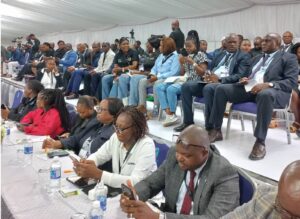
The flagship event, which will be presided over by Vice-President Constantino Chiwenga is running under the theme “Revitalising Industrialisation for Zimbabwe’s Economic Resurgence”.
IBC provides a platform to explore bold strategies in industrial revival, trade integration, tech innovation, and global financing to power Zimbabwe’s next growth phase.
Zimpapers Business Reporters, Nqobile Bhebhe and Judith Phiri will be giving us live updates from the conference
ZITF Business Conference unites global leaders to drive economic growth

Judith Phiri, Business Reporter
THE ZITF International Business Conference has been lauded for uniting leaders and business experts from across the globe, marking a significant milestone in the economic growth of the country
Giving welcome remarks at the conference, Minister of State for Bulawayo Provincial Affairs and Devolution, Judith Ncube said ZITF was an important event for Bulawayo’s economy and that of the country.
She said collective efforts were crucial to find solutions for Bulawayo as an industrial hub and with its rich industrial endowment, stands ready to drive the industrialisation drive.
“The theme of this conference resonates deeply with the aspirations of our nation to come together and foster growth for a conducive business environment.”
She said it was critical to address financial challenges and upscale skills for industrialisation and economic growth.
The Minister said synergies will enhance industrial capabilities and also contribute to the broader African development agenda.
She said embracing the spirit of innovation was critical towards revitalising industrialisation for Zimbabwe’s economic resurgence.
The Minister called for collaboration among all stakeholders towards fostering economic resilience.
ZITF secures US$12 million investment for modern shopping centre
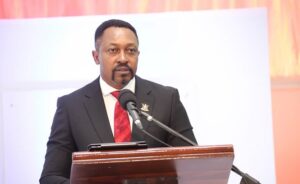
THE Zimbabwe International Trade Fair (ZITF) Company has secured a partner that has committed US$12 million towards the construction of a modern shopping centre.
This move will mark a major step forward in the transformation of its trade exhibition hub in Bulawayo.
The development is part of a broader initiative to modernise the ZITF grounds, which includes plans for a state-of-the-art 5000-seater conference centre and two hotels—a five-star and a four-star facility.
The revitalised site will be renamed the Zimbabwe International Conference and Exhibition Smart City (ZICES), aligning with the national agenda to harness technology and adopt sustainable, environmentally friendly practices.
The transformation is anchored in the ZITF Company’s “Visionary Masterplan,” unveiled last year, which outlines a long-term strategy to establish Bulawayo as Zimbabwe’s leading destination for world-class exhibitions and conferencing.
Providing an update at the ongoing International Business Conference (IBC) in Bulawayo, ZITF Company chairman Mr Busisa Moyo said the is progress made on the modernisation front.
“I am pleased to announce, just very briefly, that last year we unveiled our ambitious plan to upgrade ZITF grounds into a smart exhibition city,” said Mr Moyo.
“And we have made a lot of progress and found a partner to develop a modern shopping center near the arena area. And they have committed to investing US$12 million to the development of this retail shopping center.
“We have opened up to expressions of interest to develop the convention center, the four and five-star hotel precinct also on ZITF grounds, in line with NDS1 and the follow-up in NDS2 to upgrade exhibition facilities and the MICE industry, so that we continue to attract high-caliber exhibitions and exhibitors.”
The IBC, held under the theme “Revitalising Industrialisation for Zimbabwe’s Economic Resurgence,” serves as the country’s premier platform for strategic dialogue, bringing together government leaders, policymakers and industry experts to explore integrated industrialisation as a key to sustainable economic growth and global competitiveness.
ZITF Company’s 65th Edition Showcases Resilience, Growth and Commitment to Industrial Development
THE Zimbabwe International Trade Fair (ZITF) Company’s 65th edition stands as a testament to the nation’s resilience, economic growth and unwavering commitment to industrial development.
Speaking at the ongoing flagship International Business Conference (IBC) held alongside the Zimbabwe International Trade Fair 2025 in Bulawayo l, ZITF Company Chairman Mr Busisa Moyo described the milestone as a transformative moment.
“More than just a celebration, this Blue Sapphire edition signals our continuous push towards fostering economic transformation, attracting investment and cementing Zimbabwe’s standing in local, regional, and global markets,” said Mr Moyo.
“As an institution dedicated to advancing trade and industrialisation, it is a truly groundbreaking occasion.”
Noting the company’s pivotal role in economic development, Mr Moyo said, “The ZITF Company’s role is multifaceted, with a focus on showcasing Zimbabwe’s economic and industrial potential. We project what is happening in Zimbabwe to the world, connect local businesses with global partners and promote trade and investment opportunities.”
Addressing a high-level audience including Vice President Dr Constantino Chiwenga, Mr Moyo emphasised that industrialisation remains central to Zimbabwe’s long-term economic vision.
“It is important to note that industrialisation is the bedrock of sustainable economic growth, and for Zimbabwe to be globally competitive,” he said.
Held under the theme “Revitalising Industrialisation for Zimbabwe’s Economic Resurgence,” the IBC continues to serve as the country’s premier business forum.
It brings together government leaders, policymakers, and industry experts for high-level dialogue on critical economic matters—chief among them, integrated industrialisation as a driver for sustained growth and global competitiveness.
This influential platform draws top-tier business executives and stakeholders, making it a crucial space for shaping economic policy and forging strategic partnerships that propel Zimbabwe forward.
Zimbabwe’s manufacturing sector dominated by SMEs

THE majority of manufacturing entities that are operational in the country are in the small to medium enterprises category.
This comes amid revelations that the Zimbabwe manufacturing sector had about 4 552 manufacturing firms with at least 10 employees, according to the NSSA 2021 database on manufacturing units.
Speaking on the Manufacturing Sector Overview: Manufacturing Survey Analysis at the ZITF International Business Conference, Confederation of Zimbabwe Industries (CZI) chief executive officer (CEO) Ms Sekai Kuvarika said there was a need to revatilise industrialisation in Zimbabwe as the manufacturing performance trends were dropping.
She said in terms of sample distribution across the provinces, Harare was leading in manufacturing at 51 percent, Bulawayo at 20 percent, Midlands and Manicaland at seven percent each, Masvingo at four percent, Matabeleland South and Mashonaland West at three percent each, Mashonaland East and Mashonaland Central at two percent each and Matabeleland North at one percent.
Ms Kuvarika said the manufacturing performance trend was once as high as 57.2 percent in 2011 and has been going up and down, with it being 52.3 percent in 2024.
She said Zimbabwe’s rank on the African Development Bank (AfDB) Africa Industrialisation rankings (2022 report) was 32 in 2021 and there was room for improvement.
Ms Kuvarika said one of the opportunities in the Zimbabwean manufacturing sector was the packaging industry, which was plus or minus US$300 million, among others.
She said a preoccupation with the current obstacles to manufacturing growth misses the point.
“Disadvantages are not the problem; it is what countries do to address them that matters – consistently, pragmatically and effectively. It is the ability to capitalise on strengths and address shortcomings that determine success or failure.”
Ms Kuvarika said every country starts from a low base, and it is the ability to overcome constraints through a strategic vision, sustained reform and effective execution that determines success.
Minister calls for collaboration to achieve rapid industrialisation

THE government is working on addressing the high cost of doing business, smuggling of counterfeit products, which was affecting the manufacturing sector in the country.
Speaking on the Role of Industrialisation in Strengthening Zimbabwe’s Manufacturing Base at the ZITF International Business Conference, Minister of Industry and Commerce Nqobizitha Mangaliso Ndlovu also revealed that the Government has made much progress to ensure stability in the economy.
He said there was improved production and increased sales as Government was continuously improving the ease of doing business for the private sector.
Minister Ndlovu said the theme of the conference, “Revitalising Industrialisation for Zimbabwe’s Economic Resurgence” states the importance of the efforts being done by the Government to promote local manufacturing.
He said President Mnangagwa has laid the foundation for industry growth with Education 5.0, centred on the Heritage-based philosophy in shaping future technology through innovation and industrialisation.
The Minister said the Government has been active, implementing policies to ensure the manufacturing sector’s growth to positively contribute to economic development.
He commended the launch of the Industrial Development Fund for companies in the manufacturing sector and those into value addition and beneficiation of local raw materials.
The Minister said the fund that will be handled by the Venture Capital Fund Corporation will go a long way to identify, develop and implement new and existing industries and industrial undertakings that promote decentralisation of sustainable industrial development.
He acknowledged the recent proactive measures being undertaken by the Central Bank earlier this year, specifically the introduction of a targeted finance facility, which represents a significant step towards addressing the liquidity challenges that have been affecting the banking sector.
“This initiative is strategically designed to provide crucial support to the productive sectors of the economy through providing adequate working capital.”
Minister Ndlovu called upon all stakeholders, Government agencies, private sector players, finance institutions, labour representatives and research community at large to work together to achieve rapid Industrialisation.
VP Chiwenga urges industry to lead in research and academia collaboration
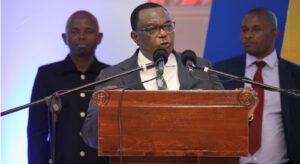
Vice President Chiwenga has challenged Zimbabwe’s industrial sector to invest in research and forge stronger partnerships with academia to drive sustained economic growth.
Delivering the keynote address at the International Business Conference (IBC) in Bulawayo, VP Chiwenga emphasised that the responsibility to initiate collaboration should lie with industry, not academia.
“I have heard during the first panel discussion, it is not the academia that is the most important sector that must go to industry, actually, it is vice versa.
“Industry, the manufacturing sector, must go to our researchers, to our institutions of higher and tertiary education, and say, we are producing ten pieces of equipment, we want to accelerate them to produce 100 pieces of equipment, can you give us a solution and then fund those researchers as the private sector because you are the beneficiaries.
“This is how we should go. Because the researchers, those young boys and girls who have been gifted, cannot dream of what they need. But if you go to them and you tell them what you need, they will crack their minds and you will have solutions,” he said to a round of applause.
The Vice President stressed that as the nation transitions from National Development Strategy 1 (NDS1) to National Development Strategy 2 (NDS2), there must be a deliberate and accelerated shift to enhance productivity, remove bottlenecks, and enable full private sector participation.
He further noted that Zimbabwe’s push toward industrialisation must be reinvigorated with targeted efforts that will position the country as a competitive player in regional and continental trade.
Running under the theme “Revitalising Industrialisation for Zimbabwe’s Economic Resurgence”, the IBC stands as the country’s premier business forum, drawing together government leaders, policymakers, and industry experts.
The conference provides a vital platform for engaging on key economic issues, such as integrated industrialisation, sustainable growth, and unlocking global business opportunities.
Attended by top business leaders and decision-makers, the IBC continues to serve as a critical space for shaping Zimbabwe’s economic trajectory.