Online Reporter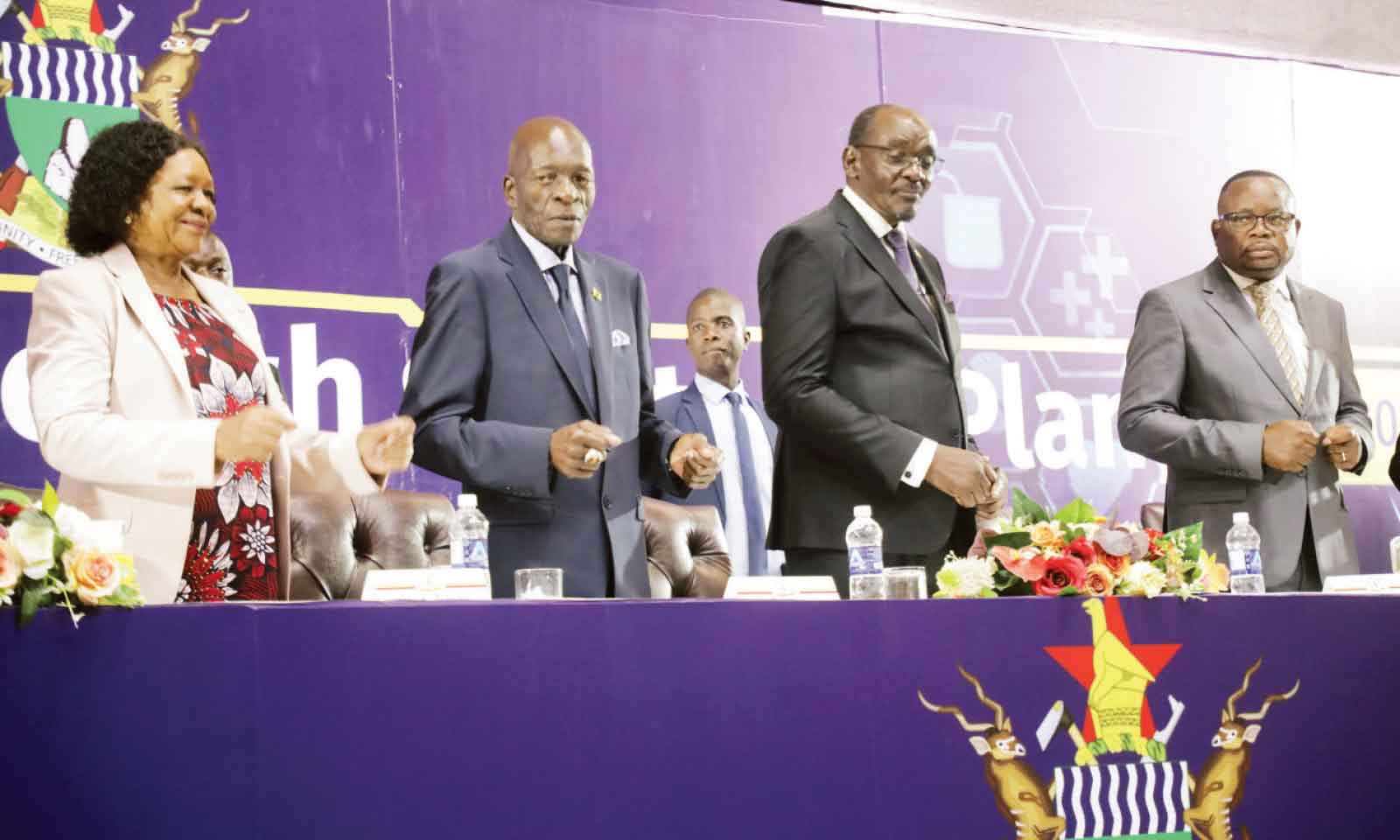
Nyore Madzianike
Senior Reporter
VICE President Dr Kembo Mohadi has directed Government Ministries, Departments and Agencies, together with all stakeholders responsible for human, animal and environmental health, to respond to public health challenges through strengthened multi-sectoral collaboration and unified policy action beyond traditional sectoral boundaries and silos.
He made the call while launching the Zimbabwe National One Health Strategic Plan in Harare yesterday. The strategic plan seeks to integrate human, animal, plant and environmental ecosystems in addressing interconnected health challenges.
It also aims to enhance synergies among health players, strengthen coordination at the highest level and provide a roadmap for a Whole-of-Government and Whole-of-Society approach.
The plan focuses on strengthening collaboration across sectors to combat endemic and emerging zoonotic and other infectious diseases, antimicrobial resistance (AMR), and the health impacts of climate change.
It also seeks to address critical gaps in Zimbabwe’s health system, including weak institutional coordination, underdeveloped infrastructure, inadequate funding mechanisms and limited research and development capacity.
In his remarks, VP Dr Mohadi said Government was aware of the challenges confronting the national health system.
“A healthy Zimbabwe is a must for the attainment of a prosperous and empowered upper middle-income society by 2030.
“Government is, however, aware of the many complex challenges that the health system is currently facing, ranging from increased disease outbreaks and limited funding for timely response to outbreaks and other key public health issues of national concern,” he said.
The Vice President said national assessments had confirmed incapacitation in some sectors of the health system, adding that Government was working to address the challenges through innovative strategies to achieve Vision 2030, to become an upper middle class economy.
“A national self-assessment and a September 2025 World Health Organisation led Joint External Evaluation of Zimbabwe’s core capacities for the International Health Regulations, confirmed some of these national health systems core capacity challenges.
“Government is, therefore, ceased with addressing these challenges comprehensively using innovative strategies in order to ensure that the country is healthy and able to meet vision 2030, leaving no one and no place behind,” he said.
He said Government was now prioritising collaboration among MDAs in implementing public health issues that cut across sectors.
“The Zimbabwe National One-Health Strategic Plan 2026–2030 is an innovative and transformative framework that establishes a well-coordinated multi-sectoral approach to tackling health threats at the intersection of human, animal and environmental health.
“It specifically seeks to strengthen coordination and collaboration across sectors at all levels.
“In addition, the plan is a science-driven innovative approach that addresses interconnected One-Health challenges through a Whole of Government and Whole of Society Approach.
“It emphasises the importance of collaboration among sectors in order to efficiently and effectively address complex health capacity challenges in a timely way,” he said.
The Vice President said lessons from the Whole-of-Government approach led by the Office of the President and Cabinet during the Covid-19 era informed the development of the plan.
“Best practices and lessons learnt from the very successful Whole-of-Government and Society national COVID-19 pandemic response, that the Office of the President and Cabinet led and coordinated, informed the development of this strategic plan.
“Other science driven local, regional and global strategies and approaches such as the UN One-Health guidelines, also informed the development of this national strategic plan,” he said.
VP Dr Mohadi said the plan prioritises the health of people, animals and the environment while ensuring efficient utilisation of available resources through collaboration.
“The plan clearly outlines the nation’s ‘One-Health’ governance in support of strengthened cross sectoral collaborations towards resilient and sustainable one health systems.
“The nation’s journey to a prosperous and upper middle-income society is only possible when the country embraces collaborative strategies and approaches that ensure that available resources are used efficiently for a healthy nation.
“The Zimbabwe National One-Health Strategic Plan is a transformative framework that reflects Zimbabwe’s commitment to addressing complex national health challenges through a unified and holistic ‘One-Health’ approach,” he said.
He added that the strategic plan provides a clear roadmap for integrating human, animal, plant and environmental ecosystems.
“The plan’s vision of a Zimbabwe where the health of the people, animals, plants and the environment is holistically protected and promoted through evidence, collaboration and integration highlights the fact that the strategy is aligned with Zimbabwe’s Vision 2030 through the National Development Strategy two (NDS2) priorities, as well as regional and international frameworks including the Africa Agenda 2063, SDGs and the UN global quadripartite joint plan of action on One-Health.”
VP Mohadi said addressing current health challenges through the One-Health approach was key to achieving Vision 2030.
“I, therefore, direct and urge Government Ministries, Departments and Agencies (MDAs) and all other stakeholders responsible for Human, Animal and Environmental Health, to be guided accordingly and to respond to public health challenges through strengthened multi-sectoral collaboration and unified policy ACTION at all levels beyond the traditional sectoral boundaries and silos,” he said.
The launch was attended by Health Minister Dr Douglas Mombeshora, who was represented by Minister of Skills Audit and Development Prof Paul Mavima, Minister of Environment, Climate and Wildlife Dr Evelyn Ndlovu, Public Health Adviser to the President and Cabinet Dr Agness Mahomva, Minister of State for Harare Provincial Affairs and Devolution Charles Tawengwa and other senior Government officials.