Online Reporter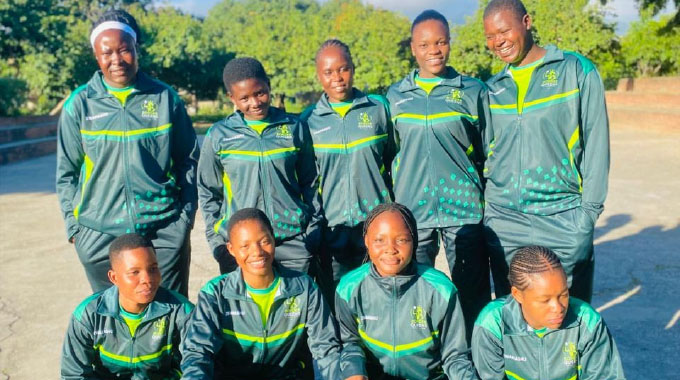
Lovemore Dube, [email protected]
THERE was a time, not too long ago, when it felt as though the Border Queens story had reached its end — not with celebration, but with quiet disappointment. In Beitbridge, where the team had become more than just a sporting outfit, their withdrawal from last year’s Nedbank Premier Netball League midway through the season landed like a heavy silence. It was not simply about missed fixtures or points left unclaimed; it was about young women losing a platform, a sense of direction, and, for some, a safe space where talent and purpose met.
The reason was painfully familiar. Funding had dried up, and with it, the ability to keep going. Without the means to travel, to meet obligations, to simply exist at that level, the team had no choice but to step aside. It was a bitter blow, especially for a club that had quietly been doing so much more than competing — one that had been giving girls a reason to believe in something bigger than their circumstances, keeping them engaged, disciplined, and hopeful.
For a while, it seemed as though that chapter had closed for good. But sometimes, in ways that feel almost unlikely, a story finds its way back.
Earlier this year, that shift came through the intervention of Vice President Kembo Mohadi. What had looked like the end began to reshape itself into something else entirely — a second chance. His support came at a moment when the club needed more than words. It needed action. And through his assistance, the Border Queens were able to settle affiliation fees, secure equipment, and, perhaps most importantly, return to the road — travelling, competing, and fulfilling their fixtures once again.
For those closest to the team, the turnaround felt deeply significant. Chairperson Melody Mabonga does not try to dress it up as anything less than what it was — a lifeline.
“The Vice President’s (Mohadi) intervention was a God sent act to salvage our team, which was driving sports tourism into our town, giving girls the chance to exhibit their talents at the highest level with a view of exposing them to professional clubs,” she said.
There is a weight to that statement that goes beyond courtesy. It speaks to what the team represents in Beitbridge — not just matches played and results recorded, but movement, visibility, opportunity. For a town that has often had to fight for recognition, the Border Queens had become something of a symbol: a reminder that talent exists everywhere, even if opportunity does not always follow easily.
“We thank the Vice President for his acts, and at the moment we are sitting in seventh position on the national log standings because we started the year on a rebuilding exercise after hope had been lost,” said Mabonga.
It is easy to glance at seventh place and overlook it, but within the context of where the team has come from, it means something. It tells of a group still finding its rhythm, still putting the pieces back together after being so close to disappearing entirely. There is no rush in it, no false bravado — just steady progress, built on the simple decision to keep going.
The road back has not been walked alone. Support, as it often does in close-knit communities, has come in layers. Mabonga points to the role played by businessman Jonathan Gapare, whose involvement has helped steady the club further, and hints at growing interest from local leaders who have begun to take notice.
“Gapare came on board too, and already some local politicians have expressed interest to come on board. The morale is high, and we want to do better this year,” declared Mabonga.
There is a sense, listening to her, that momentum is beginning to build — not the loud, dramatic kind, but something quieter and more enduring. The kind that grows through belief, through small acts of support, through the idea that perhaps this team is worth backing, worth protecting.
At present, the Border Queens stand alone as the only netball club from their region competing at national level. It is a position that carries both pride and pressure. Every match they play carries the name of Beitbridge with it, every result felt not just by those on the court, but by those who have come to see the team as their own.
Yet even as things have begun to stabilise, reminders of the challenges they face are never far away. Just last weekend, plans for a Harare tour had to be abandoned. The fixtures were lined up — three matches that could have added momentum to their rebuilding season — but nature had other ideas. Flooding in areas surrounding Beitbridge made it impossible for several players to travel or even train. Roads became uncertain, movement restricted, and the practical realities of participation quickly caught up with ambition.
“We had a number of players coming from flooded areas around Beitbridge. So, we could not train, and they couldn’t find their way to the town. We then asked for a postponement of the matches,” said Mabonga.
It is the kind of setback that rarely makes headlines, but says a great deal about the environment in which teams like the Border Queens operate. Progress is never straightforward. It is shaped by forces far beyond the game itself — weather, resources, access.
The matches against Harare City, Harare District, and Zimsmart Nyanga at Girls High will have to wait, tucked away for another weekend, another opportunity. For now, patience becomes part of the journey.
And perhaps that is what defines this team more than anything else at the moment — patience, and a quiet resilience.
The Border Queens are no longer fighting to prove they belong; they are simply trying to move forward, one step at a time, rebuilding what was nearly lost.
There is no glamour in it, no easy narrative of triumph. Just a group of young women, a handful of committed individuals behind them, and a town that has started to believe again.
Sometimes, that is enough.