

 Online Reporter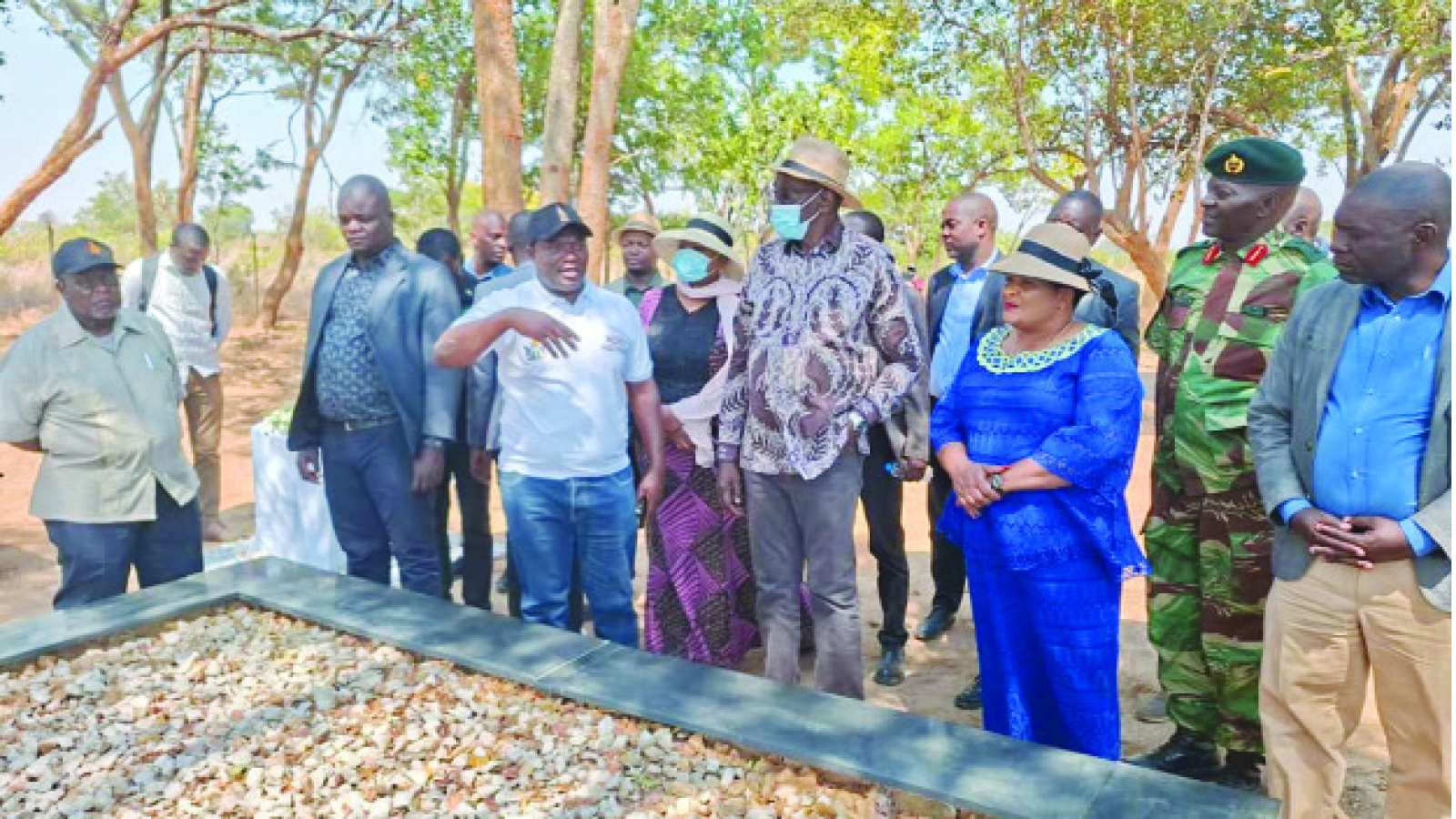
Richard Muponde
Zimpapers Politics Hub
THE recent tour of fallen heroes’ mass graves in neighbouring countries by Vice President Kembo Mohadi has invoked profound emotions of belonging and stirred the conscience of a nation whose independence was won at a heavy cost.
The whirlwind journey, which took the Vice President to Angola, Tanzania, Mozambique and Zambia (where his own brother lost his life in a Rhodesian bombing), is more than just a ceremonial exercise but a powerful reawakening of national consciousness.
The tour rekindles the aspirations of the liberation struggle, serving as a stark reminder to Zimbabweans, especially the youth, that the freedom being enjoyed today was attained through the blood and sweat of young men and women, many of whom never lived to see the dawn of independence.
These shrines, scattered across Mozambique, Angola, Zambia and Tanzania, are silent yet eloquent testaments to the selflessness of a generation that was robbed of its youth, but driven by the vision of a liberated Zimbabwe.
The liberation war was unique in the sheer youth of its fighters, most of whom were in their teens or early twenties when they crossed into Mozambique or Zambia to join ZANLA and ZIPRA. They abandoned the promise of youthful joy, education, careers, and family life, offering their lives for the birth of an independent nation.
The Chimoio and Nyadzonia massacres in Mozambique, the Boma bombing in Angola, and the attacks on Mkushi Girls’ Camp in Zambia are tragic markers of this sacrifice.
Vice President Mohadi movingly captured the magnitude of the brutality during his recent tours when he said: “When you look at these mass graves, it is difficult to imagine that people were killed in numbers like this. It is painful. It all goes to show how brutal the colonial regime was.”
This remark underscores the brutality faced by cadres who were massacred in training and refugee camps by Rhodesian forces.
The ethos of the liberation struggle was anchored on unity, freedom, and development, principles which remain the foundation of ZANU PF and the nation at large.
They dreamt of a Zimbabwe that would be prosperous, inclusive, and dignified—a Zimbabwe where no citizen would be left behind.
This vision continues to animate the policies of the Second Republic under President Mnangagwa, who has committed himself to the mantra of “leaving no one and no place behind,” in line with Vision 2030 of an upper middle-class income economy.
His administration has embarked on a mission to honour both living and fallen heroes by ensuring decent burials, the construction of shrines, and immortalising names.
At Boma in Angola, where over 300 ZIPRA fighters lie in a mass grave, the Vice President promised that the Government would construct a shrine and monument so that “the history of our country will remain forever.”
These acts are the fulfilment of a promise made during the liberation struggle.
“We are sorry that we took long to come and we will do everything in our power to make sure this place never looks like this again,” VP Mohadi said in Angola, acknowledging the debt owed not only to the fighters, but also to the communities in neighbouring countries who bore the burden of hosting the liberation armies.
This recognition widens the narrative of the struggle, showing it as a regional effort founded on African solidarity.
For the youth, the tour of these shrines is an invaluable political and moral lesson. VP Mohadi was explicit in his message to young officers accompanying him.
“You, young people, especially all those below the age of 50, you really need to learn about this and take it seriously.
“Lack of that understanding and knowledge has left some of you calling on the return to the colonial era so that you can start the liberation war again. It is sad, to say the least.”
This is a cautionary reminder that the liberation struggle must not be trivialised or romanticised; it was a bloody, painful process that cost thousands of lives.
By engaging with this heritage, young Zimbabweans can develop an identity rooted in patriotism, responsibility, and respect for leadership. They are now the vanguard of the liberation struggle in its current form: “the struggle for economic prosperity.”
The 22nd ZANU PF National People’s Conference in Mutare presents an opportune moment to reflect on this heritage.
Delegates must deliberate on issues that directly improve the welfare of Zimbabweans, because this is what the fallen heroes fought for: a Zimbabwe of milk and honey where citizens enjoy modern amenities, social services, and economic opportunities.
Honouring the liberation struggle is not only about constructing monuments but also about delivering tangible improvements in people’s lives.
Decent burial for fallen heroes is part of fulfilling the liberation promise.
With 17 shrines in Mozambique alone where thousands of cadres lie, many in unmarked graves at sites such as Madulu, Mapai, and Barrage, VP Mohadi’s sense of duty is palpable.
“The question from some of us who lived through this war is that are we doing enough. The answer in many circumstances is that we are not. We surely need to do more,” he admitted.
His insistence that resources, even from sources such as gambling revenue, should be channelled to ensure proper amenities are installed at these shrines is both practical and visionary.
The Second Republic has demonstrated commitment through acts such as organising tombstones for Zambian policemen killed while aiding refugees and supporting the preservation of shrines across the region.
Such gestures highlight the seriousness of the Government in ensuring no hero, Zimbabwean or allied, remains forgotten. The phrase “no one and no place left behind” thus extends even into the realm of death.
As the Vice President noted, “The story of the liberation war must be told now and again to all Zimbabweans. It must be talked about in all social spaces regularly so that our young ones can understand what we mean when we say this country’s liberation war was nourished by human blood.”
He argued that Zimbabwe must elevate its liberation story into an everyday consciousness to prevent the danger of amnesia or the trivialisation of the ultimate sacrifice.
The tour of liberation shrines is more than a symbolic gesture; it is a reawakening of national consciousness.
The Government, under President Mnangagwa, deserves commendation for making good on the promises of the liberation war, both in honouring the fallen and uplifting the living.
The upcoming ZANU PF conference must seize this spirit and deliberate on issues that will truly transform Zimbabwe into the land of milk and honey envisioned by the gallant sons and daughters who lie in mass graves far from home but never forgotten.



The question that begs answers is why this only happens 45 years after independence yet ZANU/ZAPU now ZANU-PF leadership is still the same? This has nothing to do with the second Republic because we are dealing with the same people from the beginning of the liberation struggle. They cannot try to smuggle in this activity to decorate the second Republic. This should have been done years back. Today the independent Falken Heroes Trust is carrying out reburials of our heroes that may scattered all over the country side that the first and second Republics ignored for decades. Meantime the national shrine continue to be filled up by individuals whose track records aren’t even worth considering for burial at district heroes shrines.